
VKS 3.8 Raises Supervisor Scale to 500 Clusters and Caps Add-Ons at 100
"VMware's 23 November post puts VKS at 500 clusters per Supervisor control plane. The 3.8 release notes attach a budget to that number: 100 Helm-based add-ons per Supervisor at 500 clusters,

TL;DR
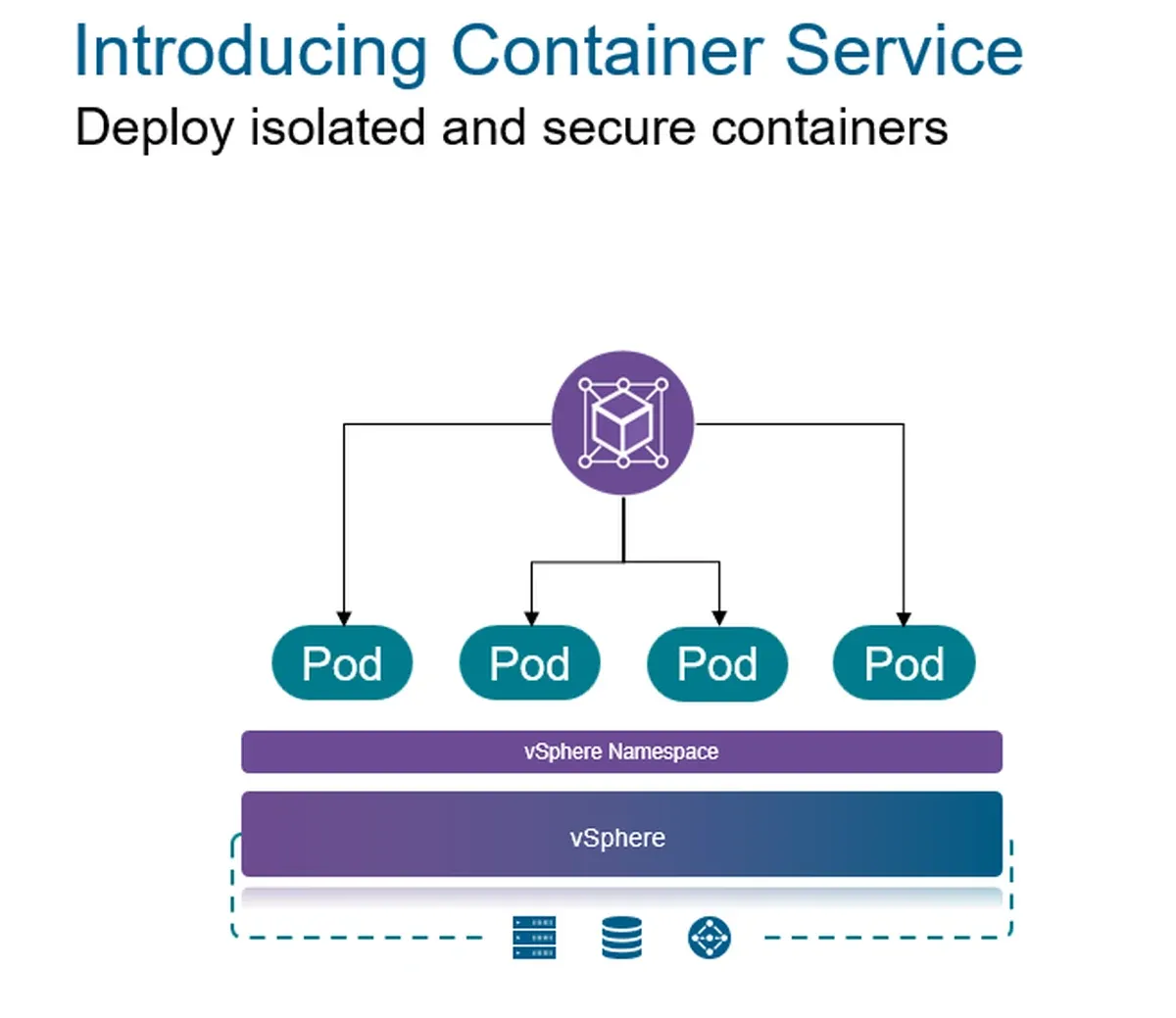
- vSphere Kubernetes Service is a Kubernetes runtime that VMware ships inside vSphere: a Supervisor control plane runs in the hypervisor, and VKS provisions the workload clusters that teams deploy applications onto.
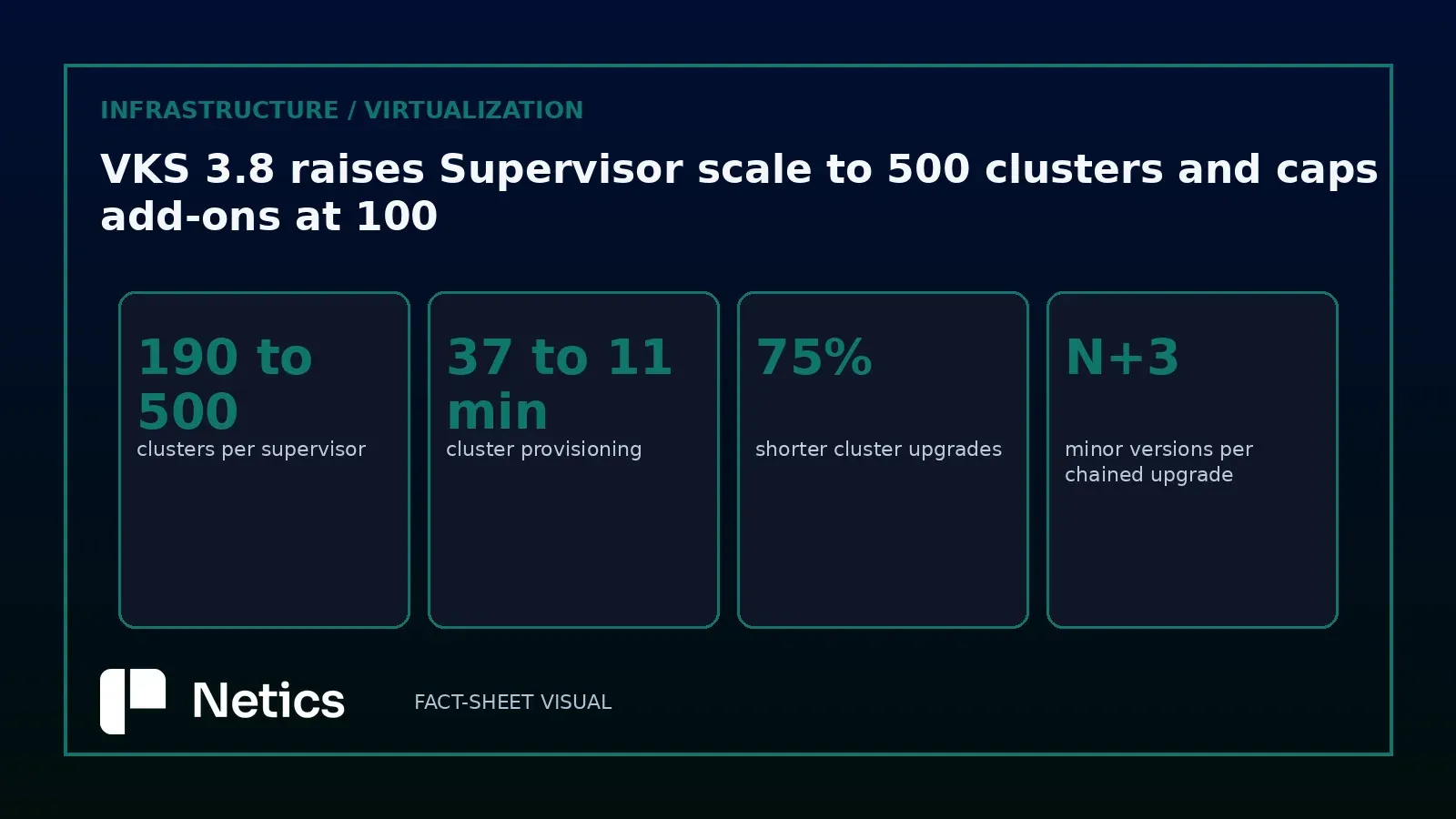
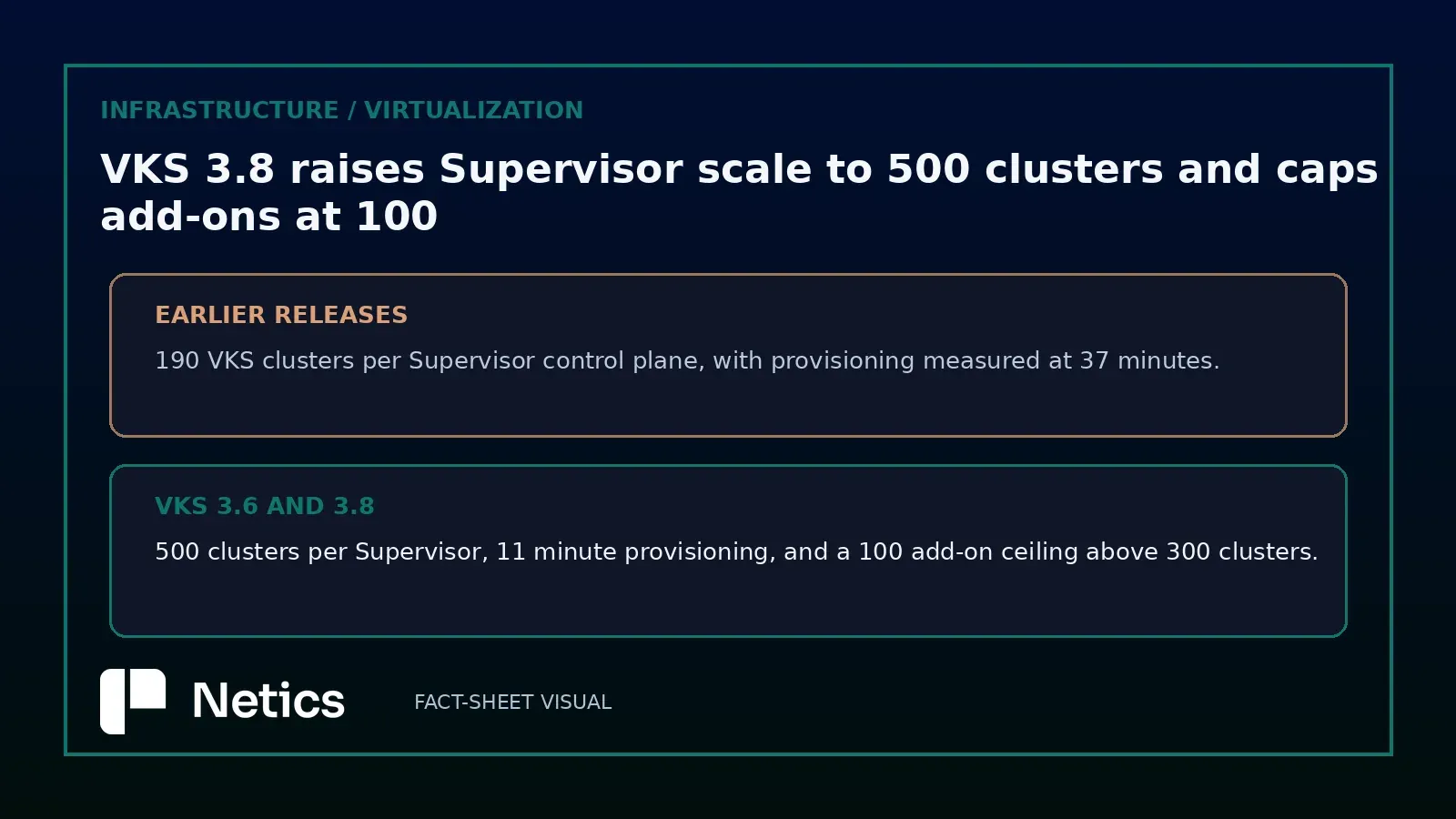
- VMware published figures on 23 November 2026 showing single Supervisor scale rising from 190 VKS clusters to 500, with Fast Deploy cutting cluster provisioning from 37 minutes to 11 and cluster upgrade time by 75 percent.
- Fast Deploy rests on two mechanisms the post names: per-datastore image caching and linked-mode delta disks, which is why the same page also reports faster upgrades.
- The 3.8 release notes attach a budget to the 500-cluster figure: up to 300 clusters allows 600 Helm-based add-ons, while up to 500 clusters allows 100, and exceeding the boundary causes add-on manager out-of-memory restarts.
- Chained workload cluster upgrades cover up to three Kubernetes minor versions in one operation, with automated pre-checks on target availability, upgrade path, ClusterClass support and add-on compatibility.
- Prerequisites block a Supervisor 9.1 upgrade when a cluster still runs ClusterClass older than 3.6.0, and system checks block upgrades while SystemChecksSucceeded reports False.
- A sizing review before the scale-up counts add-ons per Supervisor, inventories ClusterClass versions, and picks an inPlaceUpdateStrategy for each cluster.
- The 500-cluster figure needs your own measurement: the post publishes no test conditions, no node counts and no storage profile behind it.
The numbers VMware published on 23 November
The VMware Cloud Foundation post of 23 November 2026 combines a VKS 3.6 architecture guide with the five-module HOL-2704-07 lab. That preconfigured sandbox walks through VKS and Supervisor updates, cluster creation with node overrides and secondary networks, Fast Deploy and VM operations, vSphere Pods, and Argo CD delivery with Harbor and GitLab. Its independent, self-paced modules let practitioners exercise those VKS 3.6 workflows firsthand. The analysis here is a targeted assessment of the post's scale and performance claims against the operational constraints documented in the VKS 3.8 release notes. The headline numbers are in the summary: single Supervisor scale rises from 190 VKS clusters to 500, provisioning falls from 37 minutes to 11, and cluster upgrade time drops by 75 percent.
The context for those numbers is a claim about operational fatigue. The post describes day-two Kubernetes work degrading into infrastructure silos, fragmented toolchains and widening skill gaps, and presents the scale increase as a way to stop running separate management planes per cluster group. VKS ships upstream-aligned Kubernetes with 24 months of enterprise support, which the post says reduces mandatory upgrade churn.
A second group of changes sits alongside the scale figure: multi-NIC support for isolating data and control planes with native multicast for streaming and finance feeds, Cilium through a managed CNI add-on framework, lightweight vSphere Pods directly on ESXi, and Supervisor integrations for Argo CD and Harbor so infrastructure and applications can be declared through Git.
Fast Deploy: per-datastore caching and delta disks behind the 11-minute figure
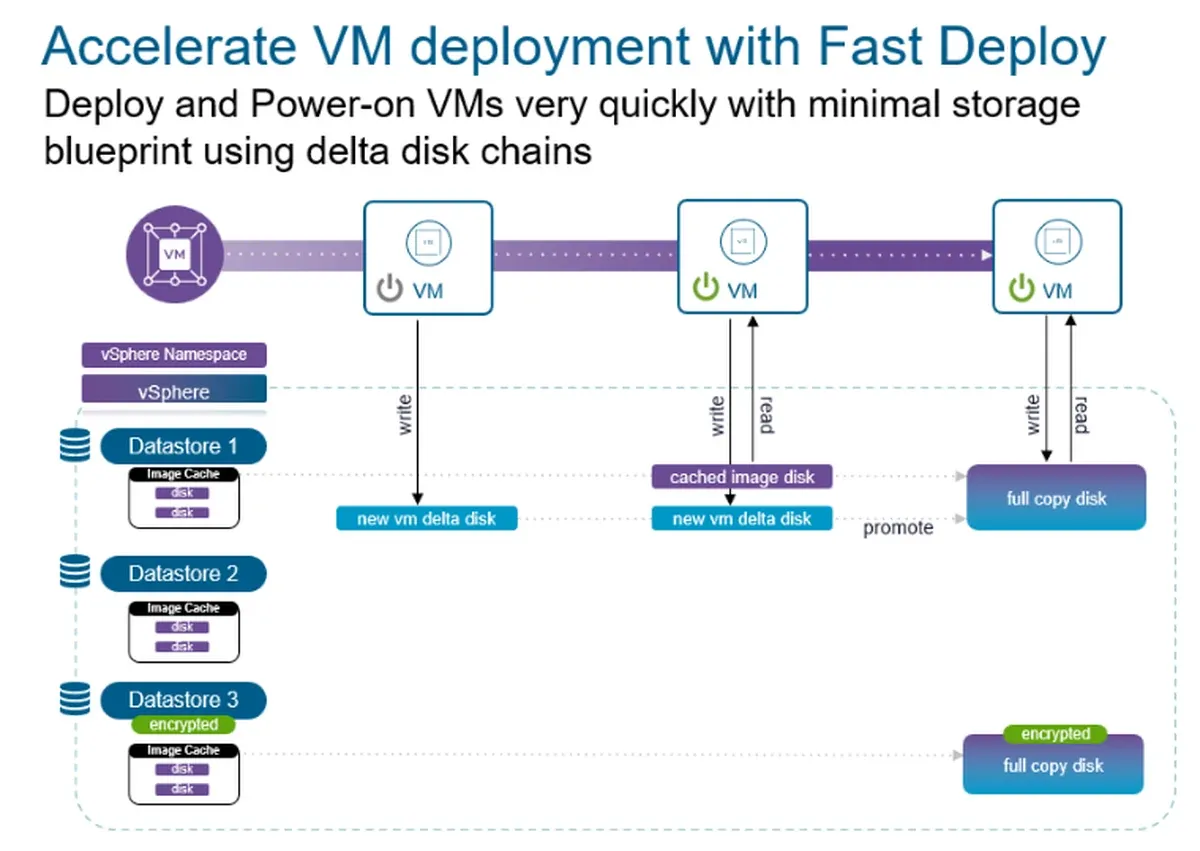
Fast Deploy is the mechanism most readers skip past, and it explains both numbers. The post describes it as per-datastore image caching combined with delta-disk technology in linked mode: the image layers a cluster needs are cached on each datastore, and a new cluster is built from delta disks that reference the cached base.
The VMware diagram makes the chain visible. Templates sit on three datastores, each cluster consumes a base disk and then a short chain of deltas, and the namespace layer tracks which chain belongs to which cluster. The saving comes from the copy operation that no longer happens on every provisioning request.
That same mechanism carries the upgrade saving the post reports, since a rolling replacement of nodes reuses the cached base and writes only the delta. For a platform team sizing datastore capacity, the practical consequence is that free space accounting shifts: fewer full copies per cluster, more deltas to track, and an image cache to maintain.
The add-on budget that arrives with 500 clusters
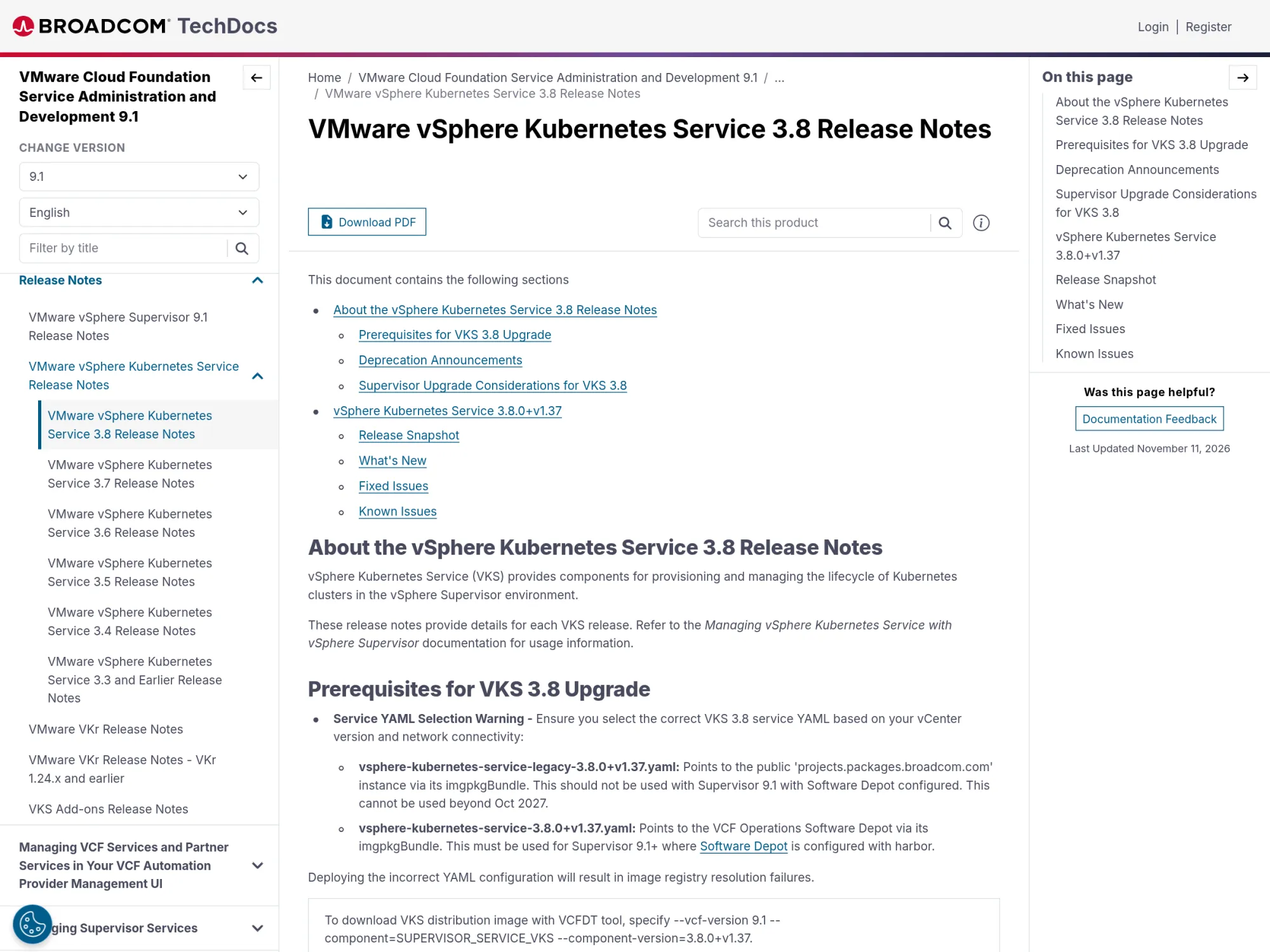
The 3.8 release notes carry the constraint that the announcement leaves out, and it is specific enough to plan against. A known issue states that exceeding supported workload cluster and Helm-based add-on scale thresholds causes the add-on manager to run out of memory and terminate. The add-on workloads keep running on the clusters; reconciliation fails, with ClusterAddon resources flapping and reporting Ready as False.
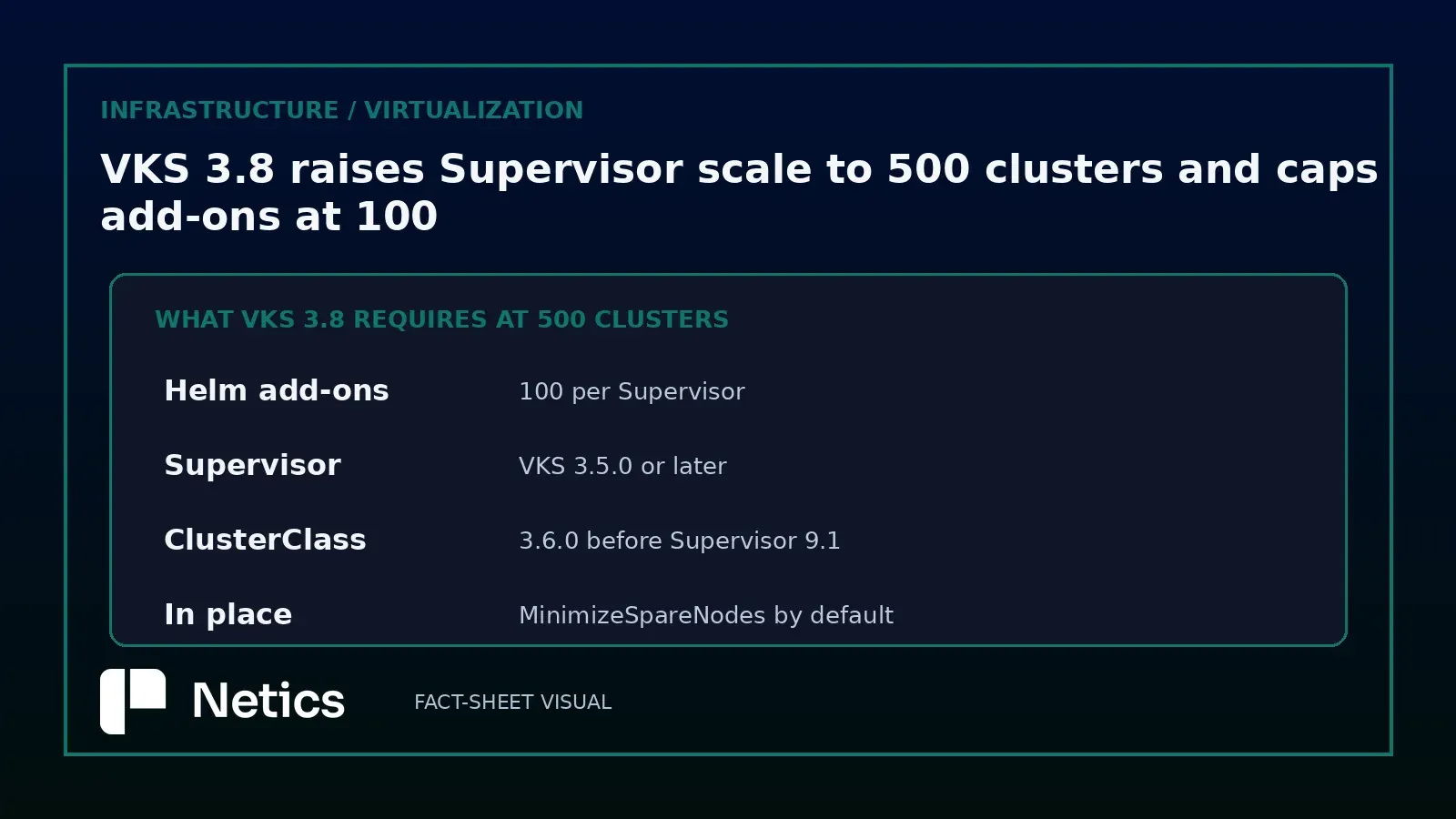
The workaround is a published budget per Supervisor. Up to 300 clusters, do not exceed 600 total Helm-based add-ons. Up to 500 clusters, do not exceed 100. The notes add that memory scales with the total number of workload clusters and active add-ons, and that large rollouts should stagger add-on provisioning in smaller batches to avoid sharp memory spikes.
Read those two lines together and the shape of a real deployment changes. A team planning 500 clusters has 0.2 add-ons per cluster on average available at the top of the range, against two per cluster at 300. Every Helm release installed on every cluster, from a CNI to a monitoring agent to a policy engine, spends from that budget.
A second constraint in the same notes affects private registries: installing an add-on repository from a private Helm registry fails authentication when no initialised VKS workload cluster exists on the Supervisor.
Chained upgrades across three minor versions
VKS 3.8 adds chained workload cluster upgrades: a cluster can move across up to three Kubernetes minor versions in a single operation, and automated pre-checks validate target version availability, upgrade path, ClusterClass support and add-on compatibility before anything starts. The UpdatesAvailable condition lists the viable targets.
The mechanics that matter for a maintenance window are in the same section. A cluster's in-place update behaviour is now a variable on the ClusterClass: MinimizeSpareNodes applies compatible updates without creating spare nodes, RespectMaxUnavailable creates spare nodes to keep availability, and Disabled bypasses in-place upgrades. The new default is MinimizeSpareNodes, which the notes justify as a way to avoid a wave of spare node creation across every cluster after a Supervisor-wide configuration change.
System checks now gate the operation. Starting in 3.8, when SystemChecksSucceeded reports False, cluster upgrades and ClusterClass version changes are blocked, and updates to variables that require a node rollout are blocked regardless of the in-place strategy.
Prerequisites that block a Supervisor 9.1 upgrade
Three requirements decide whether a 500-cluster plan survives its first upgrade. The release notes ask for VKS 3.5.0 or later on the Supervisor before moving to 3.8, and for a Supervisor Kubernetes version of at least 1.33. They also state that every VKS cluster must run ClusterClass 3.6.0 or later before a Supervisor 9.1 upgrade, because clusters on earlier ClusterClasses can experience system-initiated rolling updates, either from the upgrade itself or from configuration changes afterwards.
The 23 November post adds two security changes worth checking against existing automation. SSH access is programmatically disabled across all Kubernetes control plane and worker nodes, and an Advanced Intrusion Detection Environment runs periodic integrity checks on critical system directories. A runbook that still opens an SSH session to a worker node has a step that will not work.
There is a known issue attached to that hardening. A node can report AIDEIntegrityCheckPassed as False because the initial pre-check failed before the baseline database was written, which leaves the node flagged until it is re-baselined, and the documented workaround is to contact Broadcom Support.
A sizing review before the scale-up
The following Casablanca scenario is a constructed planning example. Imagine a Casablanca manufacturer running a private platform for twelve plants, with one Supervisor per site and a plan to consolidate eight site clusters into a single Supervisor at 400 clusters. The add-on count is the first number to collect: if each of those 400 clusters carries three Helm releases, the total sits at 1,200 against a ceiling of 100 at that scale.
The review order that follows from the documents is short. Count Helm-based add-ons per Supervisor and compare against the published budget for the target cluster count. Inventory ClusterClass versions and confirm 3.6.0 or later everywhere before scheduling a Supervisor 9.1 upgrade. Read SystemChecksSucceeded on a sample of clusters to see whether the gate is already closed. Choose the in-place update strategy per cluster, since a fleet-wide default of MinimizeSpareNodes trades spare capacity for a shorter window. And check the runbooks that reach nodes over SSH.
This kind of capacity and lifecycle work belongs to the same conversation as sovereign infrastructure and cloud exit, because the decision to keep 400 Kubernetes clusters on your own hardware is rooted in the hosting model and shapes the Kubernetes architecture.
Where the 500-cluster figure still needs your own measurement
Both documents are consistent on the direction of the numbers and silent on the conditions behind them. The post gives no node counts, no storage profile, no add-on profile and no test duration for the 37-to-11 minute provisioning figure, and it does not say which cluster size the 75 percent upgrade saving was measured on.
The release notes provide useful planning boundaries: a budget for add-ons, a scale threshold where the manager fails, a ClusterClass floor, and a system-check gate that blocks an upgrade. Those are the numbers a design document can cite.
Kubernetes 1.37 itself is already on patch releases upstream, so the version VKS 3.8 lands on has a maintenance line behind it. The remaining question is local: how many Helm releases your platform actually installs per cluster, and whether that count survives the ceiling at the scale you are asking for.
Sources
- Escaping the Silos: A Deep Dive into vSphere Kubernetes Service 3.6 — blogs.vmware.com, 23 November 2026
- VMware vSphere Kubernetes Service 3.8 Release Notes — techdocs.broadcom.com
- Kubernetes 1.37 changelog — github.com/kubernetes/kubernetes
Source: "Escaping the Silos: A Deep Dive into vSphere Kubernetes Service 3.6" — blogs.vmware.com, 2026-11-23, https://blogs.vmware.com/cloud-foundation/2026/11/23/escaping-the-silos-a-deep-dive-into-vsphere-kubernetes-service-3-6-and-the-hands-on-lab-you-need-to-take, read against the VMware vSphere Kubernetes Service 3.8 Release Notes at techdocs.broadcom.com and the upstream Kubernetes 1.37 changelog; all fetched and saved on 23 November 2026 under sources/2026-11-23/vks-38/.