
Google TPUs Land on Oracle Cloud and Accelerator Choice Becomes a Cloud Feature
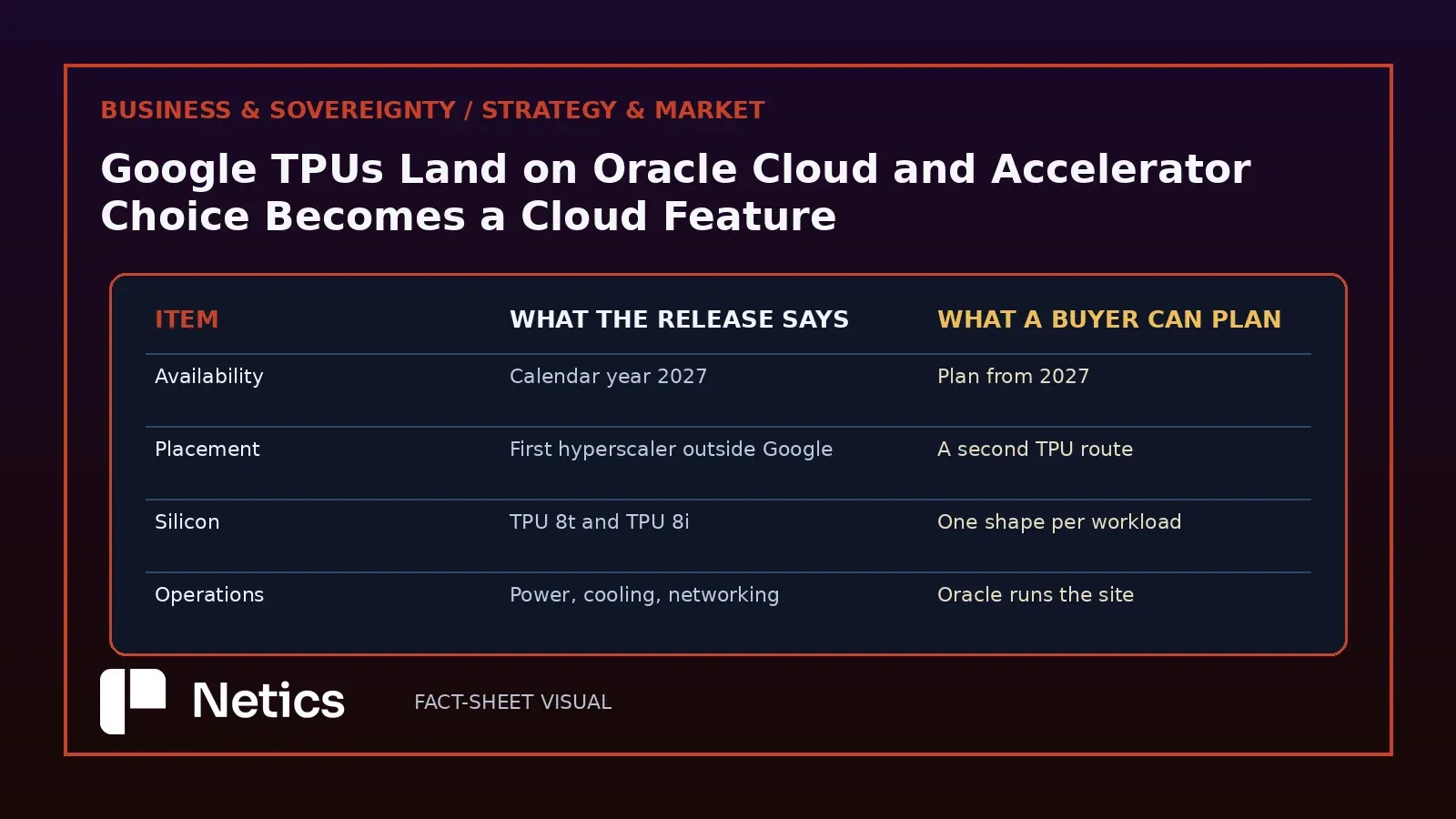
Oracle will offer Google TPUs through OCI in calendar year 2027, the first hyperscale cloud outside Google to do it, with Oracle supplying the power, cooling and datacenter networking.

TL;DR
- Tensor Processing Units, or TPUs, are a family of custom AI accelerators that Google designs and rents inside its own cloud for training and inference.
- Oracle and Google announced on 27 October 2026 that TPUs will be offered through Oracle Cloud Infrastructure, the first hyperscale cloud outside Google to do it.
- OCI supplies the power, cooling and datacenter networking, and Google describes TPUs as custom accelerators co-designed with open software.
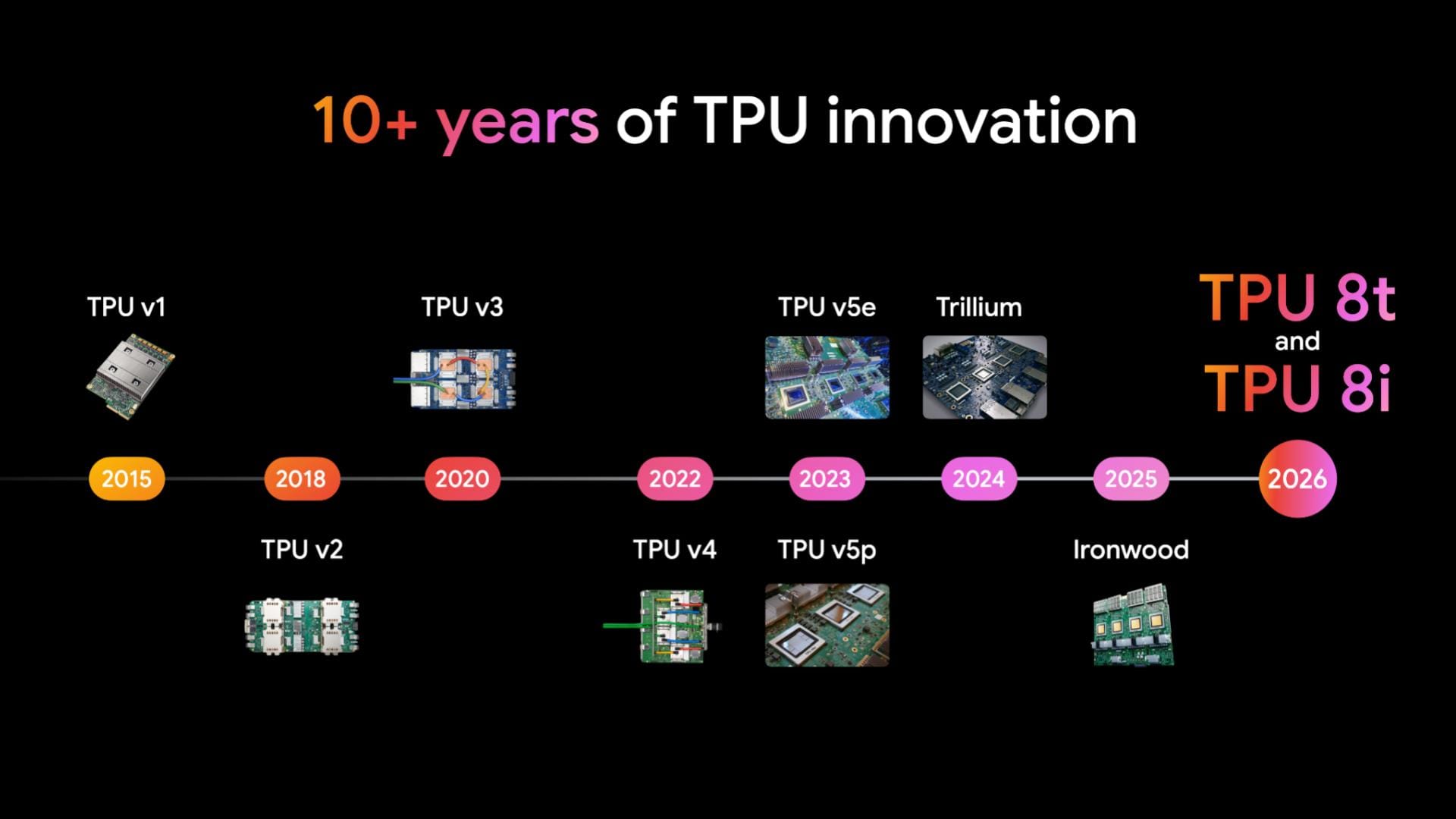
- The eighth-generation TPU carries two architectures, TPU 8t for training and TPU 8i for inference, and Google reports nearly 3x the compute performance per pod for TPU 8t over the previous generation.
- Capacity arrives in calendar year 2027 and ramps over a multi-year period to meet customer needs.
- The buyer questions are about portability, data placement and contract terms, and they are answerable before the first instance exists.
Oracle describes OCI as giving customers access to multiple leading AI compute architectures in one cloud. The announcement adds Google TPUs to OCI's AI compute portfolio, with OCI providing the power, cooling and datacenter networking needed to deploy them at scale. The deal shows how a cloud provider can expand its accelerator catalogue through a partnership.
Oracle and Google Put TPU Capacity Inside OCI
The release makes the placement claim without hedging: Google TPUs will be available through Oracle Cloud Infrastructure, marking the first time Google TPUs will be offered on a hyperscale cloud platform outside Google.
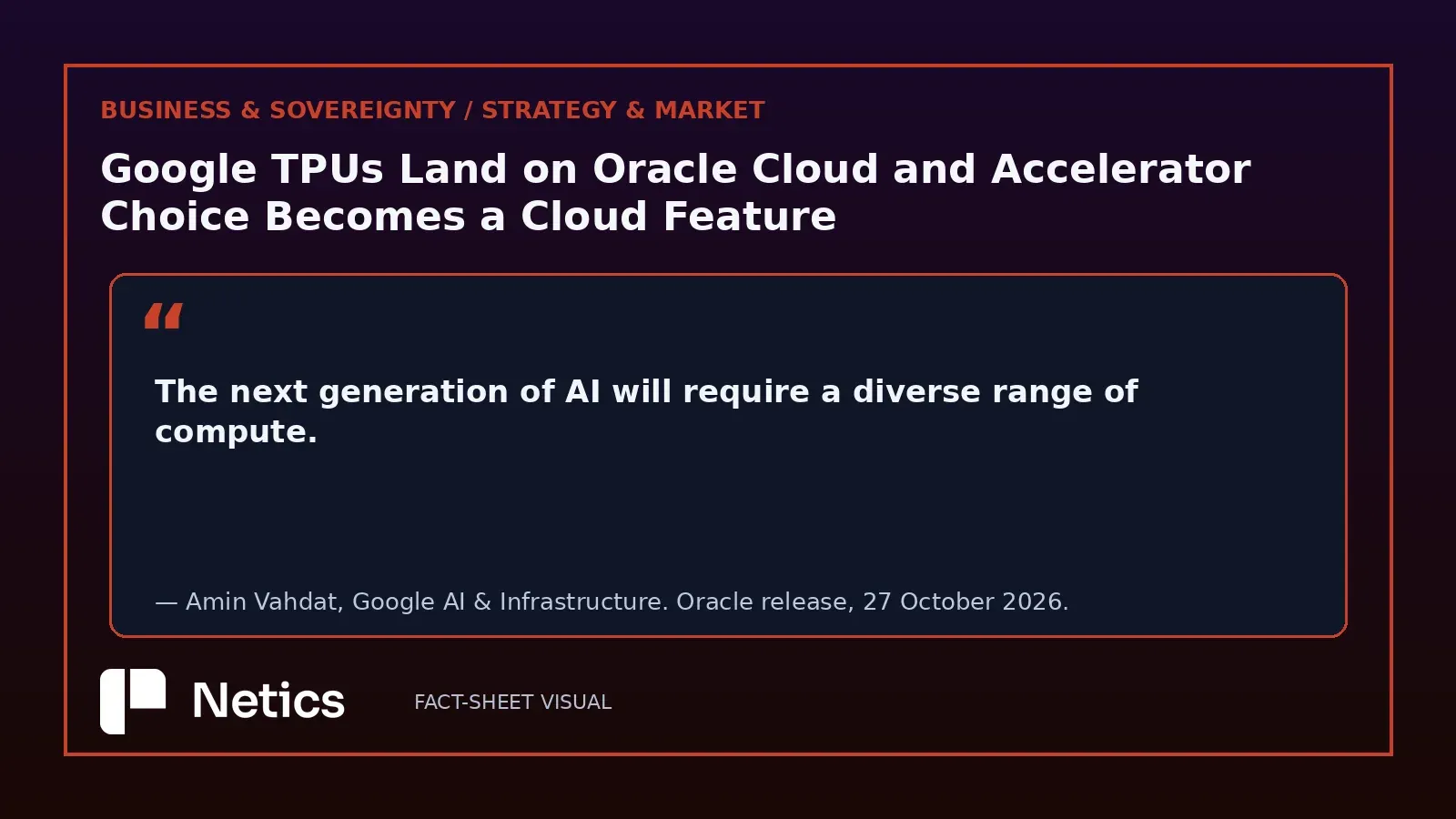
Mahesh Thiagarajan, president of Oracle Cloud Infrastructure, frames the reason in one sentence: "Different AI workloads have different compute needs." The value he describes is a catalogue of compute options, since customers get access to multiple leading AI compute architectures in one cloud and can match infrastructure to the performance, throughput and economics of each workload.
The Eighth-Generation TPU Splits Training and Inference Silicon
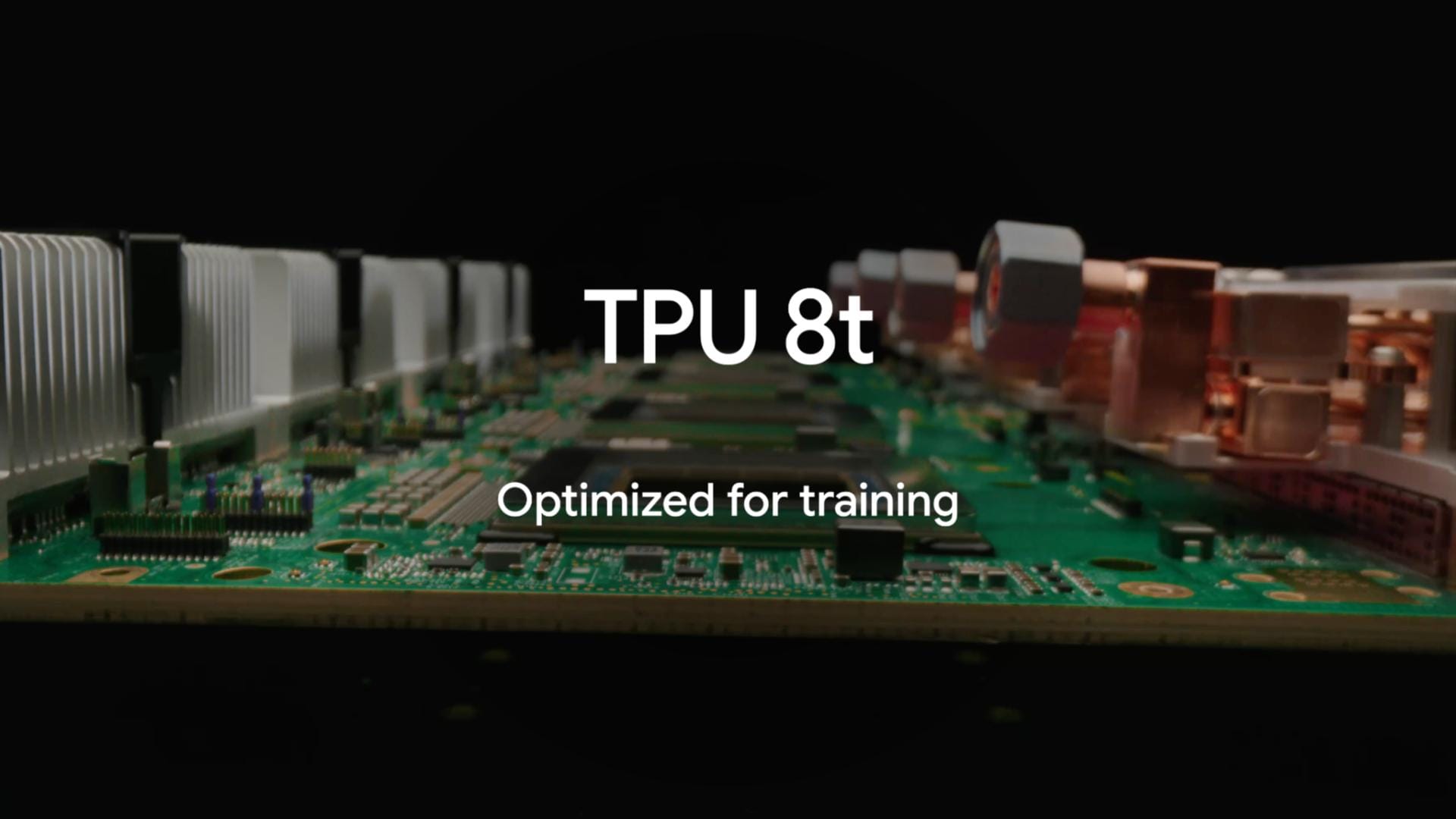
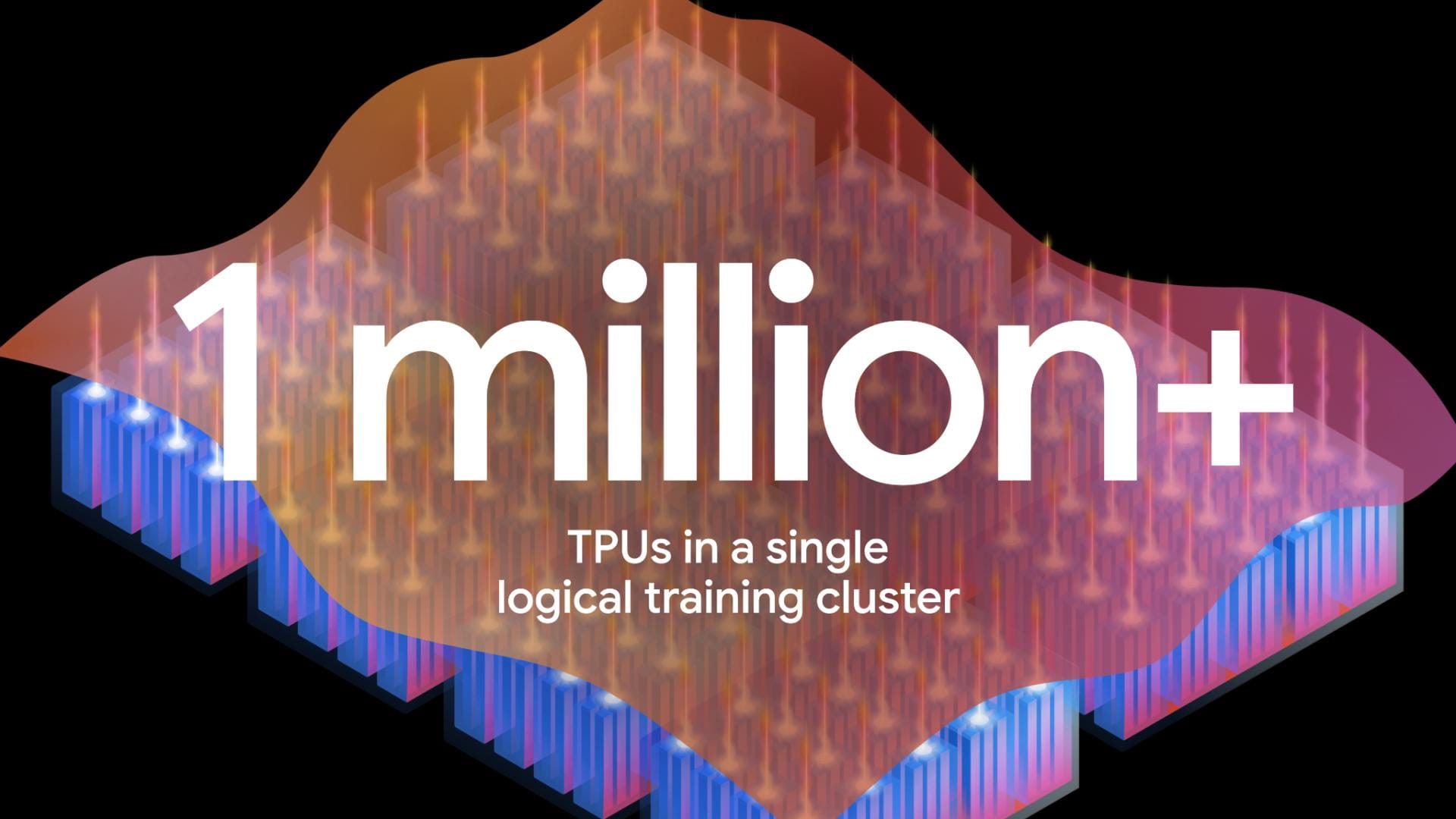
Google's eighth-generation TPU comes in two parts, and the distinction matters for anyone comparing prices later. TPU 8t targets training and cuts frontier model development cycles from months to weeks, with nearly 3x the compute performance per pod over the previous generation. TPU 8i targets inference and the iterative work of many specialised agents.
The release also states the design goal behind the family: maximising AI processing from each watt of electricity, with fast access to model data and rapid communication between chips. Google describes the accelerators as co-designed with open software and aimed at the whole lifecycle, from frontier training through large-scale inference to the multi-step reasoning that agentic workloads demand.
Oracle Supplies Power, Cooling and Datacenter Networking
The operating split is explicit. OCI will handle their power supply, cooling and large-scale datacenter connectivity.
Read that as a division of labour between a facilities operator and a silicon designer. Oracle brings buildings, electrical capacity and network fabric. Google's TPU page describes an open ecosystem with native, high-performance support for PyTorch and JAX, along with tools including OpenXLA and vLLM.
For European buyers, the interesting question is which of those two parties answers a data-residency audit. The release does not say. In this release, Oracle does not specify regions, and Google's TPU page describes an open software ecosystem, so a team that needs a named processor architecture in a contract should raise it early.
Calendar Year 2027 Gives Buyers a Planning Horizon
Availability is the plainest sentence in the document. Google TPUs on OCI will be available in calendar year 2027, ramping over a multi-year period to meet customer needs.
That is a year, a direction and no date. It gives a procurement team something usable: a 2027 horizon to put in a roadmap, and a reason to revisit the comparison as availability details emerge.
What Changes for a Team That Runs Inference Today
Very little this quarter, and something structural over two years.
A team running inference on GPUs inside one cloud today has a single supplier relationship for silicon and for facilities. When a second hyperscaler lists a different accelerator family, the negotiating position changes even for teams that never move.
The technical work of moving depends on the workload's frameworks, compiler path and custom code. Google presents an open TPU ecosystem with native support for PyTorch and JAX and tools including OpenXLA and vLLM. A buyer should test compatibility against the frameworks, libraries and model code used by the workload before planning a migration.
Four Questions to Ask Before Signing TPU Capacity
None of these need an instance to exist. All four decide whether the capacity is usable.
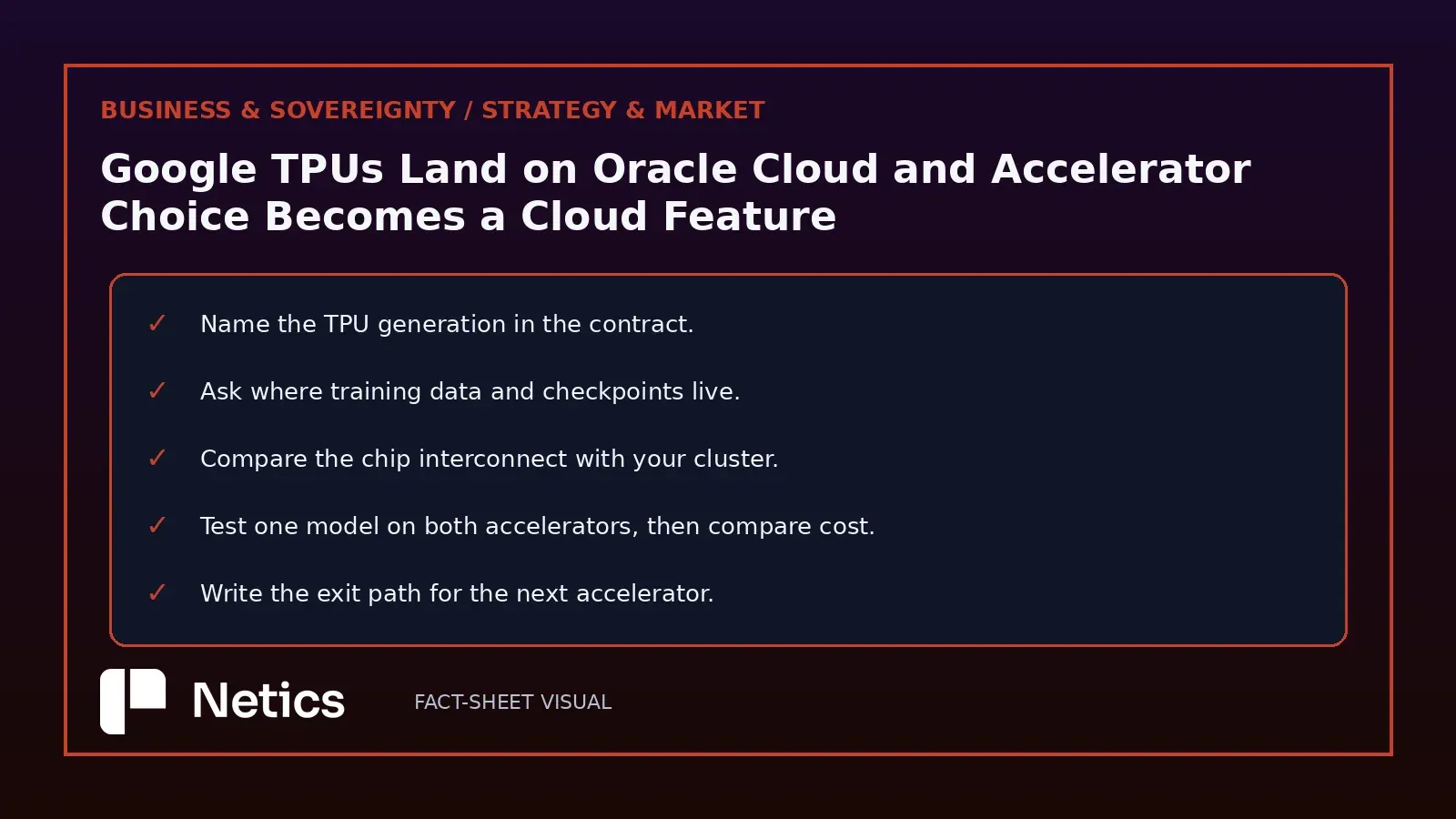
- Which generation? Ask for the TPU 8t or TPU 8i designation in writing, since the two architectures serve different jobs and the release describes them as separate products.
- Where does the data sit? Training data and checkpoints are the expensive part of an AI estate, and the release says nothing about storage placement or who operates it.
- What does the interconnect look like? Google's pitch rests on rapid chip-to-chip communication, and that value appears in cluster-scale training; a single-node benchmark measures something smaller.
- What is the exit? Write down what happens to the model the day it moves back to a GPU, and how much kernel work that move costs.
The procurement discipline here is the same one that belongs in any automation pipelines with human approval decision: name the evidence, name the approver, and put both in the file before the purchase order. The wider question of who holds the infrastructure is already an established subject here, from public cloud exit cost comparison to the arithmetic of moving a workload off one provider and onto another.
What the announcement establishes is a direction of travel: accelerators are becoming a catalogue item inside clouds that do not build them. What it leaves open is the part that decides the outcome for a buyer, which is price, region and the terms attached to both.
Sources
Source: Oracle Brings Google TPUs to Oracle Cloud Infrastructure — oracle.com newsroom, 2026-10-27. The placement claim, both executive statements, the TPU 8t and TPU 8i description, the power and cooling scope and the 2027 availability come from that release (retrieved 2026-10-27). Product graphics from cloud.google.com/tpu, retrieved the same day.