
Cadence Maestro Makes Chip Design Models a Portfolio You Post-Train
Cadence opened its Maestro portfolio of domain-specialized models for chip and system design, post-trainable on a customer's own silicon data and runnable on premises, with first access in t


TL;DR
- Cadence Maestro is a portfolio of domain-specialized AI models for chip and system design, built from post-trained language models, trained decision models and agent skills, and wired into Cadence's AI Super Agents and its EDA and system design tools.
- Cadence announced it on 26 October 2026, the same day it reported third-quarter revenue of 1.633 billion dollars, and says the first models reach select early access customers in the fourth quarter of 2026.
- The portfolio runs on Cadence's cloud, on public clouds or in a customer-controlled on-premises environment, and customers can post-train it on their own designs and workflows, which is where the design data question lands.
- The interesting part is the scoring loop: Cadence's deterministic solvers and EDA tools judge what the agent produced against engineering objectives, constraints and ground truth, and that verdict feeds the reinforcement learning.
- Cadence reports up to 30% higher quality of results and up to 5X greater token efficiency against a general-purpose foundation model, initial figures it does not break down by metric or benchmark.
- Synopsys announced GPT-Synopsys with OpenAI on 30 September 2026 and plans to run it on OpenAI-hosted infrastructure, which makes the placement of design data the live difference between the two offers.
Cadence sells the software that turns a specification into a chip layout, and its new product is a bet about where the intelligence in that process should sit. Cadence combines domain-specialized models with its tools and uses its own solvers to score their output. That choice explains both the numbers in the release and the questions a buyer should ask about them.
Maestro is a portfolio of post-trained models around four agents
The release describes the portfolio as spanning several model sizes and architectures: post-trained large language models, trained decision models and self-improving agent skills. Those pieces sit inside the AuraStack, ChipStack, InnoStack and ViraStack AI Super Agents, which handle analog, digital front-end, implementation and verification work, and the agents call Cadence's EDA and system design tools.

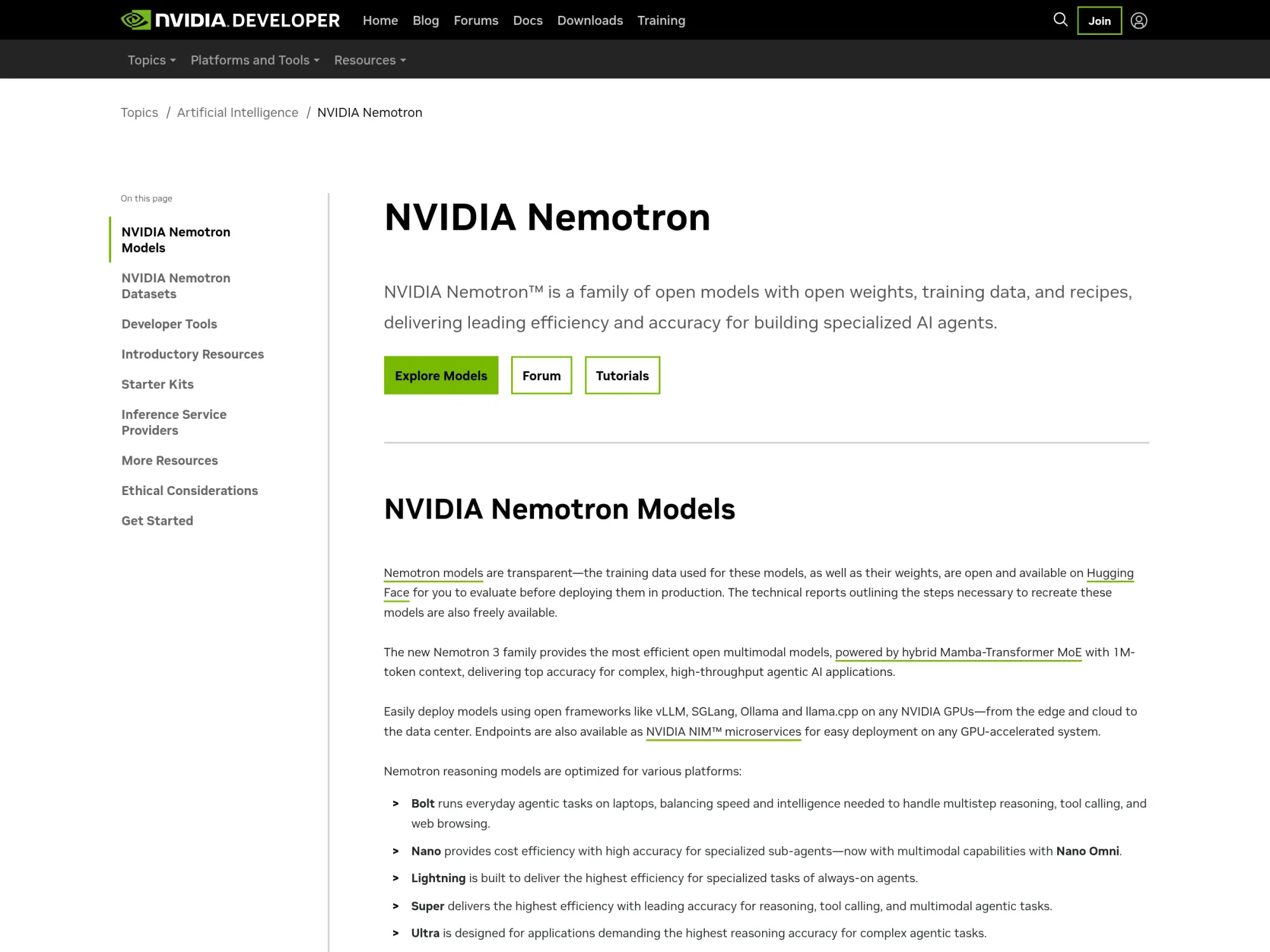
Cadence names NVIDIA Nemotron among the models inside the portfolio, and NVIDIA's Tim Costa describes the collaboration in the release as bringing Nemotron, OpenShell and engineering expertise to Maestro's domain-specialized models. The named customers are specific rather than generic: Socionext's chief operating officer says it is deploying InnoStack into its production design environment and expects up to 5X overall productivity gains, and Silicon Labs cites faster root-cause analysis through Verisium Debug inside ChipStack.
Cadence's solvers provide the reward signal
Cadence combines its models with EDA tools and deterministic solvers. Those systems evaluate outputs against engineering objectives, constraints and ground truth. Cadence's answer is to make that judgement part of the training loop: deterministic solvers and the EDA tools evaluate what the agent produced against engineering objectives, constraints and ground truth, and the result becomes the reward that reinforcement learning optimises.

That design has a property worth naming. Part of the portfolio comes from open-weight Nemotron, and customers can post-train the models on their own data. The moat is the scoring apparatus: the tool suite that can say whether a layout is good, and the curated datasets and evaluation harnesses that make the verdict repeatable at volume. Reuters quotes Cadence senior vice president Paul Cunningham framing the models as agnostic about providers, with more model providers in the market than chip design software vendors. A vendor that can swap models and keep the reward loop has made the model a component.
Where the model runs is the decision buyers will argue about
The release states that the whole environment, agents, models and tools, can run on Cadence's secure cloud, on secure public clouds or in a customer-controlled on-premises environment, and that the portfolio can be post-trained on a customer's proprietary data, designs and workflows. Cadence's fine-tuning step can therefore stay inside the customer's network, which is the sentence a European semiconductor team will read twice.
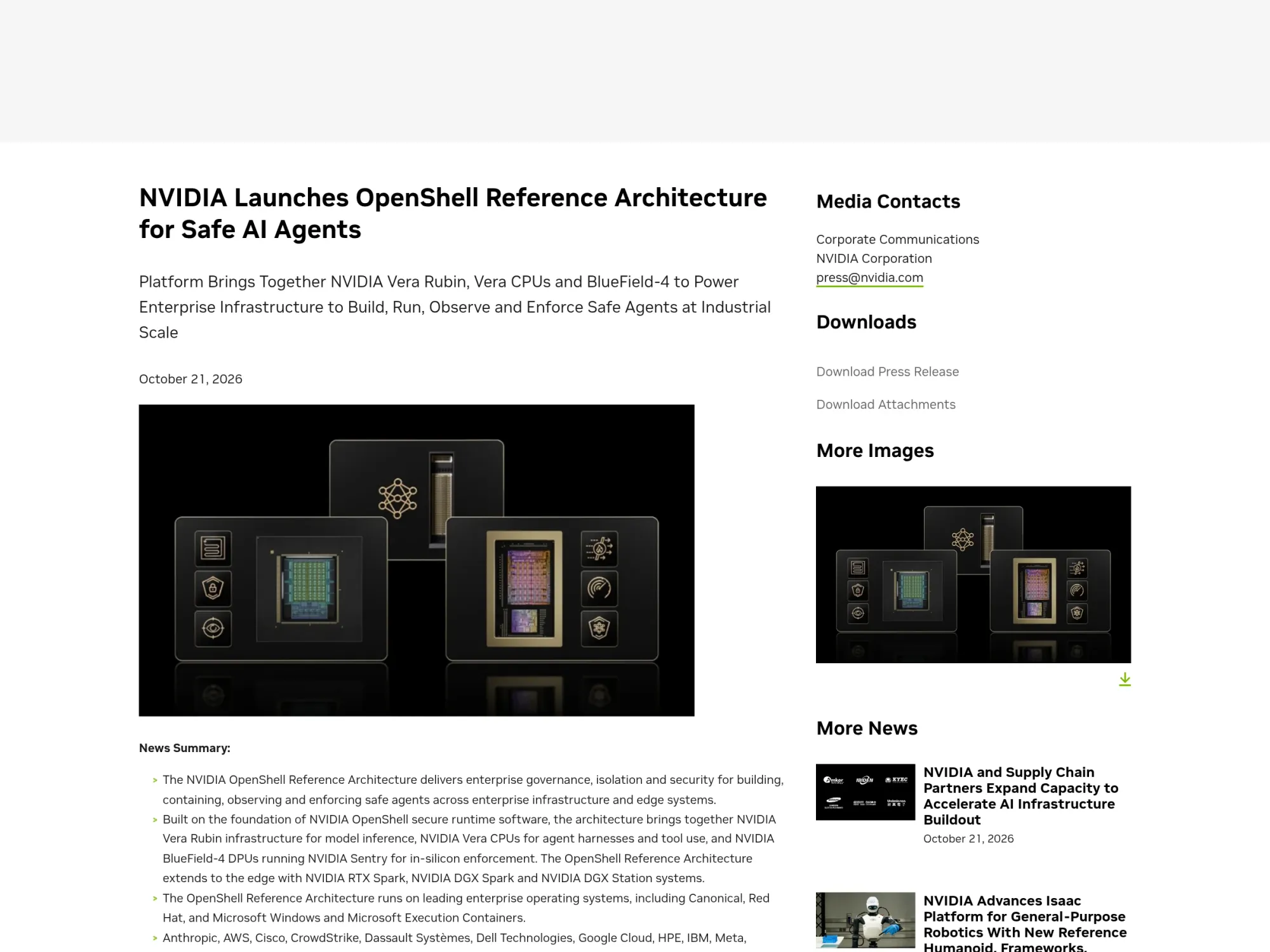
The release presents its security integration through NVIDIA's OpenShell Reference Architecture. Cadence says it is working with NVIDIA on an integration with the OpenShell Reference Architecture, which NVIDIA announced on 21 October 2026 as a stack combining Vera Rubin infrastructure for inference, Vera CPUs for agent harnesses and tool use, and BlueField-4 DPUs running its Sentry software for enforcement in silicon. Jensen Huang's framing in that announcement is the familiar one about giving agents freedom to work inside clearly defined boundaries. For a design team the practical question is narrower: which actions can an agent take on a live design database, and who approves the ones that change it.
Two vendors, two placements for the same design data
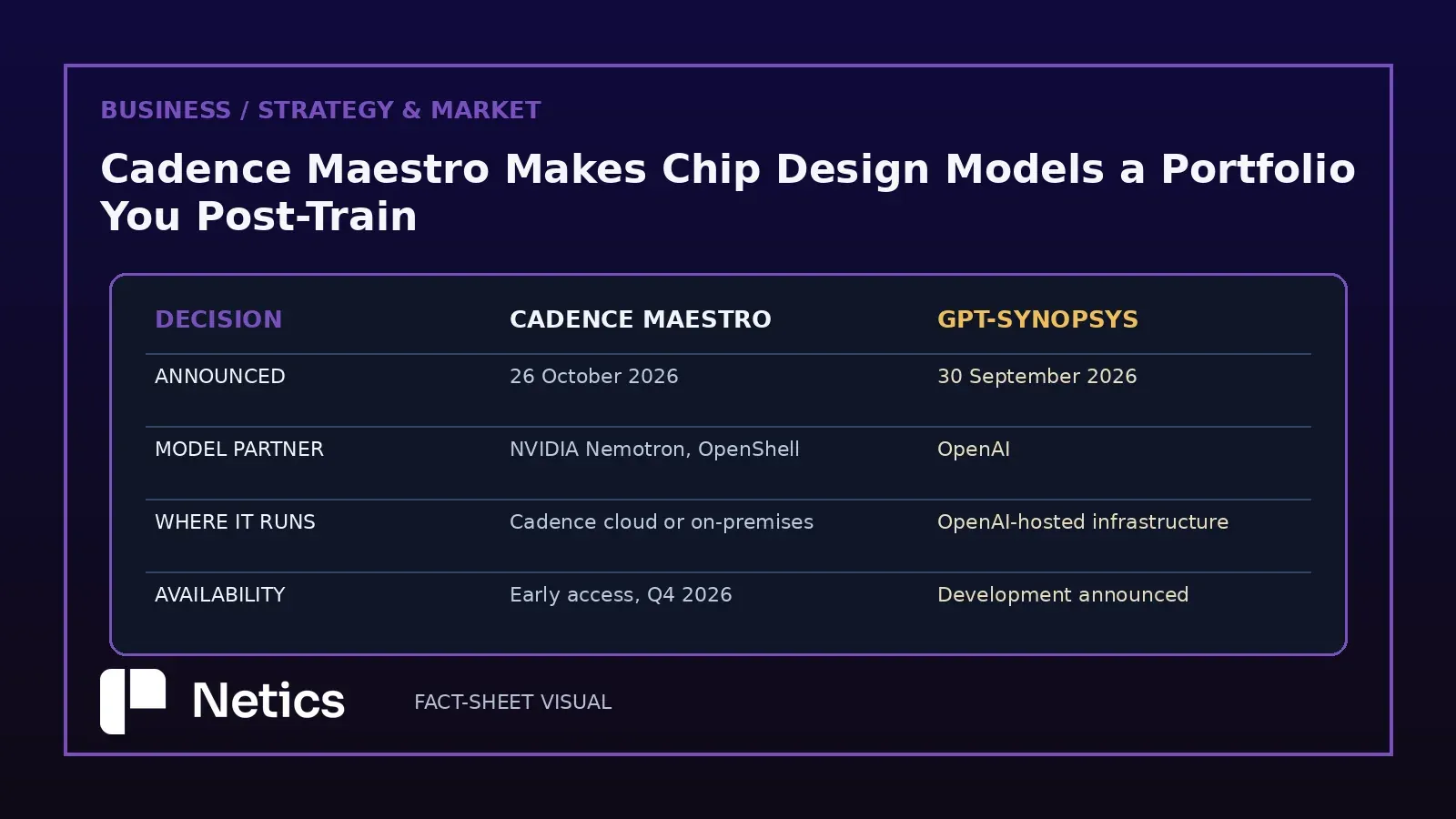
Synopsys said on 30 September 2026 that it would develop an AI model with OpenAI and share revenue, and Reuters reports that GPT-Synopsys will run on OpenAI-hosted infrastructure. Cadence offers customer-controlled placement, with the model available in the customer's own environment and post-training on the customer's own silicon data.
Design data is the most sensitive asset a chip company holds, and the placement question is the one procurement can actually evaluate. GPT-Synopsys is scheduled to run on OpenAI-hosted infrastructure. Cadence says its complete agentic environment can run in a customer-controlled on-premises environment and that Maestro can be post-trained on a customer's proprietary data, designs and workflows. Each arrangement carries costs, and the release does not price either.
What the 30% figure covers, and what a buyer should ask
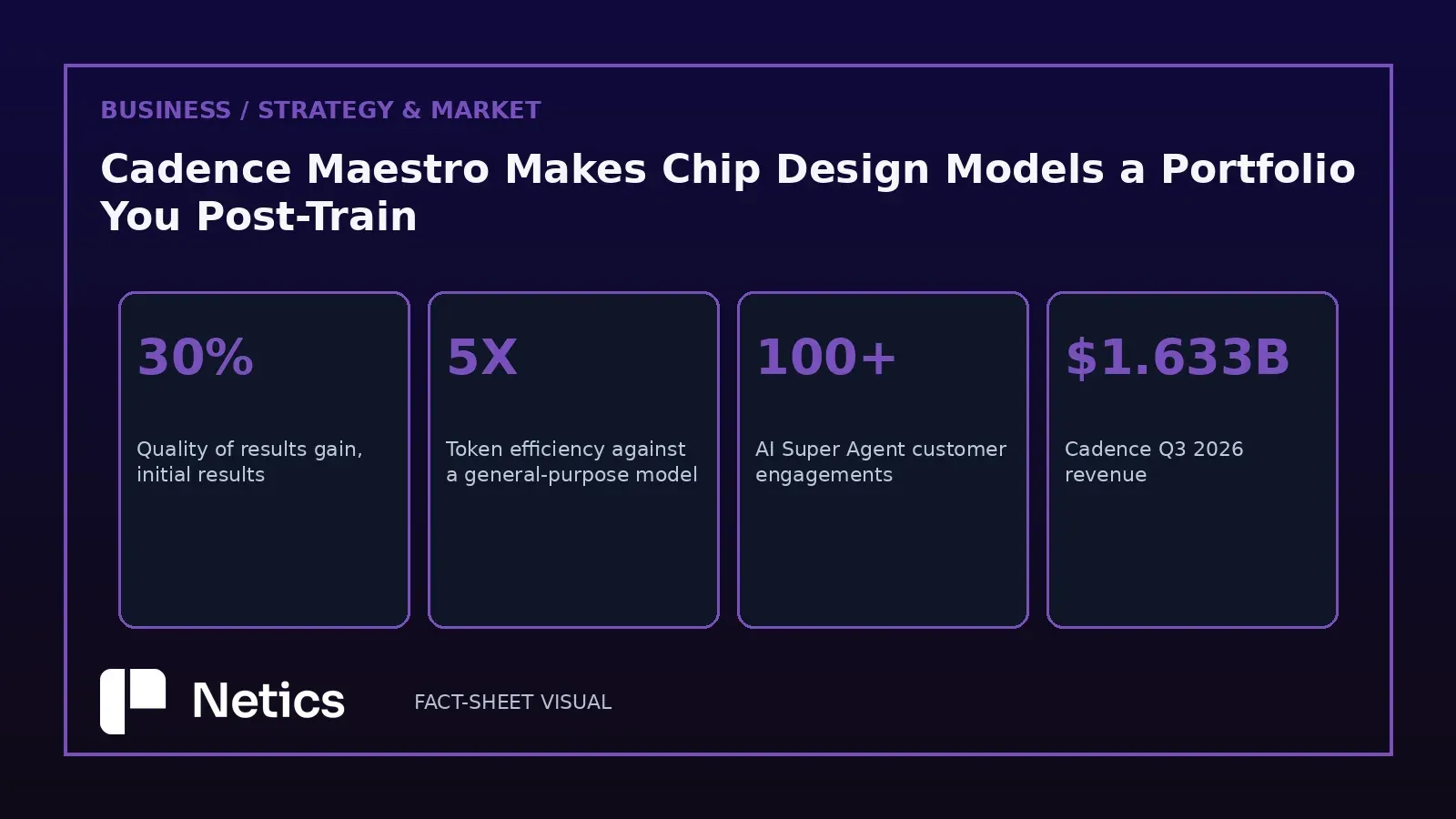
Cadence reports up to 30% improvement in quality of results and up to 5X greater token efficiency versus a general-purpose foundation model, described as initial design-workflow results. The release does not say which benchmark produced them, which design or node they used, or how quality of results was measured.
The supporting numbers from the quarterly results are easier to check and they explain the timing: revenue of 1.633 billion dollars, a backlog of 8.2 billion, more than 100 active customer engagements for the AI Super Agents, and a 2026 outlook raised to 21% growth. A vendor reporting that momentum launches a portfolio with confidence, and the release says several customer deployments are already underway.
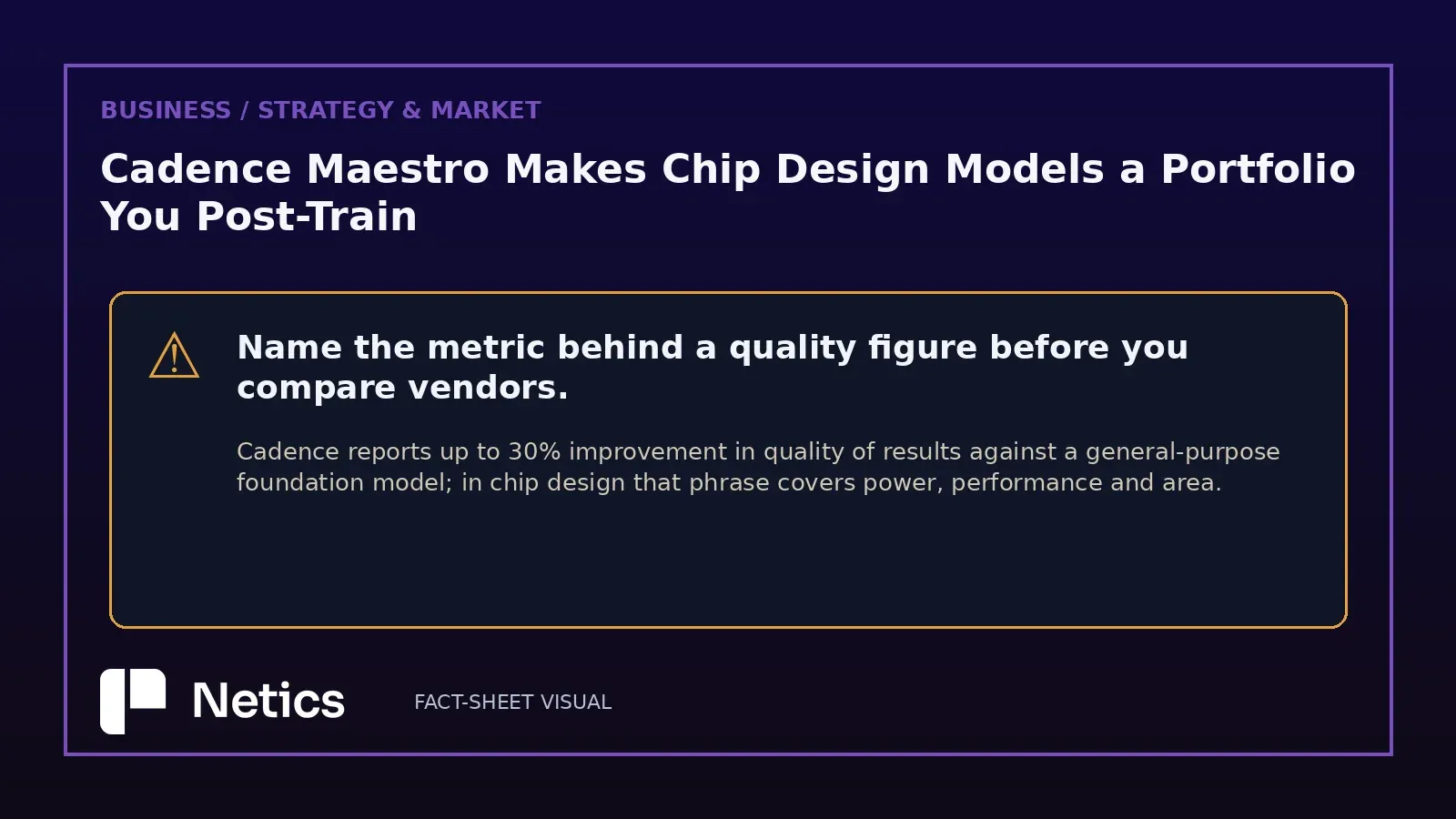
Four questions separate a pilot from a purchase. Which metric the quality figure uses, and on which design. Where the post-training runs, and who holds the resulting weights. Which evaluation harness scores the agent's output, and whether the customer can inspect it. And what the agent may change without a human approval step. The same approval question arises in automation pipelines with human approval outside chip design. Cadence has not published a general availability date for Maestro, and the early-access customers in the fourth quarter will be the ones who learn what the loop is worth on real silicon.
Sources
Source: Cadence Introduces Maestro, a Domain-Specialized AI Model Portfolio to Revolutionize Agentic Chip and System Design — cadence.com, 2026-10-26. Figures: Cadence Reports Third Quarter 2026 Financial Results — cadence.com, 2026-10-26. Context: Cadence unveils suite of AI models that chipmakers can run in-house — Reuters via channelnewsasia.com, 2026-10-26. Companion: NVIDIA Launches OpenShell Reference Architecture for Safe AI Agents — nvidianews.nvidia.com, 2026-10-21.