
LaunchDarkly’s AI SDK makes the control plane the runtime boundary
LaunchDarkly’s new AI SDK simplifies provider routing, agent graphs, judges, metrics, and traces, but convenience can deepen platform lock-in.

TL;DR
LaunchDarkly’s AI SDK offers a smaller integration surface, with a larger architectural decision behind it. Provider routing is useful only when the escape route is visible; agent graphs turn orchestration into a governed object; deferred judges improve latency, not evaluation quality by themselves; and metrics and traces become defaults—and potential lock-in points. Maintenance mode is a migration signal, not a deadline. The adoption test is smaller than a rewrite: verify provider fallback, node-level traces, evaluator context, failure handling, and evidence export before making AgentControl the only runtime boundary.
A smaller integration surface, with a larger architectural decision
LaunchDarkly’s new AI SDK is positioned as the recommended path for new AgentControl integrations in Python and JavaScript. The promise is practical: install the SDK and provider handlers, create a configuration, then call a convenience function or invoke(). Provider routing, agent execution, metrics, and traces move closer to the control plane instead of remaining scattered across application code.
That is real simplification. The source describes a previous setup that could involve as many as five packages, separate initialization for the base and AI SDKs, a tracker wrapped around model calls, and a hand-built OpenTelemetry pipeline. The new path moves client lifecycle, provider selection, and telemetry into the SDK. It also adds native agent graph execution, judges attached to individual graph steps, and evaluation that can be deferred for single calls.
The Netics question is not whether fewer integration lines are attractive. They are. The question is what becomes the new boundary: when a provider call, quality score, trace, and multi-step run all pass through one vendor’s configuration model, the integration becomes easier to start and harder to reason about independently. This article examines the smaller integration surface, provider routing and its escape route, agent graphs as governed objects, deferred judges, metrics and traces as potential lock-in points, maintenance mode as a migration signal, and the adoption test before a rewrite.
Provider routing is useful only when the escape route is visible
The SDK ships first-party handlers for OpenAI, Anthropic, and LangChain. LaunchDarkly also describes support for the Claude Agent SDK, including mapping Claude’s built-in tools such as web search and bash to LaunchDarkly tool definitions. Providers without a first-party handler can be registered as custom handlers. Routing occurs at call time, so a configuration can move a workload between OpenAI, Anthropic, or a custom provider without a deploy, provided the appropriate handler is installed.
For a team that is still comparing models, this is a meaningful operating advantage. A provider switch can become a configuration decision rather than a code migration. It may also let an organization keep its orchestration framework—LangGraph, OpenAI Agents, or the Claude Agent SDK—while using AgentControl to define and run the workflow.
But “switch providers without a deploy” is not the same as “remain provider-independent.” The handler is still an adapter with its own supported modes, error semantics, streaming behavior, tool mapping, and version lifecycle. A portability test should therefore include more than a successful completion. Record the request shape, tool calls, retries, latency, streaming chunks, token and cost fields, and failure modes for each handler. Then ask whether those records can be reproduced outside AgentControl without rewriting the application’s core logic.
The practical test is simple: can the team run the same representative workload with a direct provider client, preserve the authorization boundary, and still explain the resulting trace? If not, the product has reduced glue code by making itself part of the application’s execution model.
Agent graphs turn orchestration into a governed object
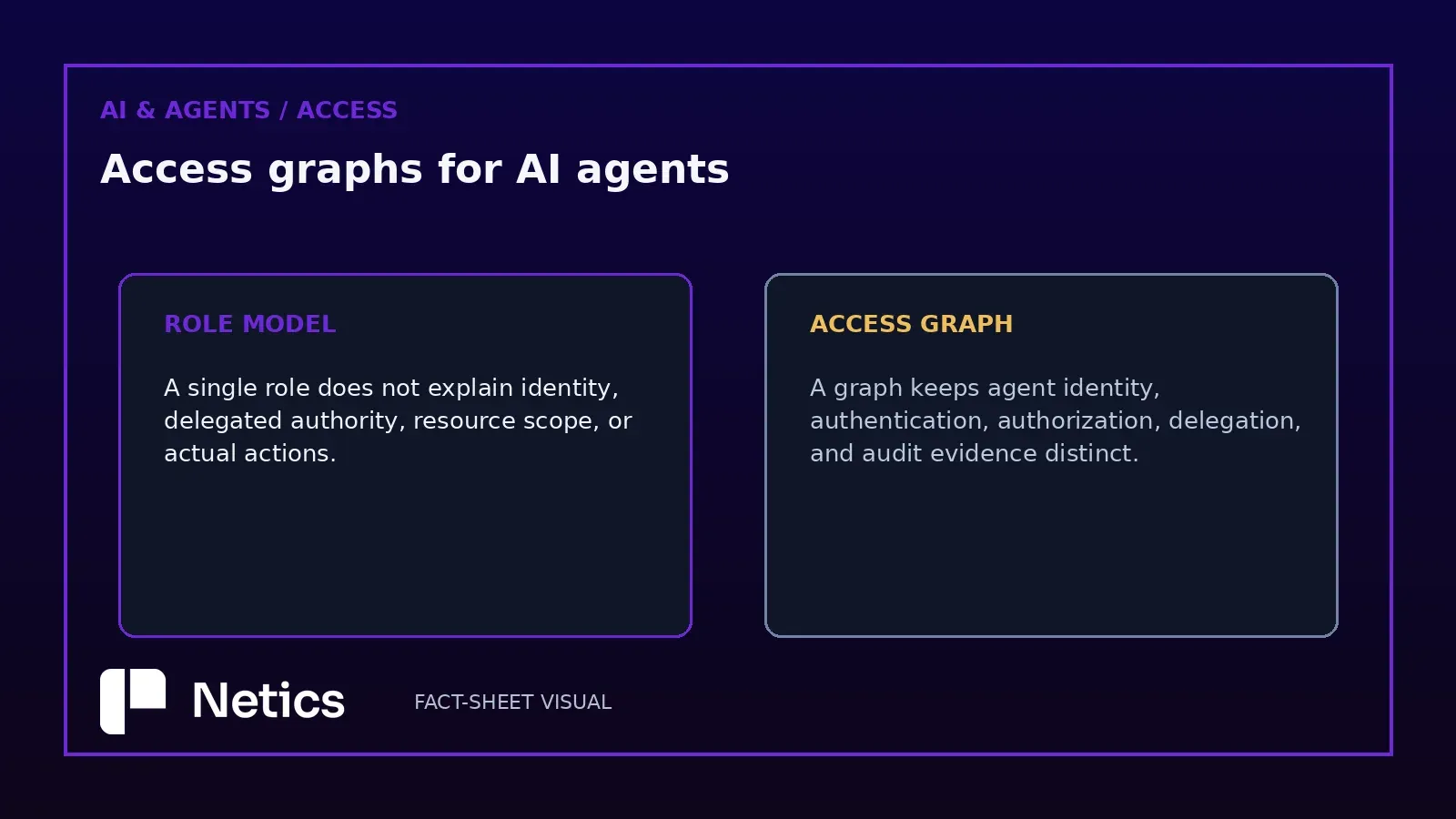
The SDK’s graph execution is more consequential than a shorter installation command. A multi-step agent graph can run from one call, with each step represented by its own agent configuration and routed independently. A workflow can therefore combine an OpenAI Agents step with a Claude step while the whole run is tracked and traced.
That creates a useful control point. Instead of treating an agent as an opaque application function, the platform can associate configuration, routing, evaluation, and telemetry with individual steps. A judge can attach to a graph node rather than scoring only the final workflow. In principle, that gives an operator a better answer to a familiar incident question: which step introduced the bad result?
It also changes what teams must version. Prompt text is not enough. A graph review should capture each node’s provider handler, tool definitions, configuration key, judge configuration, fallback behavior, and data access. A single top-level feature flag cannot explain a graph whose steps have different providers and permissions. The source says steps route independently; Netics’ operational implication is that ownership and rollback must be independent enough to match.
Consider a hypothetical support agent with a retrieval step, a policy step, and an action step. A final answer score may look acceptable even when the retrieval node returned stale context or the action node invoked a tool outside its intended scope. Node-level judges can narrow the signal, but only if the organization defines what each node is allowed to do and retains the evidence needed to investigate a disagreement.
For teams already building internal traces, this is where the convenience becomes a trade-off. The SDK gives a coherent runtime record, but the team must verify whether the record exposes the granularity it needs rather than merely producing a green dashboard.
Deferred judges improve latency, not evaluation quality by themselves
LaunchDarkly says judges can run wherever the agent runs and attach to individual graph steps. For single calls, scoring can be deferred to a worker so the user receives a faster response while the quality signal is attributed to the original request. Graph steps score inline, and streamed responses score after the final content chunk.
This is a sensible separation of user latency from evaluation work. It allows an organization to retain quality measurement without placing every judge on the critical path. It also introduces operational obligations that a product announcement naturally compresses: queue durability, replay policy, evaluator versioning, late-arriving scores, and what happens when the original trace or configuration has changed.
A deferred score is not just a number attached later. It is a measurement taken against a particular input, output, provider, graph version, judge version, and policy context. If those dimensions are not retained, a team can observe that quality fell without knowing whether the model changed, the judge changed, the workload drifted, or the asynchronous worker sampled a different population.
The evaluation design should also resist self-certification. A judge configured in the same control plane can be operationally convenient, but teams still need held-out test cases, human review for high-impact decisions, and failure categories that are not reduced to one aggregate score. The SDK can transport the score; it cannot decide whether the score is a valid proxy for the business outcome.
Metrics and traces become defaults—and potential lock-in points
The source says the tracker API is gone: metrics are recorded without remembering to wrap every model call, and traces require one additional telemetry package. The SDK initializes on the first AI call, reads the SDK key and provider keys from environment variables, and reports data to LaunchDarkly’s observability surfaces.
Removing manual instrumentation is valuable. Coverage that depends on every developer remembering a wrapper will degrade as code paths multiply. Automatic initialization also lowers the cost of instrumenting a first workload. For a small team, that can be the difference between an observable pilot and an untraceable one.
Yet automatic telemetry deserves the same scrutiny as automatic routing. Which fields are captured? Are prompts, tool arguments, outputs, identifiers, and errors redacted before they leave the process? Can retention and access be controlled per configuration? Can traces be exported in a standard format with enough parent-child relationships to reconstruct an agent graph elsewhere? These are not accusations about LaunchDarkly’s implementation; they are purchase questions for any platform that becomes the default recorder of runtime behavior.
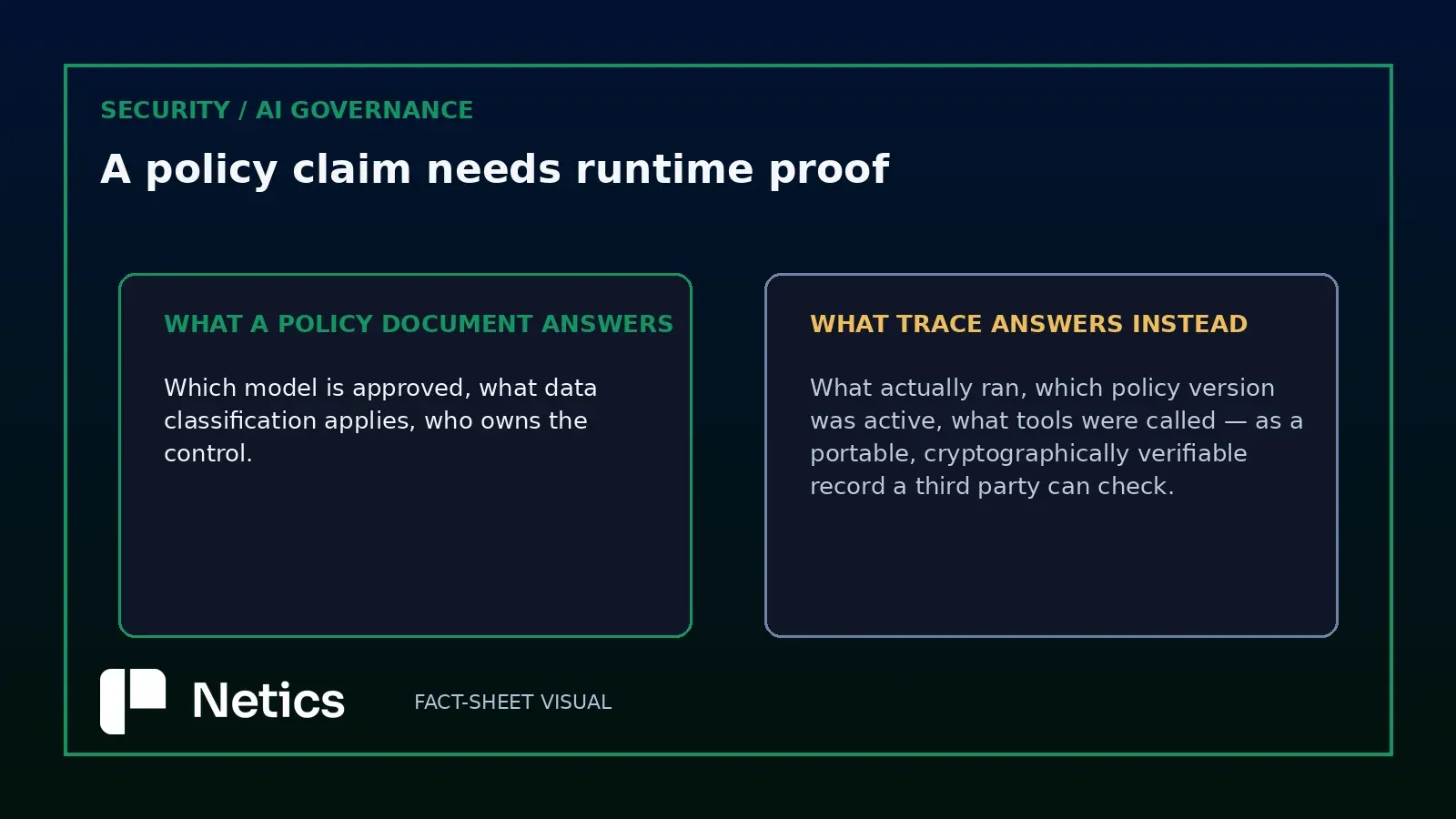
The visual distinction between a policy statement and runtime evidence matters here. A dashboard saying that a configuration is approved is different from a trace proving which provider, tool, graph step, and policy version actually ran. Teams should inspect a real trace from a failed or partial run, not only a successful demo. Observability earns its keep when it explains the exception.
Maintenance mode is a migration signal, not a deadline
LaunchDarkly says the legacy Python and Node.js AI SDKs remain supported, receive fixes, and have no migration deadline. That caveat matters. Teams do not need to convert a stable production workload merely because a newer SDK exists.
At the same time, the announcement says new capabilities will land in the LaunchDarkly AI SDK and that the older SDKs move to maintenance mode. That creates a strategic signal without a calendar deadline. New work in Python or JavaScript will naturally accumulate around the newer abstractions: invoke(), handlers, graph execution, judges, and the new telemetry path. Waiting may preserve short-term stability while increasing the eventual distance between the legacy call sites and the supported capability set.
A measured migration plan should inventory current calls, trackers, provider-specific assumptions, trace consumers, and rollback paths. Run a representative workload through both paths where possible. Compare not only output quality but also tool behavior, error handling, latency, cost visibility, trace completeness, and evaluator attribution. Keep the legacy path available until the new path can explain a failure and be disabled without losing the evidence needed to diagnose it.
For a broader Netics view on why agent platforms need explicit boundaries before they become infrastructure, see our analysis of permissions before platforms.
The adoption test is smaller than a rewrite
The LaunchDarkly AI SDK is a credible response to a real integration problem: provider-specific glue, repeated instrumentation, and agent orchestration spread across application code. Python and JavaScript teams using AgentControl may get a cleaner starting point, especially when they need multi-step execution and quality signals rather than a single completion.
Netics would make adoption conditional on five demonstrations:
- A direct-provider fallback can run a representative request without the SDK.
- A trace identifies every meaningful graph step, provider, tool call, and configuration version.
- Deferred judges preserve the original request context and evaluator version.
- A provider handler failure has a documented retry, fallback, and rollback behavior.
- Removing the SDK does not erase the organization’s only copy of its operational evidence.
If those tests pass, the convenience is being purchased with a known dependency rather than an accidental one. If they fail, the SDK may still be useful for a bounded experiment, but it should not quietly become the only place where routing decisions, quality scores, and traces exist.
Teams assessing an AI control plane can keep the trade-off explicit through Netics: reduce integration work, but preserve the ability to observe, evaluate, and leave.
Sources
[1] Introducing the LaunchDarkly AI SDK — LaunchDarkly, 2026-09-03.
[2] LaunchDarkly AI SDK documentation — linked by the primary source for Python and Node.js references.
Source: Introducing the LaunchDarkly AI SDK — launchdarkly.com, 2026-09-03