
Apple’s Hybrid AI Strategy Puts the Control Plane at the Center
"Apple is not abandoning apps or services. Its more durable AI strategy is a hybrid control plane that routes work across the device, Private Cloud Compute, and external models."

TL;DR
- Apple’s documented direction combines on-device Foundation Models, local model-provider integration, and Private Cloud Compute for requests that need more capability.
- The strategic asset is not simply a larger Mac or a replacement for every app. It is the control plane that decides where inference runs, what context leaves the device, which tools an agent may call, and how outcomes are observed.
- French and EU SMEs should evaluate local, private-cloud, and external API paths by workload, data sensitivity, latency, quality, cost, and operational ownership—not by hardware enthusiasm.
A useful provocation is circulating: that AI could move value away from conventional software and toward hardware, memory, context, and permission to act. That is not proof Apple is abandoning apps, services, or the cloud. Apple’s own material points to a more commercially durable answer: a hybrid system in which the device remains the trusted first stop, Private Cloud Compute handles harder requests, and developers can connect other model providers where the framework allows it.
The distinction matters for buyers. A company choosing an AI architecture is not choosing “local” or “cloud” once. It is designing a routing policy. Netics has made the same operational point in Production AI Starts Beyond the Model: the model is only one component of a production system. In Apple’s case, the control plane around the model may become the more important product boundary.
The device is the first inference tier, not the whole stack
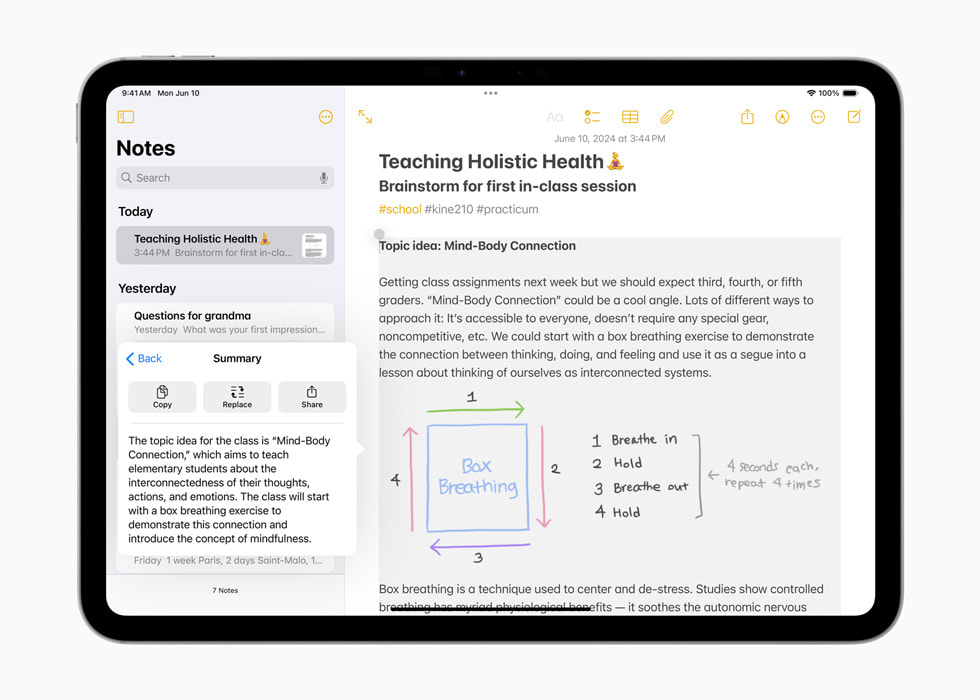
Apple introduced its Foundation Models framework as an on-device system that can work offline and provide inference without a per-token API charge. That is valuable, but “free” here does not mean costless. The organization still pays for capable hardware, memory, battery or electricity, software integration, evaluation, updates, and support. A local request also consumes a scarce resource: the device’s compute capacity while the user is trying to work.
Local inference nevertheless has three strong properties. Data can remain on the endpoint for the operation. Latency can be predictable when the model and context fit. And a product team can avoid turning every small classification, extraction, or rewrite into a metered network request. Those properties make local models attractive for personal context, lightweight tool selection, document pre-processing, and tasks that must work without connectivity.
The constraint is fit. A local model that is adequate for routing may be poor at a complex legal synthesis. A model that can summarize a short note may not safely operate over a large, multilingual business corpus. The question is not whether Apple hardware can run a model. It is whether the selected model, context window, thermal envelope, and evaluation threshold are sufficient for one defined workload.
The memory discussion is therefore more consequential than a simple chip race. More unified memory can make larger models or longer contexts feasible, but capacity does not automatically deliver better answers, lower total cost, or safe agency. SMEs should measure sustained throughput, concurrency, context size, energy, failure rate, and human-review time on their own tasks before buying a memory tier.
Private Cloud Compute is the bridge between privacy and capability
Apple’s 2024 Apple Intelligence architecture described a split: some requests are processed on device, while more complex requests can be sent to Private Cloud Compute. The important strategic signal is coexistence. Apple is not presenting local processing as a universal replacement for server inference; it is presenting a privacy-oriented path for workloads that exceed the device.
The bridge changes the procurement question. A business does not need to force every task onto an employee’s laptop to retain a privacy objective. It can define which context is eligible to leave the endpoint, which server-side processing path is acceptable, and which tasks must fail closed when the policy cannot be satisfied. The exact guarantees still need to be checked against the product, OS version, region, and contractual requirements. “Private cloud” is not a synonym for “no risk.” It is an architectural tier with its own identity, retention, access, and audit questions.
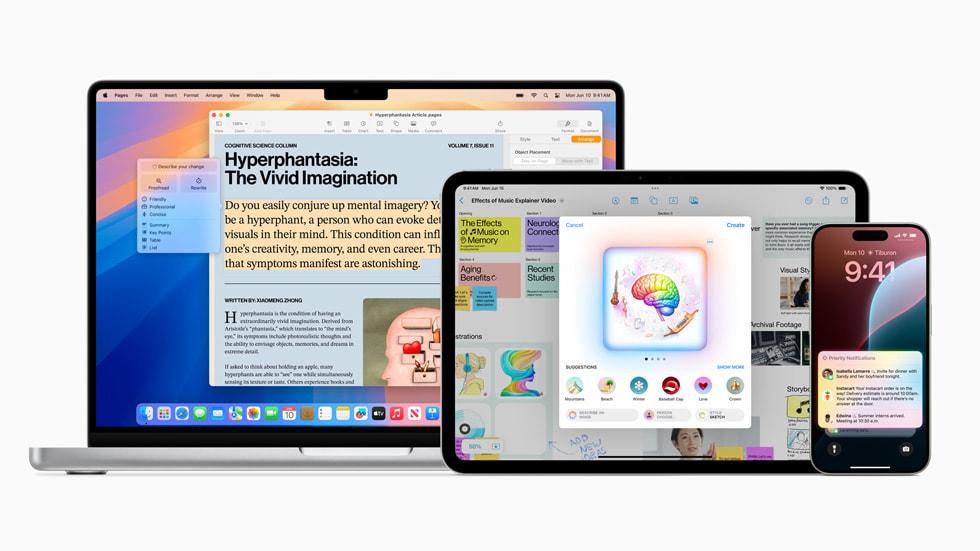
For Apple, this hybrid design also protects the installed base and services ecosystem. A device can stay the user-facing control point while cloud capacity supplies occasional depth. That is very different from a post-app world in which apps disappear. Apps can remain the places where people express intent, review a result, approve an action, and recover from failure. AI changes the interaction and orchestration layer; it does not make every application irrelevant.
Model routing becomes the real product decision
A useful routing policy starts with the task, not the model brand. Send a request locally when its sensitivity is high, its quality bar is moderate, its context is bounded, and the device can meet the latency target. Use Private Cloud Compute when the request needs more capability but should remain inside a controlled privacy architecture. Use an external API when frontier quality, specialized capability, burst capacity, or cross-platform delivery justifies the additional dependency.
The policy needs explicit fallbacks. What happens when the device is offline? What happens when the private tier is unavailable? Is the external API allowed to receive the original document, or only a redacted representation? Can a low-confidence local result ask for human review rather than silently escalating to a cloud provider? Routing is governance expressed as code.
Apple’s WWDC26 developer material also points toward a broader model-provider layer around Foundation Models and Core AI. The opportunity is interoperability, but interoperability can become provider sprawl. Each added model brings different behavior, logging, residency, terms, latency, and evaluation maintenance. A clean interface does not make those operational differences disappear.
The Netics recommendation is to keep a routing ledger. For every workload, record the approved tiers, data classes, maximum spend, quality floor, timeout, escalation rule, and owner. Do not let a framework default become an undocumented data-transfer policy.
Permissions decide whether local agency is useful
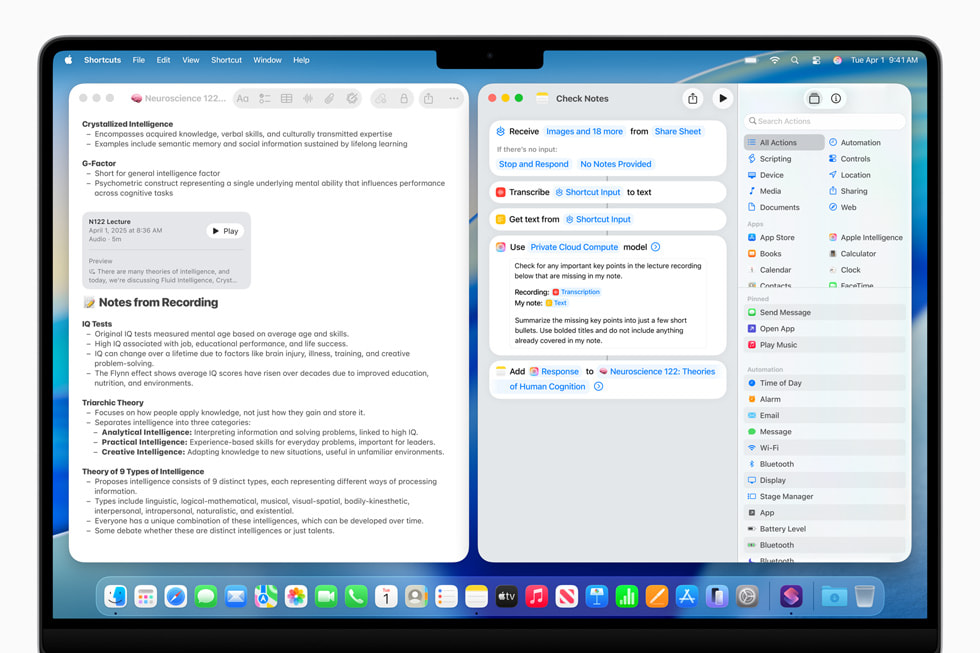
The phrase “AI on the device” becomes more serious when the system can act across files, messages, calendars, browsers, or business tools. Inference location answers where reasoning happens. It does not answer what the agent is allowed to do.
A safe design separates read permissions from write permissions, previews from irreversible effects, and user context from shared company data. A local agent might be allowed to classify an inbox but not send a message; draft a purchase order but not approve it; search a project folder but not export it. The permission should be scoped to the task, visible to the user, and revocable without uninstalling the entire application.
This is where apps remain important. They can expose the action boundary, present a confirmation, show the affected records, and provide a recovery path. A model may suggest an action, but an application or policy service should enforce whether that action can happen. Treating the model as the authority is a category error, regardless of whether the model runs locally or in the cloud.
Observability must follow the request across tiers
Hybrid systems are harder to debug because one user request can cross several execution locations. A production trace should identify the task class, policy decision, model tier, model version, context classification, tool calls, latency, token or compute estimate, fallback path, and human approval. It should not expose sensitive content merely to make the trace useful.
The minimum useful dashboard is not “accuracy.” It is a matrix: quality by workload and tier, escalation rate, local failure rate, cloud-transfer rate, median and tail latency, cost per completed task, and unsafe-action attempts. Add a route-change alarm. A silent shift from local inference to paid APIs can become a budget incident before anyone notices a quality problem.
This requirement is easy to miss when the interface feels consumer-simple. The user sees one assistant; the operator inherits multiple runtimes, policies, versions, and bills. A hybrid strategy without observability is not resilience. It is invisible complexity.
The cost case is a workload equation, not a Mac sticker
Local economics depend on utilization. A device purchased for an employee may already be present, making marginal inference cost attractive. A dedicated high-memory machine used for a few prompts per hour may be an expensive idle appliance. An API can be cheaper for bursty demand when it avoids hardware, power, maintenance, and model-update work. The same API can become expensive when a repetitive, high-volume workload is poorly routed.
Compare total cost per completed task, not price per token alone. Include hardware depreciation, electricity, engineering time, model evaluation, monitoring, privacy review, provider fees, downtime, and the cost of human correction. Keep quality and completion time in the denominator. A cheap answer that requires an analyst to redo the work is not cheap.
For a French SME, this often favors a staged design. Start with a narrow local workload whose data should stay on the endpoint. Add a controlled private-cloud path for heavier requests. Permit external APIs only for named use cases with a contract, retention position, region, and budget owner. Reassess after real traces exist. Do not buy 128 GB or 512 GB because a keynote makes capacity feel like strategy.
What French and EU SMEs should decide first
The European question is not whether local AI is morally superior to cloud AI. Legal, contractual, sectoral, and security obligations vary by data and use case. The useful decision is more concrete: which information may leave which boundary, for which purpose, under whose authority, with what evidence and recovery path?
A French logistics company might keep scheduling notes and lightweight extraction local, send a redacted planning problem to a controlled private tier, and reserve an external API for a specialized translation or forecasting task after review. That is a hypothetical operating model, not legal advice. Its value is that the route is explicit. The company can test quality, cost, residency, retention, and incident response per workload instead of arguing about “sovereign AI” as a slogan.
Apple’s hybrid architecture is commercially plausible precisely because it avoids a false choice. It can make the endpoint more useful, preserve apps as trusted action surfaces, use Private Cloud Compute for depth, and leave room for model providers and APIs. The strategic battleground is the control plane: routing, memory, permissions, observability, and economics.
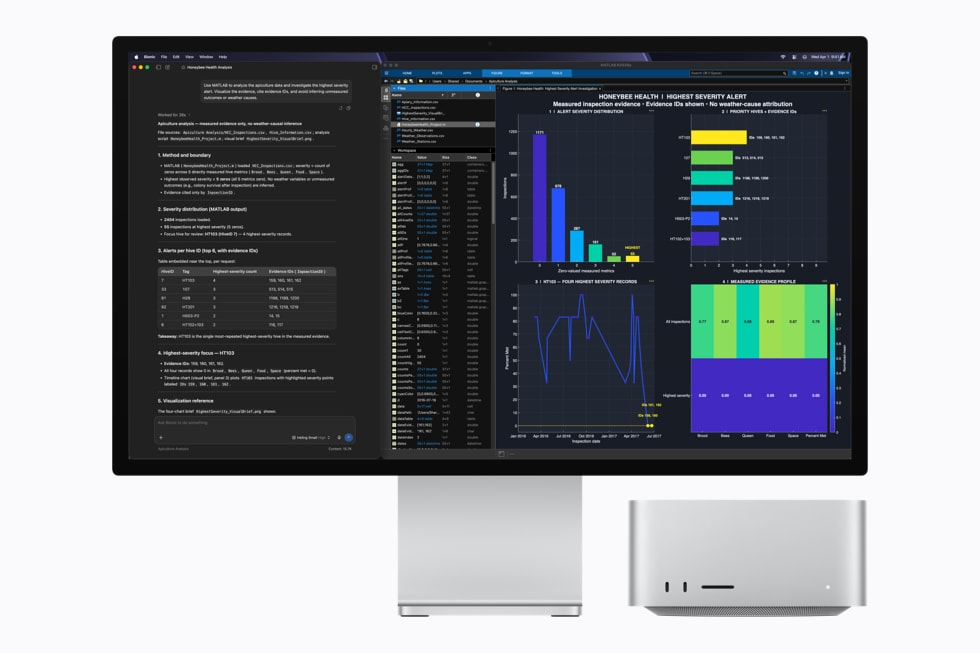
The winners in this market will not be the teams that merely own the biggest local model. They will be the teams that can explain, for every request, why it ran there, what it was allowed to see, what it cost, and who can stop or reverse the result. For help designing that decision boundary, visit Netics or book a free 30-minute audit.
Sources
- Apple, “Introducing Apple Intelligence for iPhone, iPad, and Mac,” 10 June 2024: https://www.apple.com/newsroom/2024/06/introducing-apple-intelligence-for-iphone-ipad-and-mac
- Apple, “Apple Intelligence gets even more powerful with new capabilities across Apple devices,” 9 June 2025: https://www.apple.com/newsroom/2025/06/apple-intelligence-gets-even-more-powerful-with-new-capabilities-across-apple-devices/
- Apple Developer, WWDC26 session 339, “Bring an LLM provider to the Foundation Models framework”: https://developer.apple.com/videos/play/wwdc2026/339
- Apple Developer, “WWDC26 Apple Intelligence guide”: https://developer.apple.com/wwdc26/guides/apple-intelligence/
- Apple, “Apple unveils a more powerful Mac mini featuring the all-new M6 and M5 Pro,” 25 August 2026: https://www.apple.com/newsroom/2026/08/apple-unveils-a-more-powerful-mac-mini-featuring-the-all-new-m6-and-m5-pro/
- Apple, “Apple introduces new Mac Studio with M5 Max and M5 Ultra,” 25 August 2026: https://www.apple.com/newsroom/2026/08/apple-introduces-new-mac-studio-with-m5-max-and-m5-ultra/
Source: Apple and Apple Developer primary sources — 2024–2026.