
Azure Opens Direct Virtualization to OpenShift Virtualization
"Red Hat and Microsoft expanded their engineering work on 18 November 2026 so OpenShift Virtualization can run on Azure VMs through Microsoft direct virtualization. KubeVirt gains support fo

TL;DR
- OpenShift Virtualization is a Red Hat add-on that runs virtual machines as Kubernetes objects alongside containers, and Azure Red Hat OpenShift is the managed OpenShift service that Red Hat and Microsoft engineer and operate together on Azure.
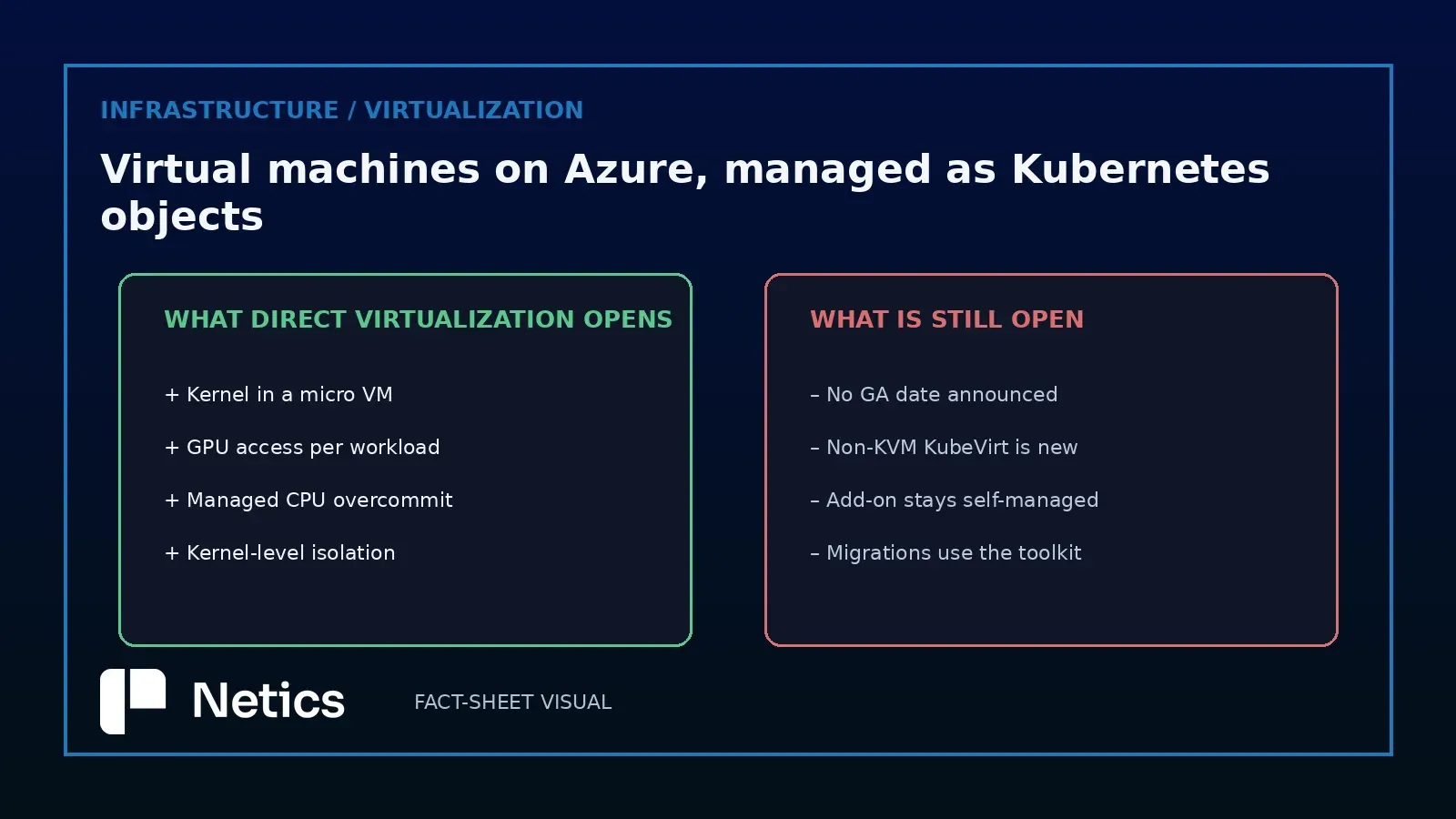
- On 18 November 2026 Red Hat said OpenShift Virtualization on Azure Red Hat OpenShift will use Microsoft direct virtualization, which runs lightweight Linux kernels in micro VMs and gives those guests a direct pipeline to hardware such as GPUs.
- The change reaches upstream: Microsoft is one of the first vendors in the KubeVirt community to extend the project to a non-KVM hypervisor, with joint work in KubeVirt, libvirt, QEMU and the Linux kernel.
- Red Hat describes the offer with managed CPU and memory overcommit that reduces stranded capacity, which makes overcommit an explicit control on a platform that treats virtual machines as cluster objects.
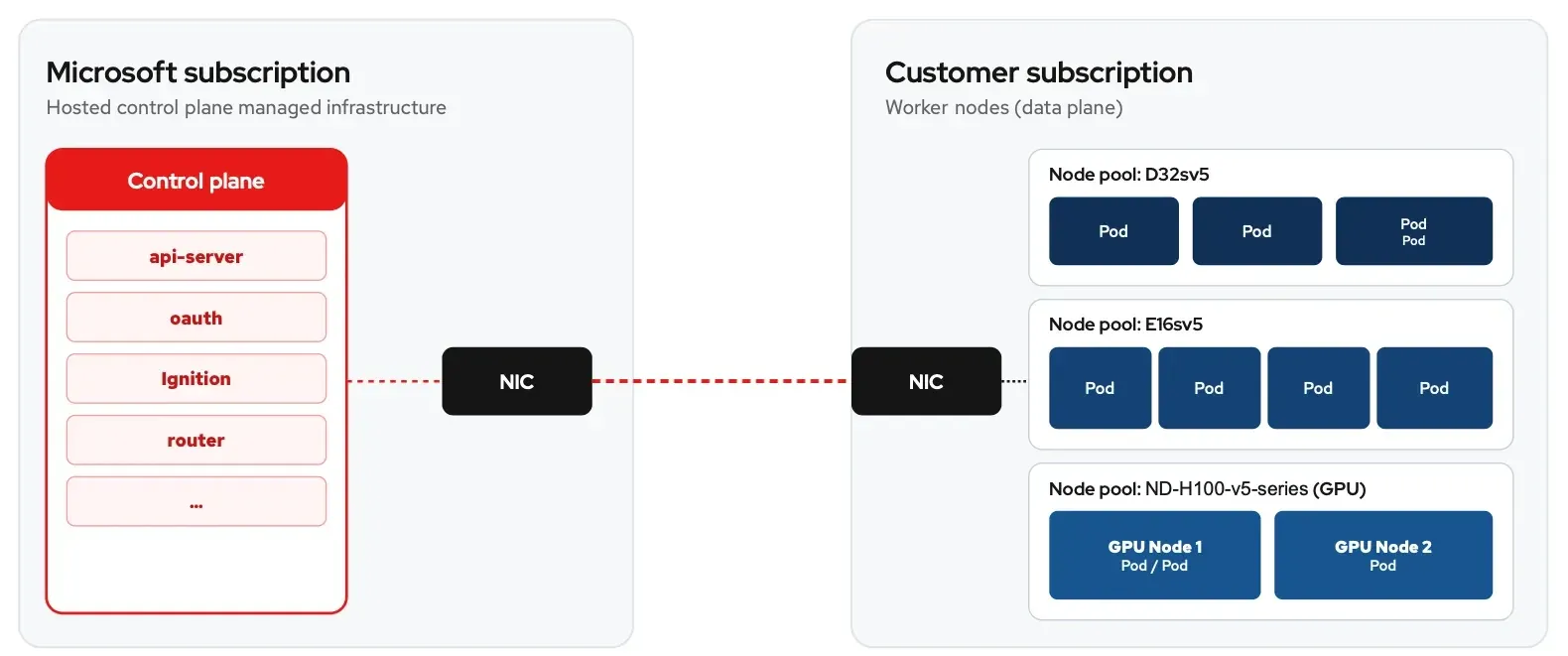
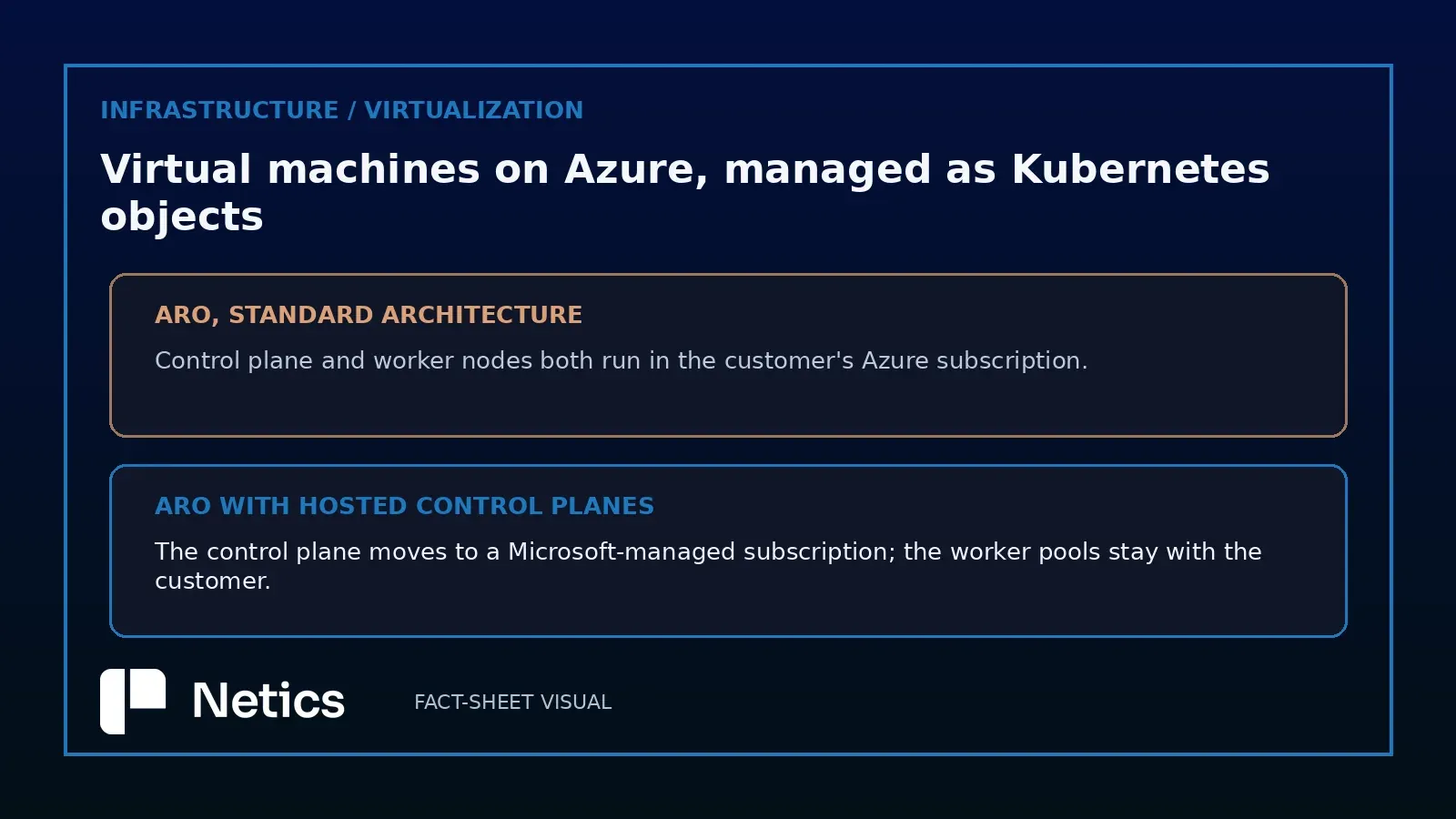
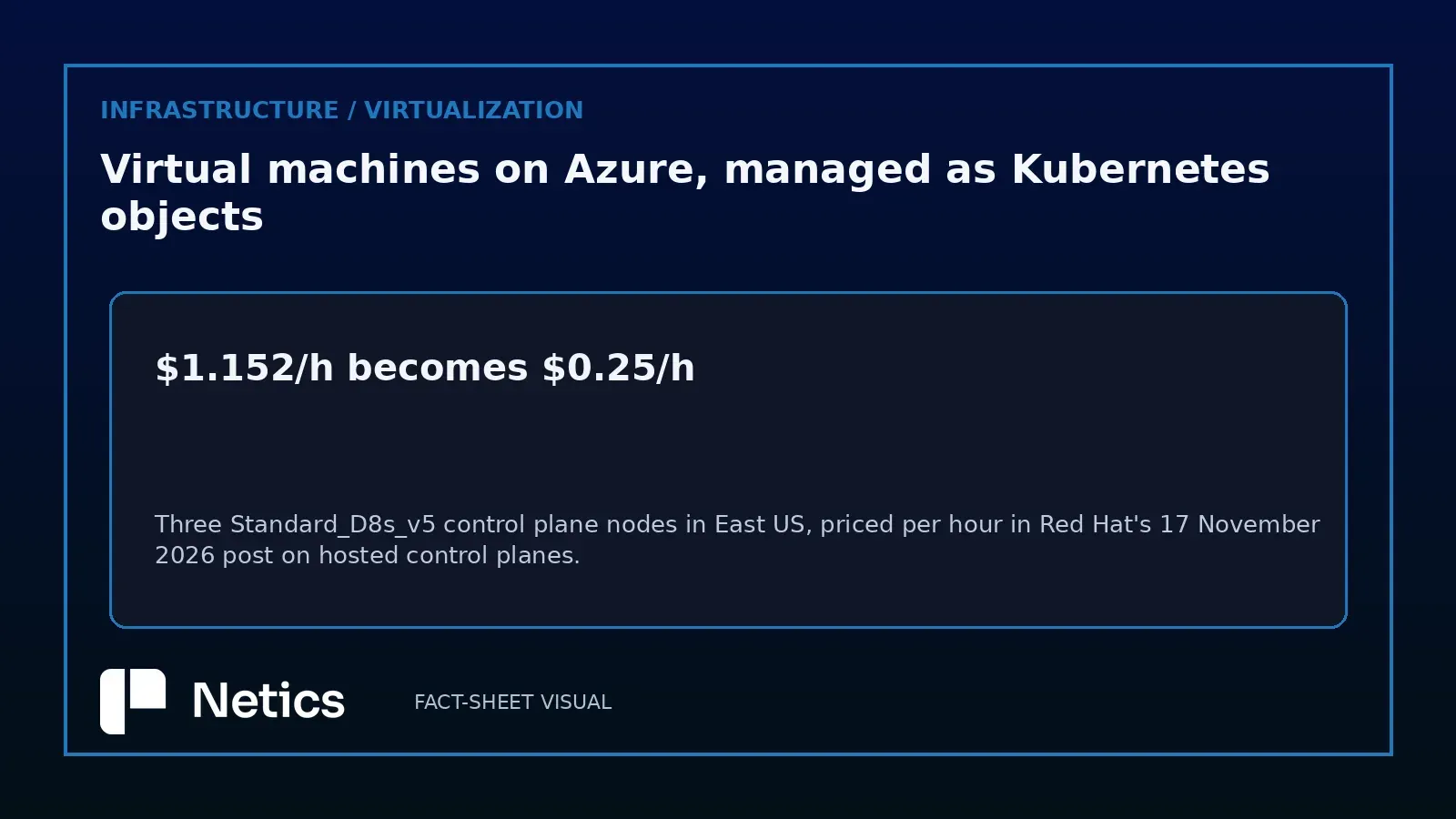
- The cost line that moved first belongs to hosted control planes, generally available since 17 November 2026: three Standard_D8s_v5 control plane nodes priced at $1.152 per hour become $0.25 per hour of control plane cost in East US.
- No general availability date for the virtualization capability was announced, so a migration plan has three questions to answer first: the date, the sizing model under overcommit, and who owns the add-on.
- An estate that runs its own hypervisor keeps its own cost model, and it gains a second cloud destination to compare against what it operates today.
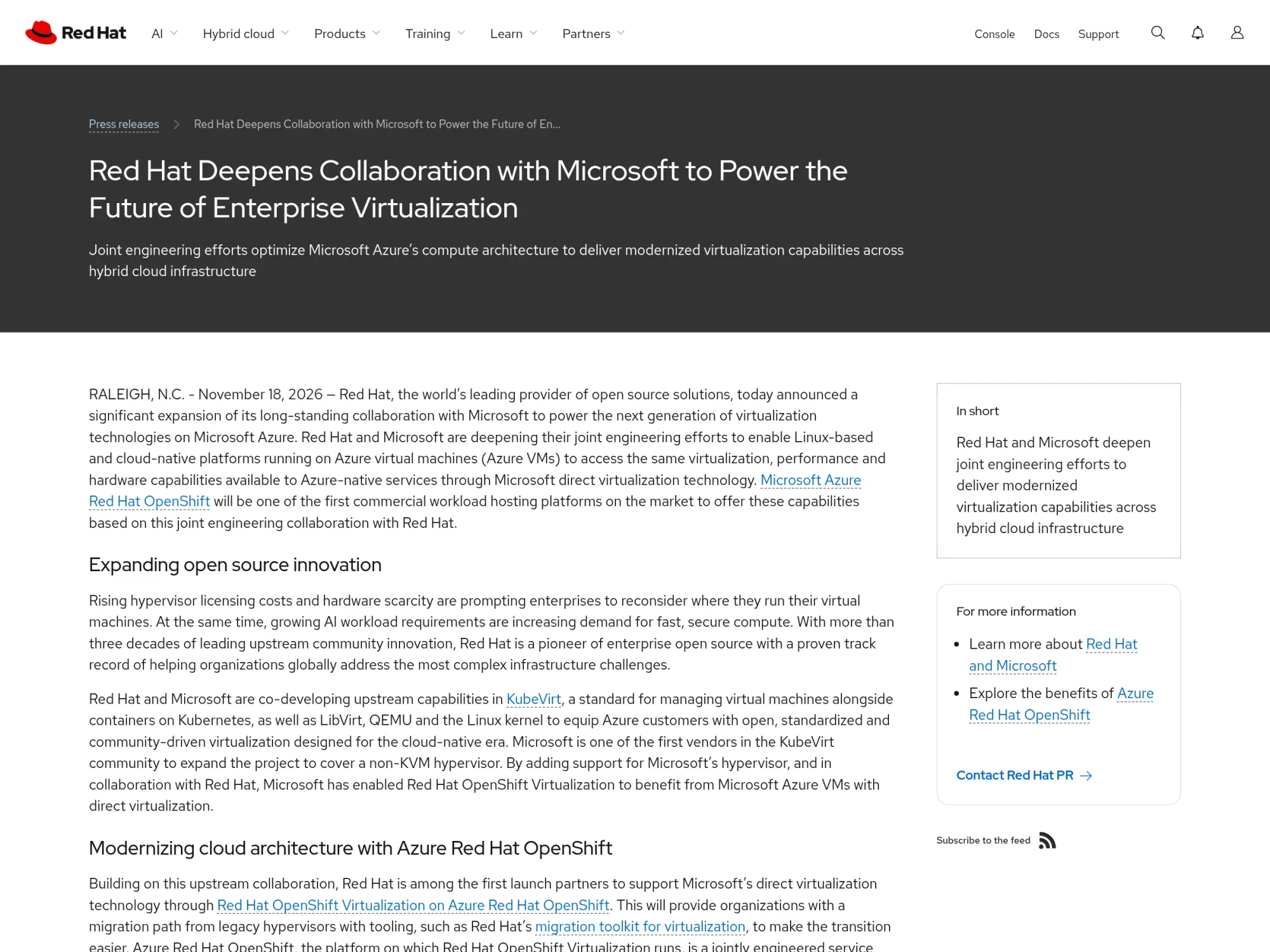
Red Hat published an expanded Microsoft collaboration on 18 November 2026 with a specific promise inside it: virtual machines managed by Red Hat OpenShift Virtualization will run on Azure VMs with the same virtualization, performance and hardware access that Azure-native services receive, through a Microsoft feature called direct virtualization. The announcement carries a second, quieter change that matters more for anyone planning a migration: KubeVirt, the project that turns virtual machines into Kubernetes objects, now supports a hypervisor other than KVM.
What direct virtualization exposes to a Linux guest
Red Hat's description of the mechanism is concrete. Direct virtualization executes lightweight Linux kernels in micro VMs, and it provides a direct pipeline between hardware, GPUs named explicitly, and isolated workloads. The press release frames Azure Red Hat OpenShift as one of the first commercial workload hosting platforms on the market to offer these capabilities.
SiliconANGLE's report of 17 November 2026 adds the framing Red Hat avoids: direct virtualization gives performance-sensitive workloads near-bare-metal access to the underlying hardware, which is the property that decides whether a virtual machine on a hyperscaler behaves like a virtual machine in a private datacenter.
KubeVirt gains a second hypervisor backend
KubeVirt exists to run virtual machines through Kubernetes APIs, and its original implementation assumed KVM on the host. Red Hat states that Microsoft is one of the first vendors in the KubeVirt community to expand the project to cover a non-KVM hypervisor, and that the two companies are co-developing upstream capabilities in KubeVirt, libvirt, QEMU and the Linux kernel.
That is the part with a life beyond Azure. Work merged upstream lands in a project any platform can build on, and Red Hat's chief technology officer describes the result as "an open, high-performance foundation that allows customers to modernize legacy VMs and run next-generation AI workloads on a single, unified platform".
Overcommit appears as a managed control
The press release lists the benefits of the joint offer, and one line deserves attention: efficient workload consolidation per virtual machine through managed CPU and memory overcommit, which Red Hat says eliminates stranded capacity and lowers total cloud costs. SiliconANGLE reports the same property as support for CPU and memory overcommitment that lets more workloads share available infrastructure.
Overcommit is the lever that decides consolidation ratios on any hypervisor, and on a cloud VM it interacts with the sizing of the underlying instance. Making it a managed property of the platform moves a decision that used to live in a hypervisor configuration file into the platform's own control plane, where the allocation becomes visible to whoever runs the cluster.
The cost line that moves first
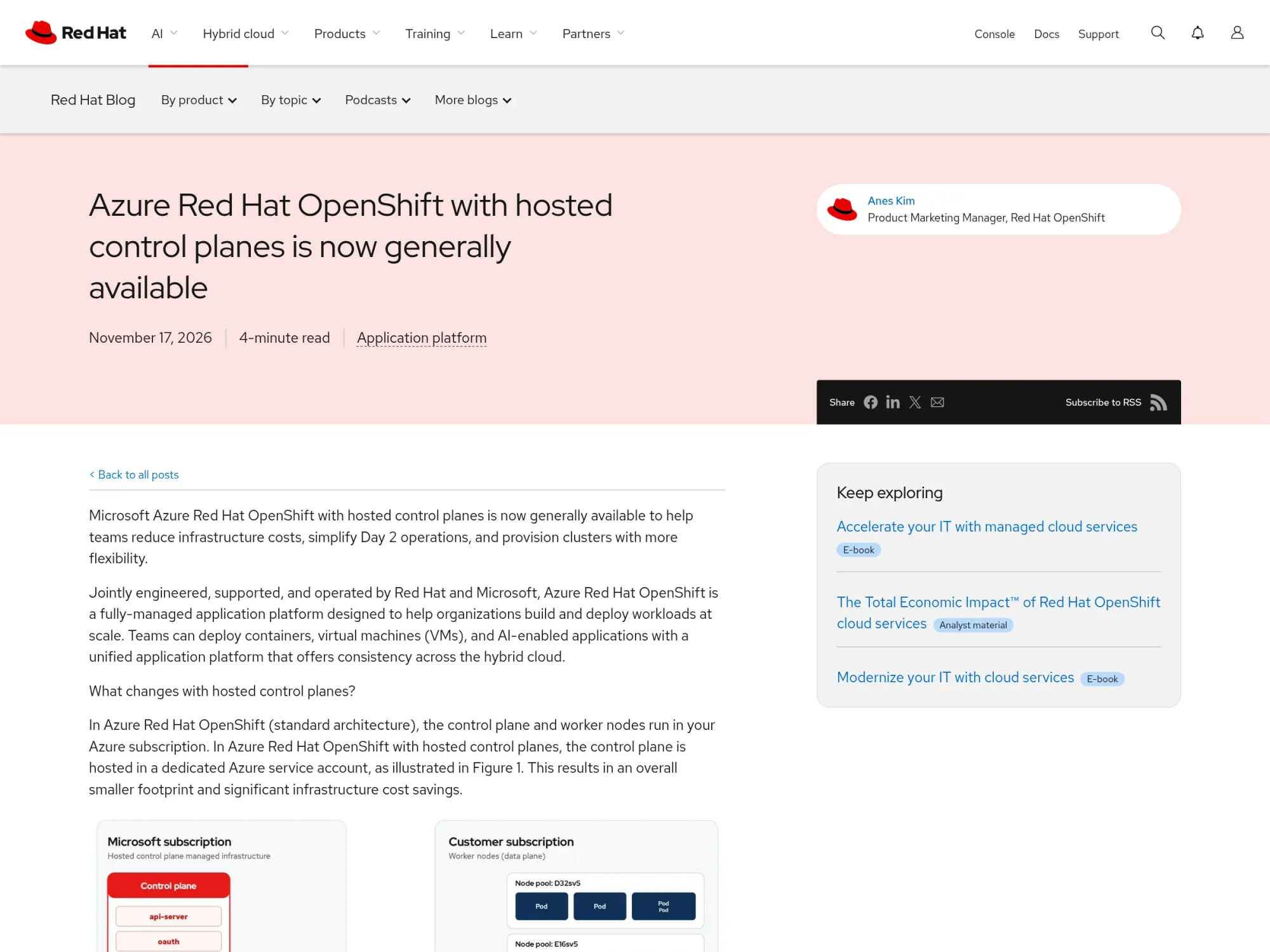
Hosted control planes reached general availability on 17 November 2026, and Red Hat published the arithmetic with it. Three control plane nodes at the smallest supported size, Standard_D8s_v5, cost $0.384 per hour each, or $1.152 per hour in East US; with hosted control planes the control plane cost becomes $0.25 per hour.
That number belongs in the same conversation as the virtualization announcement, because a virtual machine estate on Azure pays for the cluster that hosts it before it pays for a single guest. Red Hat positions the whole collaboration against hypervisor licensing costs, and SiliconANGLE notes that Broadcom has open-sourced software for provisioning and managing virtual machines with Kubernetes protocols, which makes the pricing pressure a market condition that more than one vendor is answering.
Three questions before a migration plan changes
SiliconANGLE states plainly that the companies did not announce a general availability date for the new virtualization capabilities. That single fact governs how the announcement belongs in a plan.
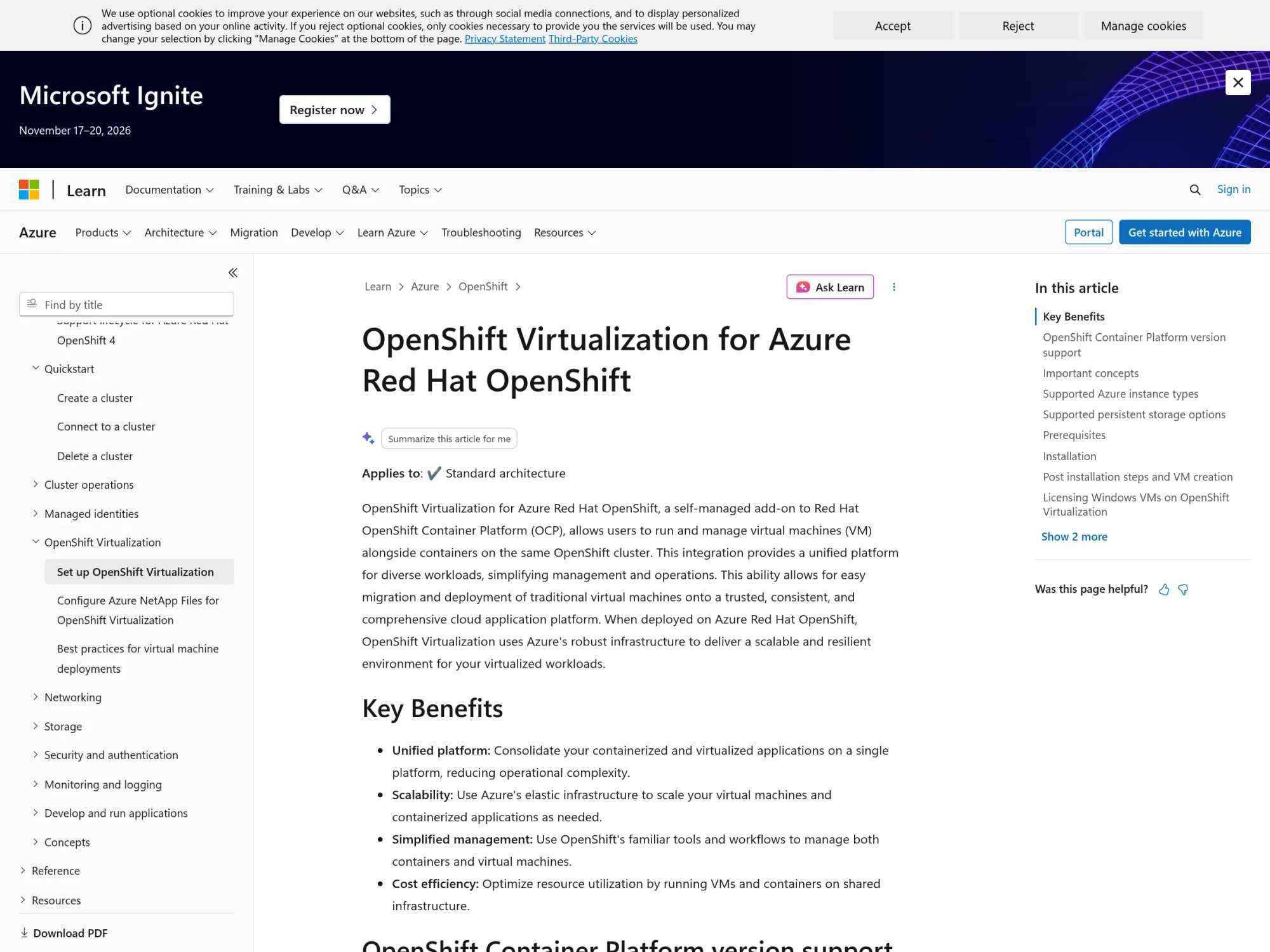
The first question is the date, and it decides whether a migration wave can name Azure Red Hat OpenShift as its destination or has to wait. The second is the sizing model under overcommit, because a consolidation ratio taken from a private hypervisor does not transfer automatically to a platform that manages allocation itself. The third is ownership: Microsoft's documentation describes OpenShift Virtualization on ARO as a self-managed add-on to OpenShift Container Platform, which means the upgrade and support boundary sits with the team running the cluster.
What an estate with its own hypervisor keeps
A private estate that already runs its own hypervisor keeps the properties a cloud VM does not change: a known failure domain, a datastore it can inspect, and a cost model it set itself. What this announcement adds is a second destination for the virtual machines that have to move, with the same Kubernetes API in front of them.
For a team weighing that move, the sovereign infrastructure and cloud exit work and a cluster that consolidates virtual machines and containers share one prerequisite: a per-application record of size, dependency and restart behaviour. The consolidation argument on the container side follows the same logic as in-place pod rightsizing on EKS, where the platform moves the allocation and the operator stops doing it by hand.
The announcement settles one architectural question and leaves the commercial and operational ones where they were. A migration plan can name the destination; it still has to date it and size it.
Sources
- Red Hat Deepens Collaboration with Microsoft to Power the Future of Enterprise Virtualization — Red Hat, 18 November 2026
- Red Hat and Microsoft bring OpenShift virtual machines to Azure — SiliconANGLE, 17 November 2026
- Azure Red Hat OpenShift with hosted control planes is now generally available — Red Hat, 17 November 2026
- OpenShift Virtualization for Azure Red Hat OpenShift — Microsoft Learn
Source: "Red Hat Deepens Collaboration with Microsoft to Power the Future of Enterprise Virtualization" — redhat.com, 2026-11-18, https://www.redhat.com/en/about/press-releases/red-hat-deepens-collaboration-microsoft-power-future-enterprise-virtualization, with SiliconANGLE's report at https://siliconangle.com/2026/11/17/red-hat-and-microsoft-bring-openshift-virtual-machines-to-azure/, Red Hat's hosted control planes post at https://www.redhat.com/en/blog/azure-red-hat-openshift-hosted-control-planes-now-generally-available and the Microsoft Learn page at https://learn.microsoft.com/en-us/azure/openshift/howto-create-openshift-virtualization; all fetched and saved on 2026-11-20 under sources/2026-11-20/openshift-virtualization-azure-direct-virtualization/.