
NVIDIA’s IBC 2026 Media Stack Puts Real-Time AI on Trial
NVIDIA’s IBC 2026 announcements connect live inference, media exchange and localization. Netics maps the controls broadcasters should validate before deployment.

TL;DR
NVIDIA’s IBC 2026 announcement is less a single broadcast product than a connected operating model: GPU-accelerated AI for Media functions, Holoscan for Media with the Media Exchange Layer, sports-specific model playbooks and a live localization workflow. NVIDIA reports capabilities for authenticity analysis, body-pose estimation, frame generation, super resolution, HDR conversion, lip-sync and speaker detection. The vendor also reports sports evaluation gains and describes deployment across on-premises, edge, cloud, hybrid and air-gapped environments. Netics’ reading is more demanding: broadcasters should validate latency budgets, pipeline behavior, GPU capacity, observability, rights boundaries and failure handling with their own feeds before treating a polished IBC demo as production evidence.
NVIDIA is assembling a live media operating layer
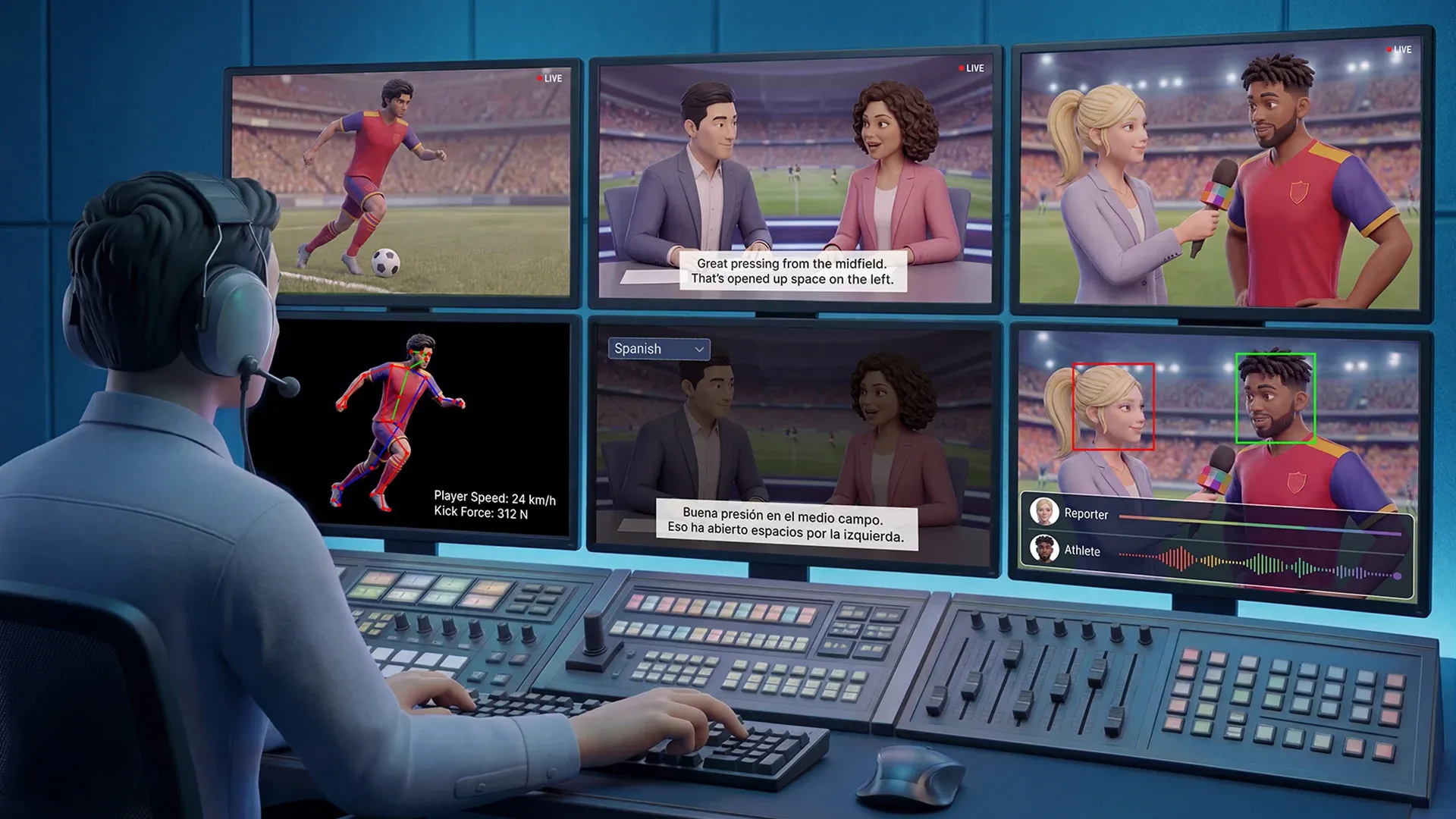
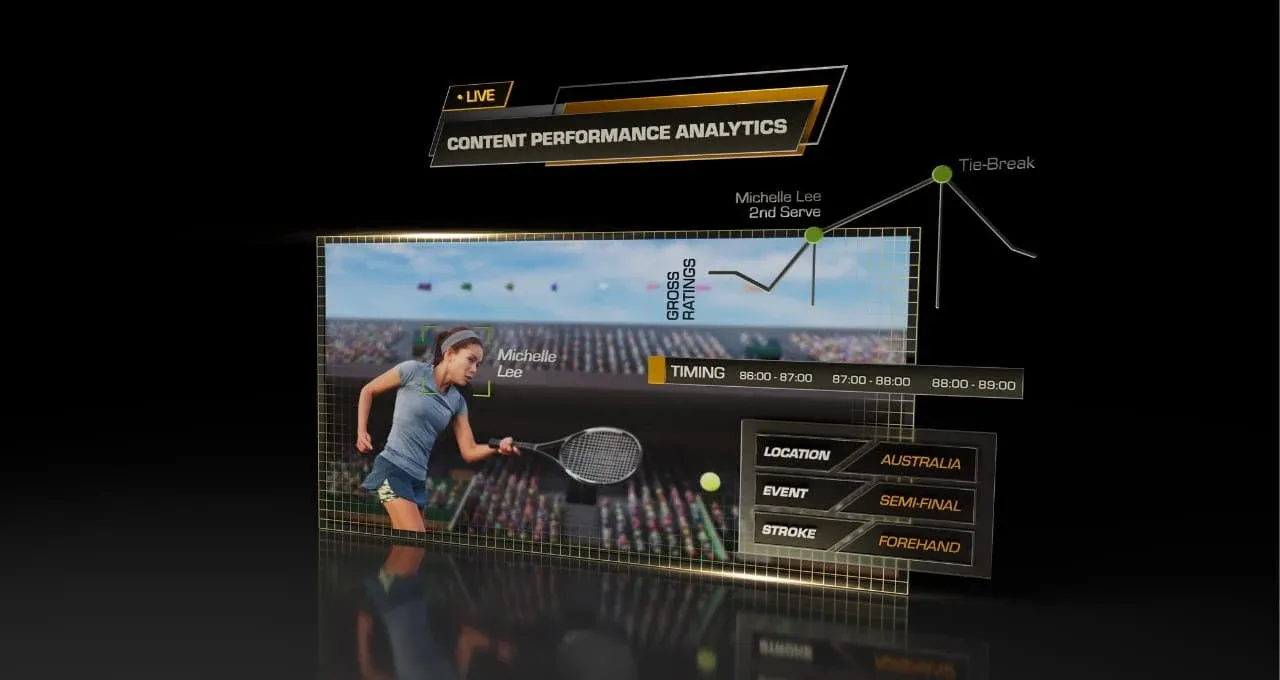
NVIDIA calls the broader collection NVIDIA AI for Media. It combines GPU-accelerated software development kits, NVIDIA NIM microservices, playbooks and blueprints for audio, video and augmented-reality effects.
The source describes a wide functional surface. Synthetic Video Detector, or SVD, gives editorial, content-authentication, digital-forensics and media-integrity teams a probability assessment about whether footage is authentic or AI-generated. Dalet is integrating it into a cloud-hosted workflow where teams can inspect scores and metadata. Compliance by TwelveLabs combines SVD’s signals with regional and custom compliance screening.
Wowza is described as distributing SVD through its Video Intelligence Framework. NVIDIA says that arrangement can analyze live feeds for objects, scenes and signs of AI generation in real time, with deployment options on premises, at the edge, in the cloud, across hybrid environments or fully air-gapped. Those are vendor-described capabilities, not proof that every deployment will meet a station’s control-room or rights-management requirements.
Netics analysis: the architectural shift is from “add AI to video” to “route live media through a chain of services.” Every boundary needs an owner, a timeout, a fallback and an audit trail.
The media pipeline is the product, not the demo effect
NVIDIA’s individual effects are easy to understand. NVIDIA 3D Body Pose estimates 2D and 3D human joint locations and angles from single-camera video, without marker-based capture systems. The source connects that data to sports analysis, replay, officiating, player safety and immersive experiences. Vizrt is using it in live virtual studios, where tracked movement drives 3D lighting effects.
Video Frame Generation creates intermediate frames between original frames. NVIDIA says Video Frame Generation can increase frame rates by 2x or 4x while preserving visual quality and temporal consistency. Ross Video is integrating it into Rio Replay for AI-assisted sports slow motion. The announcement says the work supports 6x slow-motion generation, with development underway toward 8x interpolation.
Video Super Resolution adds another branch. NVIDIA says it upscales video while reducing noise, blur and compression artifacts, with streaming modes that let developers choose between real-time performance and higher image quality. The announcement also identifies adjustable controls, 10-bit support and availability through the Video Effects SDK and a NIM microservice. TrueHDR converts standard-dynamic-range video into high-dynamic-range output in real time, reaching up to approximately 2,000 nits while adapting brightness to content. NVIDIA says VSR, VFG and TrueHDR can be combined in one video-effects pipeline.
Before adopting the stack, test each function alone and then the chain. A pipeline that looks smooth in a booth may behave differently when input resolution changes, a feed arrives late, a GPU is shared, or a service returns incomplete results. Measure capture-to-output delay, queue growth, frame drops, timestamp behavior and degradation when a stage is bypassed. Define whether a late enhancement is discarded, delayed, replaced by the original frame or allowed to hold the program. “Real time” needs a measured boundary tied to the actual program format and distribution path.
Holoscan and MXL move integration into the critical path
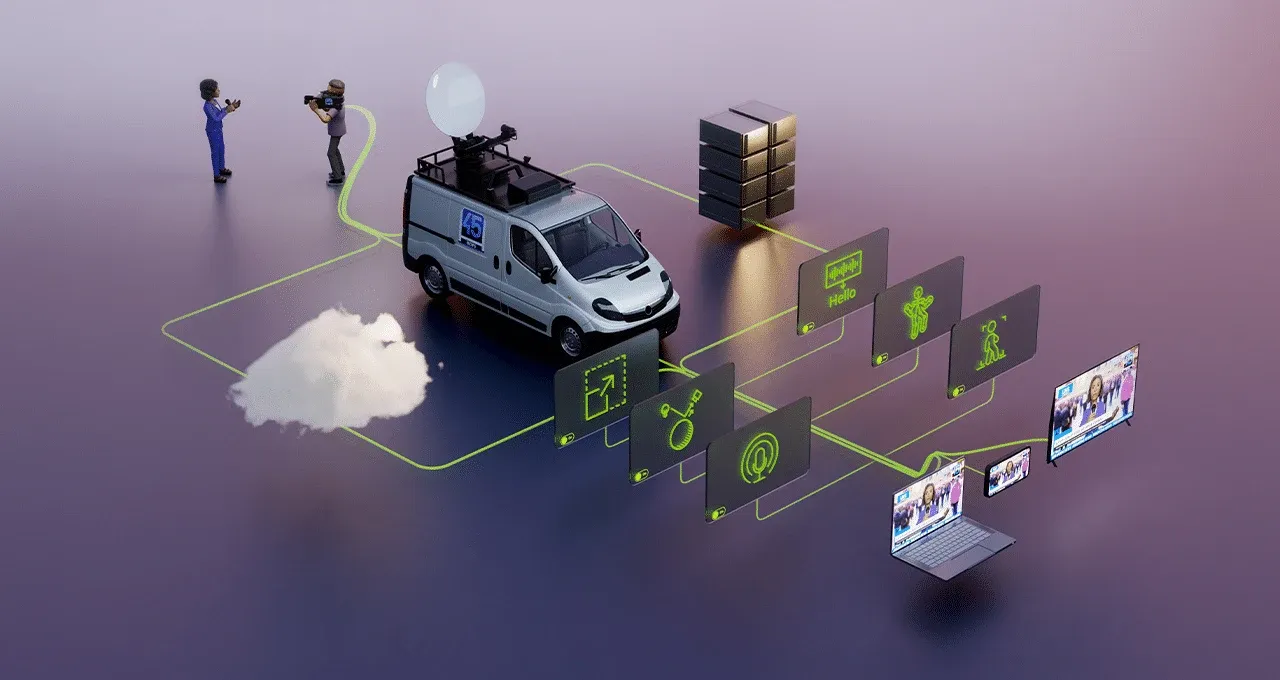
NVIDIA describes Holoscan for Media as an open reference architecture and developer toolkit for AI-powered media functions and software-defined live production. The Media Exchange Layer, integrated with Holoscan for Media, provides an open way for software-based media functions to exchange live video, audio and data across a distributed environment.
That exchange layer is the announcement’s most consequential infrastructure idea. NVIDIA says developers can share accelerated infrastructure, connect applications dynamically and evolve them independently, with less custom integration.
Netics analysis: an open exchange layer does not remove integration work; it relocates the work into contracts. Broadcasters should ask which media formats, metadata fields, clock assumptions, transport behaviors and back-pressure rules are supported in the implementation they will actually run. They should also test version changes. “Open” is useful only when an operator can inspect the interface, observe the handoffs and replace one function without destabilizing the rest of the production path.
Sports intelligence raises a data and rights boundary
NVIDIA Sports Intelligence Playbooks are designed to help leagues, media companies and technology providers fine-tune NVIDIA open models on their own sports footage and annotations. The playbooks cover data preparation, fine-tuning, inference, evaluation, optimization and deployment, bringing together Nemotron, NeMo AutoModel, Megatron Bridge, NIM microservices and NVIDIA accelerated computing.
NVIDIA says the playbooks are intended to help models understand sport-specific rules, players, scoring, strategy and context. The source reports early testing on previously unseen footage using question formats similar to those used in training: multiple-choice accuracy increased from approximately 53% to 94%, while open-ended evaluation increased from approximately 5.7% to 66%. Those are NVIDIA-reported results under the described evaluation setup. They are not a forecast for a particular league, camera plan or competition.
Machina Sports is integrating the playbooks with sports-native data, evaluation and agent infrastructure. NVIDIA also describes Wowza integrating vision-language models, including Cosmos 3 and Nemotron, to detect sports-specific moments in live streams and reduce time to action.
The rights question sits underneath the model question. A rights holder may control some footage and metadata while a league, club, athlete, agency or distributor controls other parts. NVIDIA’s announcement says organizations can use proprietary footage, metadata and performance information; it does not define a universal permission model for training, retention, cross-border processing or derived outputs.
Netics analysis: rights are a routing constraint, not paperwork added after a model works. Document who may use each asset, in which territory and duration, and whether it may enter training, evaluation, caching or a generated experience. A successful inference result is not automatically authorized.
Localization multiplies the live failure surface
NVIDIA is bringing Content Localization technologies to the Holoscan for Media developer toolkit. The reference workflow combines captions, translated audio, dubbing, synchronized video and localized graphics. Developers can select capabilities for a program, market or distribution channel instead of deploying separate infrastructure for every localized version.
NVIDIA LipSync transforms mouth movement in input video to match a target audio track while preserving head pose, blinking and body movement. NVIDIA says the new release improves facial-occlusion handling and preservation of teeth, lip and facial textures. Active Speaker Detection no longer requires speaker diarization for multiple audio tracks, adds voice activity detection and expands deployment support through a gRPC interface and broader GPU compatibility.
NDI is using NVIDIA AI for Media, including LipSync, for real-time translation, lip-synced dubbing and regional language adaptation in existing broadcast workflows. NVIDIA frames a common media stream as a way to reach global audiences while reducing bandwidth, infrastructure and production complexity. AI-Media, CAMB.AI, Chyron and Panjaya are described as addressing different localization functions.
Validate localization as a complete program path. Compare caption and audio timing, mouth movement, graphics, speaker identity and editorial approvals. Define a hard fallback to the common-language feed and make it visible to the operator. Never allow an automated branch to become the only copy of a live event.
Observability and failure handling belong in the first pilot
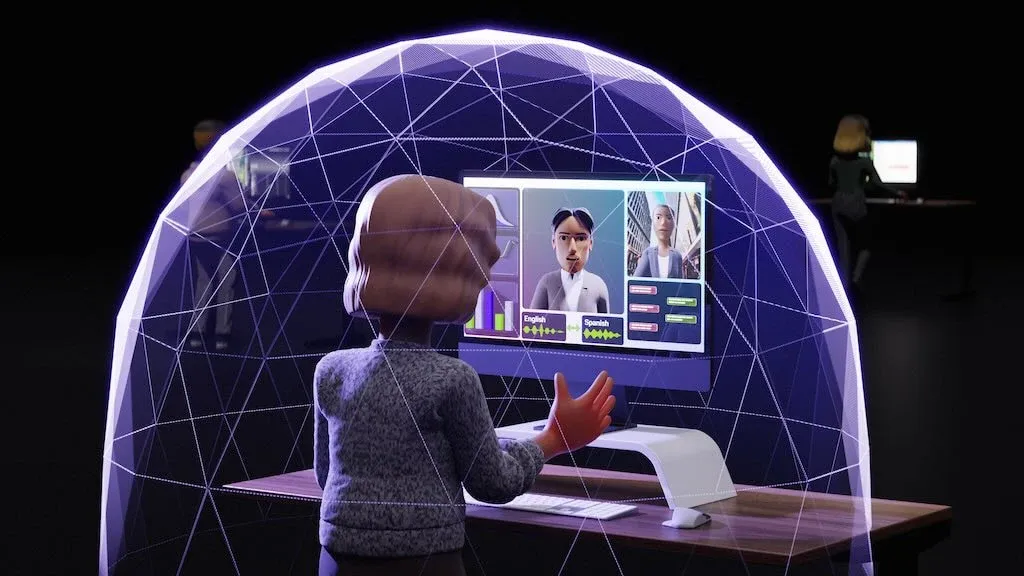
NVIDIA’s examples contain the raw ingredients of an observable system: SVD scores and metadata, frame-level authenticity signals, confidence scores, model evaluation, adjustable controls and distributed media exchanges. The announcement does not promise a universal observability layer. Broadcasters must design one.
For each inference stage, log input identity, model or service version, timestamps, queue time, GPU placement, output status, confidence where available and the reason for any bypass. Keep records separate from the media payload when rights or retention policies require it. Operators need a concise live view; engineers need enough detail to reconstruct a bad replay, wrong language branch or authenticity decision.
Test failure handling rather than inferring it from uptime language: pull a GPU, delay a service, return malformed metadata, send a dark or occluded frame, and break a distributed handoff. Verify safe program output, recovery of original media and an auditable incident record.
What broadcasters should validate before buying the story
Start with the feed: cameras, codecs, frame rates, audio tracks, metadata and distribution targets. Test the chain under normal, peak and degraded conditions. Validate latency per stage and end to end, GPU isolation, capacity planning and contention between services. Validate that Holoscan and MXL handoffs preserve the media and metadata contracts your production systems need, and validate confidence and scores with editorial users, plus regional compliance, rights permissions, retention and cross-border processing for every localized output.
Finally, validate reversibility. Can the service be disabled for one program? Can a language branch fall back without taking down the event? Can a model be replaced without rebuilding the whole media path? Can an editor explain why footage was flagged, a replay was interpolated or a speaker was selected?
The winning architecture will not be the one with the most effects in a booth. It will be the one that keeps live media understandable when the GPU is busy, the feed is imperfect, the rights are narrow and the AI is wrong. That is the same human-validation boundary Netics has examined in agentic code review. Teams reviewing this boundary can use the Netics homepage for further infrastructure analysis.
Sources
- NVIDIA Brings Real-Time AI to Broadcast, Sports and Global Streaming at IBC — NVIDIA Blog, September 9, 2026.
- NVIDIA Synthetic Video Detector — NVIDIA.
- NVIDIA LipSync — NVIDIA.
- NVIDIA Holoscan for Media — NVIDIA.
- NVIDIA Sports Intelligence Playbooks — NVIDIA.
- NVIDIA AI for Media NIM microservices — NVIDIA.
Source: Primary source links are listed in the Sources section above.