
iPhone 18 Pro Brings Variable Aperture to the iPhone Camera
Apple’s iPhone 18 Pro introduces a variable-aperture 48MP Fusion Main camera and deeper Camera app controls. Netics examines what that changes for creators.

TL;DR
Apple’s iPhone 18 Pro and iPhone 18 Pro Max introduce a variable-aperture 48MP Fusion Main camera, bringing aperture control to the iPhone for the first time, according to Apple’s September 9 announcement. The Main camera can move among ƒ/1.48, ƒ/1.8, ƒ/2.8, and ƒ/4.0, either automatically or through new Pro controls. Apple says the system uses six laser-cut blades and a rotor mechanism, while a new sensor and computational imaging pipeline are intended to improve low-light results and detail. The wider camera system keeps 48MP Fusion resolution across the Main, Ultra Wide, and Telephoto cameras. The practical creator story is not “a phone becomes a cinema camera.” It is that exposure, depth of field, motion, white balance, texture, grain, and exposure review become more deliberately available inside one mobile workflow. Apple’s claims still require independent testing, but the control surface is a meaningful product decision.
Apple is changing the camera’s job, not only its specification

Netics visual: the diagram turns the launch claim into an operational question.
The headline is easy to repeat: iPhone 18 Pro adds variable aperture. The more important detail is where Apple puts that capability. It is not presented as a specialist mode hidden behind a separate application. The variable aperture belongs to the 48MP Fusion Main camera and is connected to both automatic capture and a customizable Camera app experience.
Apple describes aperture control as arriving on iPhone for the first time. Its release says six laser-cut blades transition between apertures through a new rotor mechanism. The product page lists four settings: ƒ/1.48, ƒ/1.8, ƒ/2.8, and ƒ/4.0. Those settings give Apple a vocabulary for different creative priorities. The widest setting is intended to admit more light; ƒ/1.8 is described as a balance between light gathering and depth of field; ƒ/2.8 increases depth; and ƒ/4.0 provides the maximum depth in Apple’s illustrated range.
This is a different proposition from adding another automatic portrait effect. The camera can still make the decision for a casual shot, but a creator can now decide which visual compromise matters. A portrait may benefit from a softer background. A group photograph may benefit from keeping more people in focus. A low-light scene may justify prioritizing the maximum available light. Apple says the system can make these adjustments automatically, but it also exposes the controls for deliberate use.
The four aperture positions create a usable creative grammar
Aperture numbers only matter when they help a person make a decision. Apple’s framing is useful because it ties each setting to a visible result rather than treating the lens as a laboratory component. At ƒ/1.48, Apple says the Main camera can produce around 50 percent better low-light performance and faster Night mode photos. That is an Apple claim based on its testing and product presentation, not an independent measurement we can certify here.
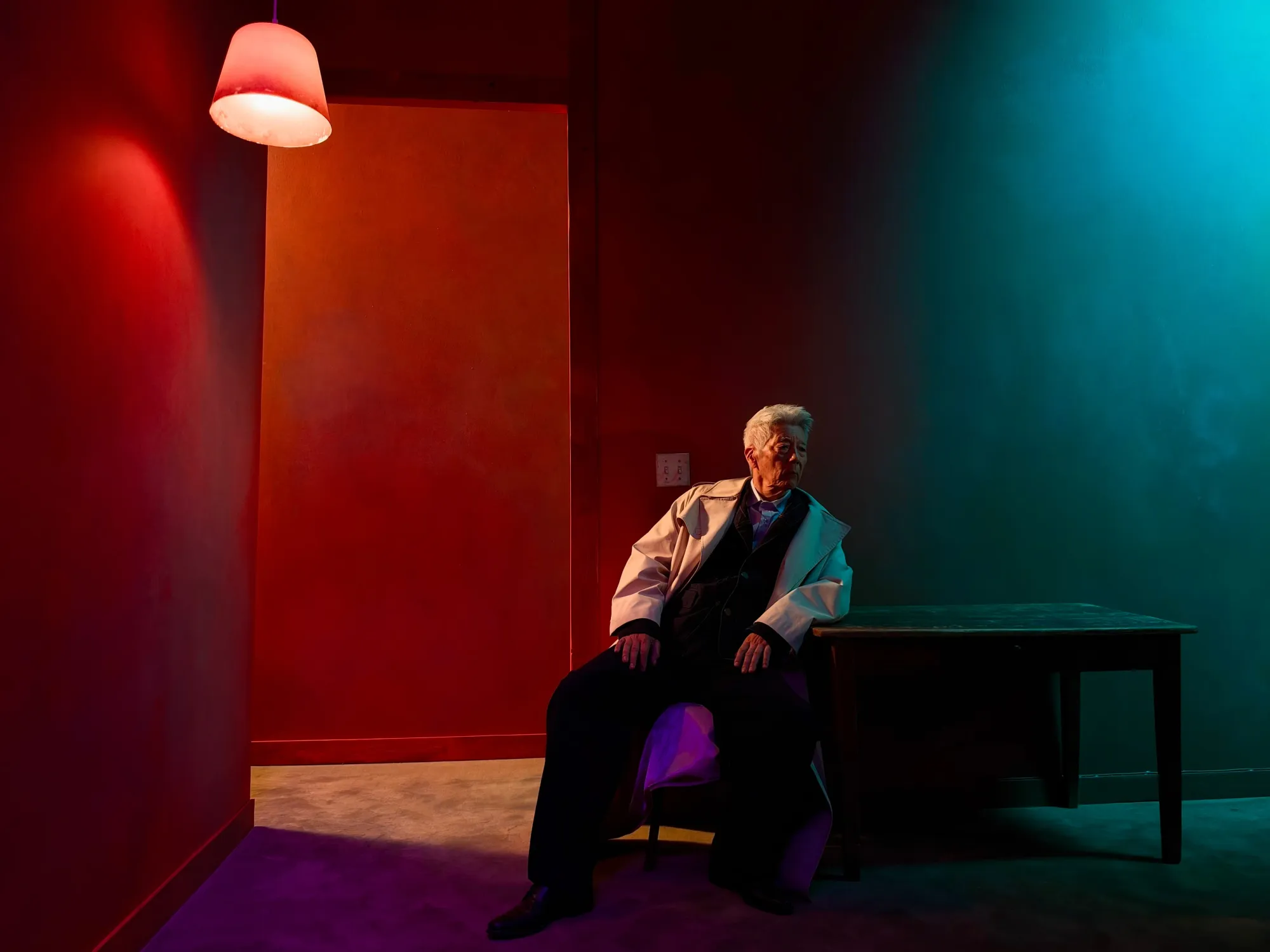
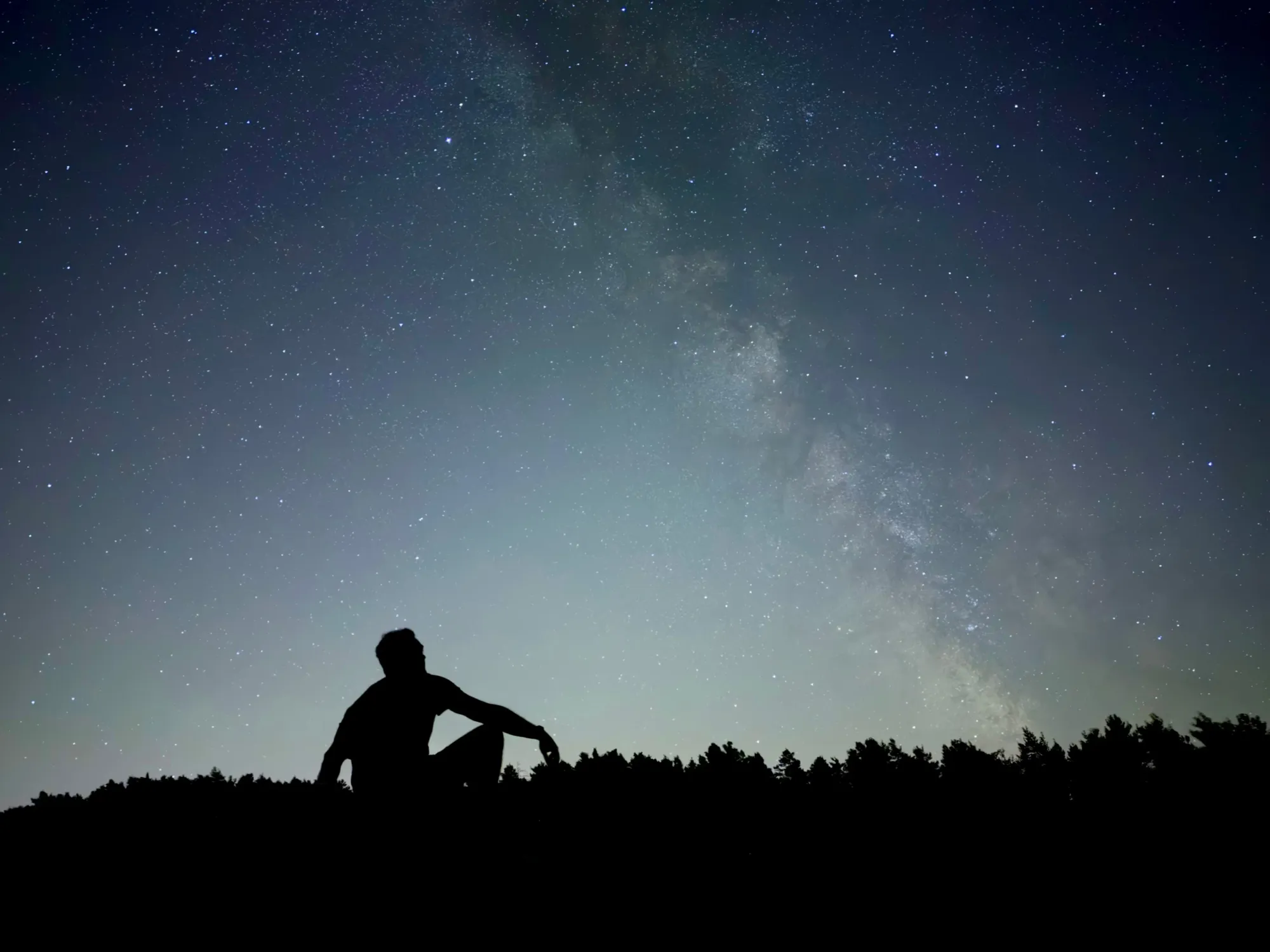
At ƒ/1.8, Apple positions the camera for portraits and a balance between light and depth of field. At ƒ/2.8, the narrower aperture is presented as a way to keep more detail farther back in the scene. At ƒ/4.0, Apple shows maximum depth and a way to create effects such as a luminous starburst from bright light when Pro controls are used manually.
For creators, the useful change is continuity. The same Main camera can be treated as an adaptable instrument rather than a fixed automatic pipeline. A short product video, for example, can be planned around the background separation of one shot and the wider focus of another. A small business documenting an installation can choose more depth so equipment and context remain legible. A photographer working in a dim interior can let the system widen the aperture, then decide whether the resulting look fits the brief.
These are analytical use cases, not promises that every scene will look better. Apple has not supplied an independent test of focus transitions, motion behavior, or the consistency of the four settings in every lighting condition. The value will depend on how naturally the Camera app communicates the trade-offs.
Three 48MP Fusion cameras make control less dependent on one lens
The variable aperture belongs to the Main camera, but Apple is presenting it within a broader 48MP Fusion system. The product page lists a 48MP Fusion Main camera with 24mm and 48mm focal lengths for 1x and 2x, a 48MP Fusion Ultra Wide camera at 13mm for 0.5x and macro work, and a 48MP Fusion Telephoto camera at 100mm and 200mm for 4x and 8x. Apple describes up to 8x optical-quality zoom.

The point is not that all three cameras share the same aperture mechanism. They do not: the variable aperture is specifically attached to the Main camera. The point is that a creator can move through a coherent set of focal perspectives while the Main camera gains a more expressive control layer. A wide establishing frame, a Main-camera portrait, and a compressed telephoto detail can belong to one production sequence without treating the iPhone as a single fixed viewpoint.
“Fusion” is also a reminder that the output is a combination of optics, sensor data, and computational processing. Apple says the new Main-camera sensor and computational imaging pipeline produce sharper, more detailed shots. That wording is a vendor claim, and the result should be checked against real files rather than assumed from the name. Still, the design direction is clear: Apple is adding physical aperture control without abandoning the computational pipeline that makes the phone accessible to non-specialists.
Pro controls move the Camera app closer to a production tool
Apple’s new Pro controls let users bring their most-used settings to the top of the Camera app. The newly exposed options include lens aperture, shutter speed, and white balance, alongside a histogram for checking exposure levels across a scene. The release also says an API is available to developers for more control across the aperture range in their own apps.
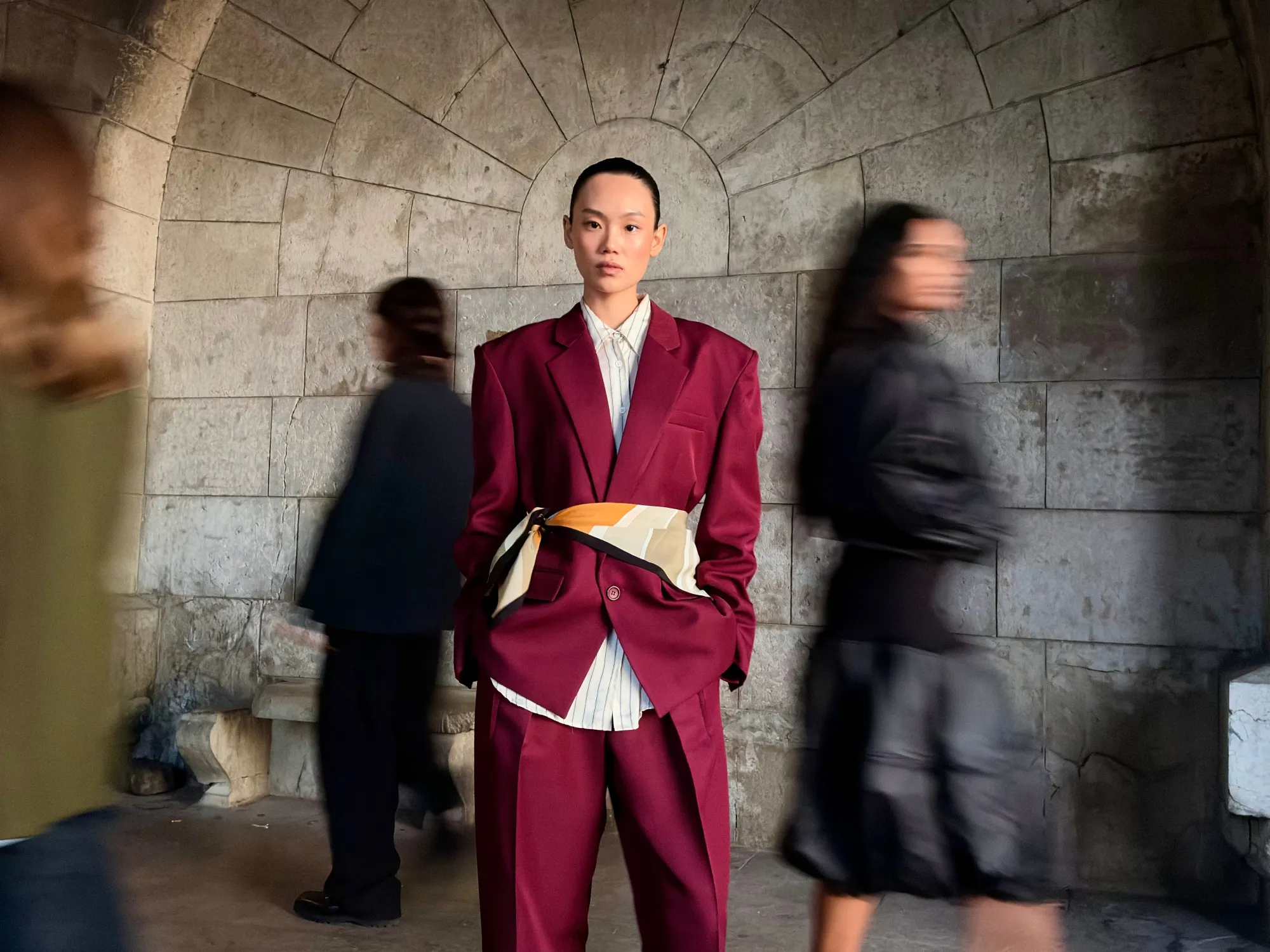
The combination matters more than any one control. Aperture determines a relationship between light and depth. Shutter speed changes the treatment of motion. White balance affects how a scene’s color is interpreted. A histogram gives the operator a second view of exposure instead of relying only on the appearance of the preview screen. Together, they let a creator make a choice, inspect its consequence, and repeat it.
Repeatability is the operational threshold. A creator producing a series of social clips, training videos, catalog images, or location updates does not only need one attractive frame. The creator needs a process that can be reconstructed tomorrow. A customizable control layout can reduce the friction between intention and capture, while the histogram can make exposure decisions less dependent on the brightness of the phone display.
The developer API extends the question beyond Apple’s Camera app. Apple says third-party developers can access more control across the aperture range. That could matter for specialist capture applications, but the existence of an API is not proof of a mature third-party workflow. App support, documentation, stability, and the quality of the resulting files will decide whether the capability becomes infrastructure for creators or remains an Apple demo.
Photographic Styles adds a finishing decision before editing
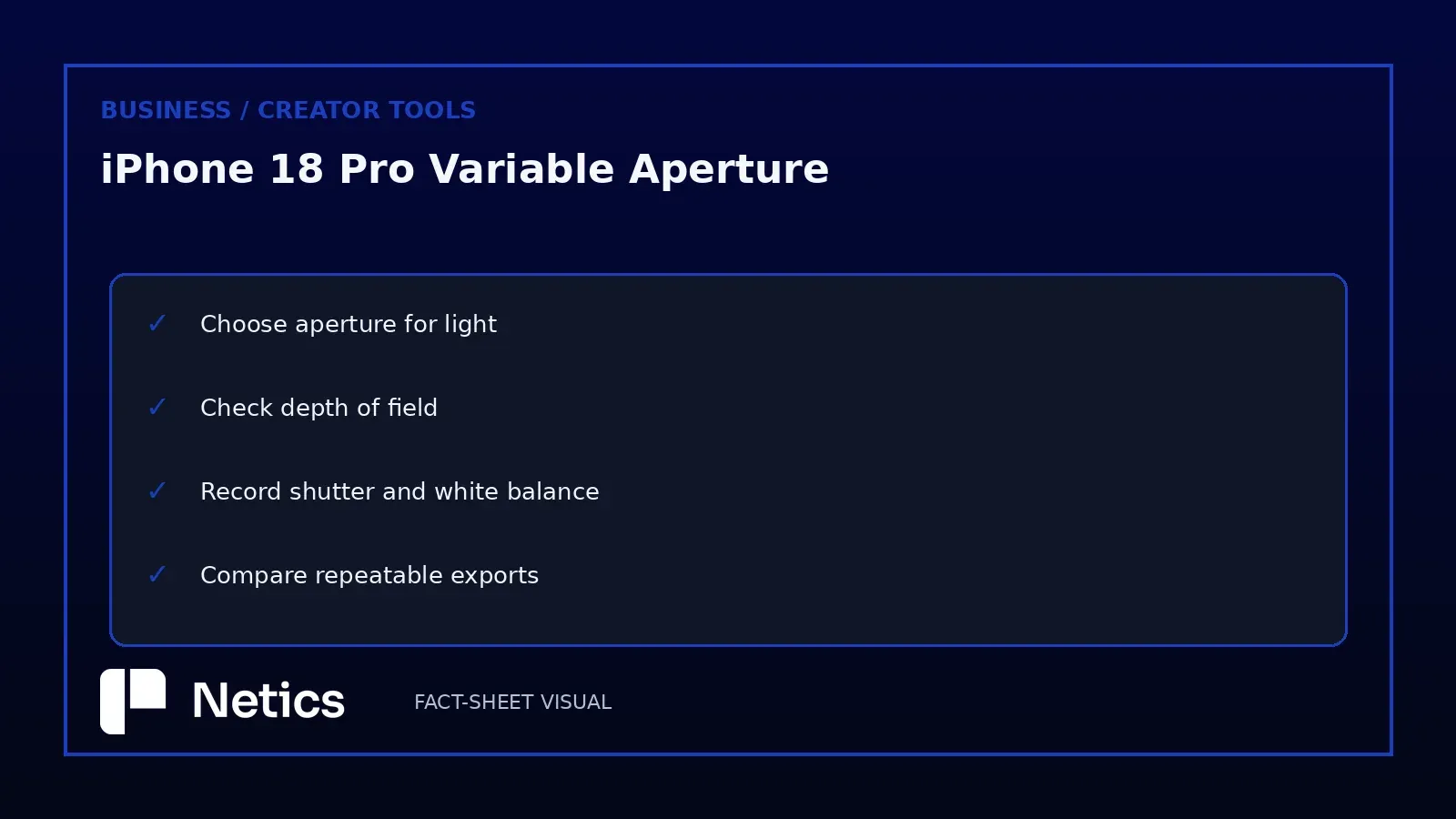
Netics visual: the diagram turns the launch claim into an operational question.
Apple also upgrades Photographic Styles with controls for texture and grain, in addition to tone and color. The product page says users can soften skin details or pursue an artful film look, then adjust or reverse effects. Apple’s release describes texture and grain as ways to dial in a desired appearance and retain more creative control over photos.
This is not the same decision as aperture. Aperture changes how the camera captures light and depth. Photographic Styles changes the appearance applied to the image. Keeping the two ideas distinct is important. A creator can use a narrow aperture to keep a group readable, then choose a restrained texture treatment. Another can use a wide aperture for separation and add grain for a deliberately less clinical finish. The controls create more combinations, but they also create more opportunities for inconsistency.
For teams, a style is useful only if it can be made repeatable. A small brand publishing product photos across several people should define when a style is appropriate, how texture affects skin and materials, and when to reverse it for a neutral master. Apple says effects can be adjusted or reversed; that is helpful, but it does not replace a simple naming convention and review step in the content workflow.
Netics’ reading: the camera becomes a controlled workflow
Apple is selling the iPhone 18 Pro to “pros and creators,” but the durable opportunity is broader. The device brings a set of decisions that used to be split between camera hardware, a specialist app, and post-production into one visible mobile workflow. Variable aperture sets the capture intent. Pro controls expose the operating choices. The histogram provides a check. Photographic Styles supplies an appearance layer.

None of this erases the need for lighting, composition, audio, storage, or review. It does not turn Apple’s launch claims into independent evidence. It does make the phone more interesting for creators who value speed without wanting every decision made automatically.
The right evaluation is therefore practical: can a creator reproduce a look across a sequence, keep a subject appropriately sharp, manage changing light, and hand off files that remain understandable to an editor? Those questions should be tested with real scenes. Apple has supplied the control architecture; the creator still has to decide whether it improves the work.
For more practical analysis of technology choices and production workflows, visit the Netics homepage.
Sources
- Apple iPhone 18 Pro Newsroom media package — Apple, accessed 2026-09-10.
- Apple Newsroom — Apple debuts iPhone 18 Pro and iPhone 18 Pro Max — primary source for Apple’s announcement, camera architecture, variable-aperture mechanism, Pro controls, Photographic Styles, creator framing, and official claims.
- Apple — iPhone 18 Pro — official product page for the camera specifications, aperture settings, focal lengths, creator controls, and Photographic Styles details.
Source: Apple primary newsroom release and official iPhone 18 Pro product page, accessed 2026-09-10.