
ChatGPT Ads measurement needs an explicit boundary
OpenAI is adding self-serve buying and conversion tools to ChatGPT Ads. Netics argues that measurement is useful only when conversion and privacy boundaries are explicit.

TL;DR
- OpenAI’s beta self-serve Ads Manager lets businesses configure budgets, bids, pacing, creative, campaigns, payments, and performance reporting directly. CPM remains available, while CPC adds buying against a click outcome.
- Conversions API and pixel-based measurement extend the signal beyond the ad interaction, but advertisers receive aggregated insights—not individual conversations or personal details. Netics’ rule is simple: define the conversion boundary and privacy boundary before interpreting the numbers.
- The product is becoming buyable, not yet fully knowable: this explainer focuses on operating limits, not a claim that aggregated attribution proves an ad caused a purchase.
The product is becoming buyable, not yet fully knowable

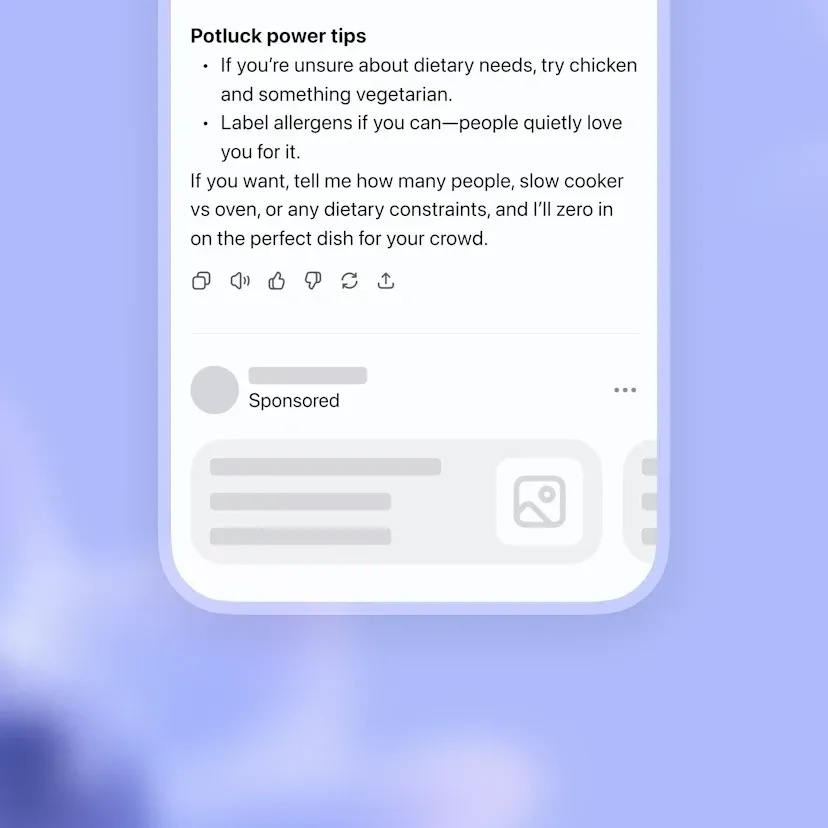
OpenAI says it is moving beyond the first phase of its ChatGPT ads pilot. Businesses can now reach the beta self-serve Ads Manager directly, while partner agencies and technology providers remain part of the access model. The portal is intended to let companies register as advertisers, add payment information, set budgets and bids, choose pacing, upload ads, launch campaigns, manage them, and view performance.
That is a meaningful operational change. The buying interface makes ChatGPT Ads available to smaller companies and startups as well as global brands. It also changes the question for the buyer. The question is no longer only whether an ad can appear in a new environment. It is whether a campaign can be governed when the platform’s delivery logic, conversational context, and reporting grain are not all owned by the advertiser.
OpenAI says its ads system controls delivery decisions. That means the advertiser can configure a campaign, but cannot treat the portal as a transparent auction log or a conversation-level research console. The boundary between what the business sets and what OpenAI decides is part of the product.
CPM and CPC answer different buying questions
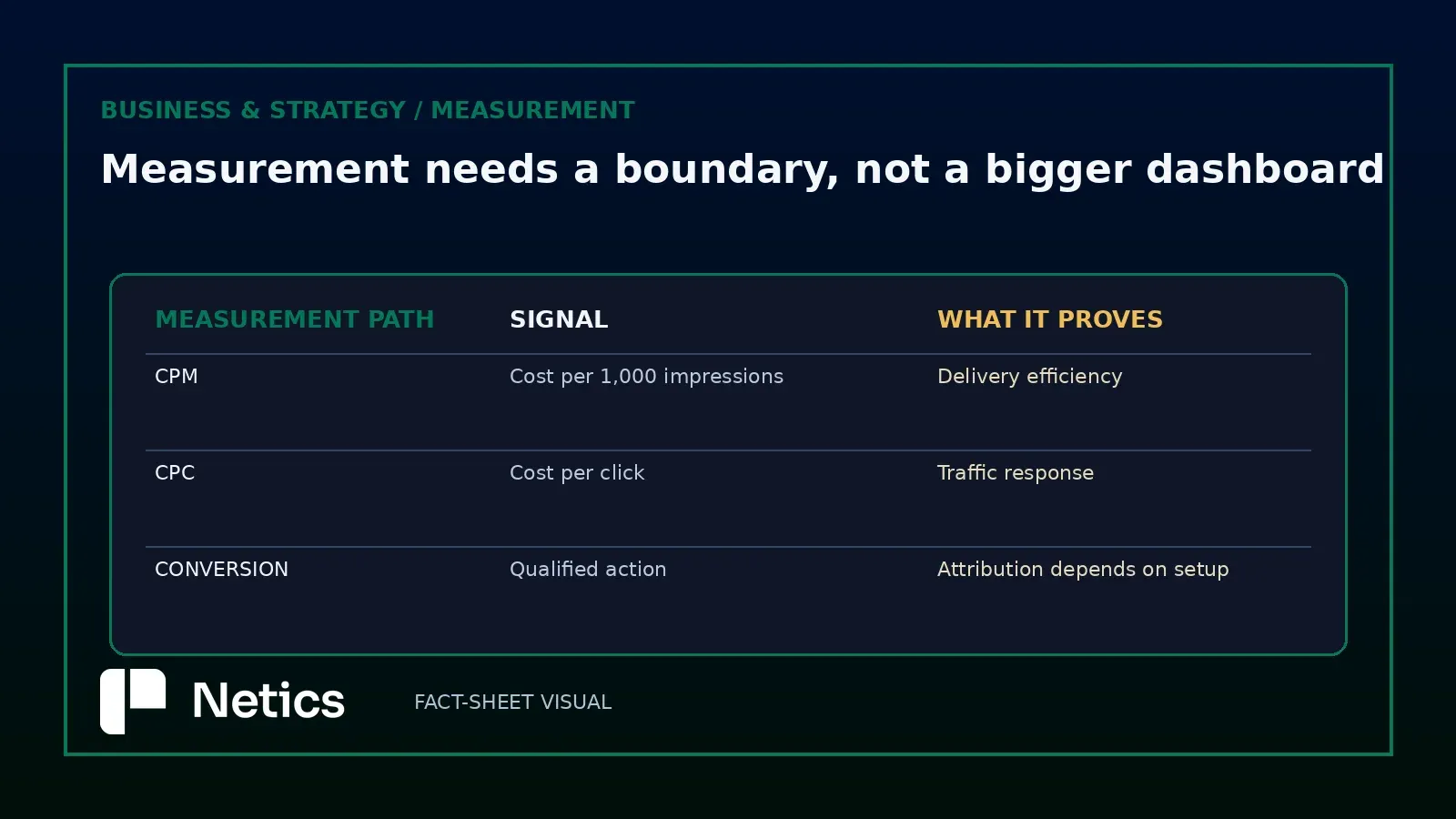
The initial pilot used CPM, or cost per mille impressions. CPM is a useful way to buy reach and learn whether delivery can find demand in a new environment. It is also a weak proxy for business value when an impression does not lead to a meaningful action. A CPM report can tell a marketer how much exposure was purchased. It does not, by itself, say whether the exposure changed a decision.
OpenAI is adding CPC bidding and says advertisers will be charged based on a click outcome. In a ChatGPT conversation, a click can be a meaningful signal: a person may be learning about a category, comparing options, or deciding what to do next. CPC therefore brings the buying unit closer to an observable action than CPM does.
Closer is not the same as complete. A click is still an event, not a business result. A user can click and leave, click accidentally, return later through another channel, or buy without a measurable click. A buyer should therefore record the buying basis separately from the outcome contract. “CPC campaign” describes how spend is charged. It does not define what counts as success.
Measurement can extend the signal without opening the conversation
OpenAI says it has launched Conversions API and pixel-based measurement. These tools are meant to help advertisers understand what happens after someone engages with an ad: a purchase, lead, sign-up, or another meaningful action. A pixel can report a browser-side event; the Conversions API can send a server-side event. Both are ways to connect the ad interaction to an event declared by the advertiser.
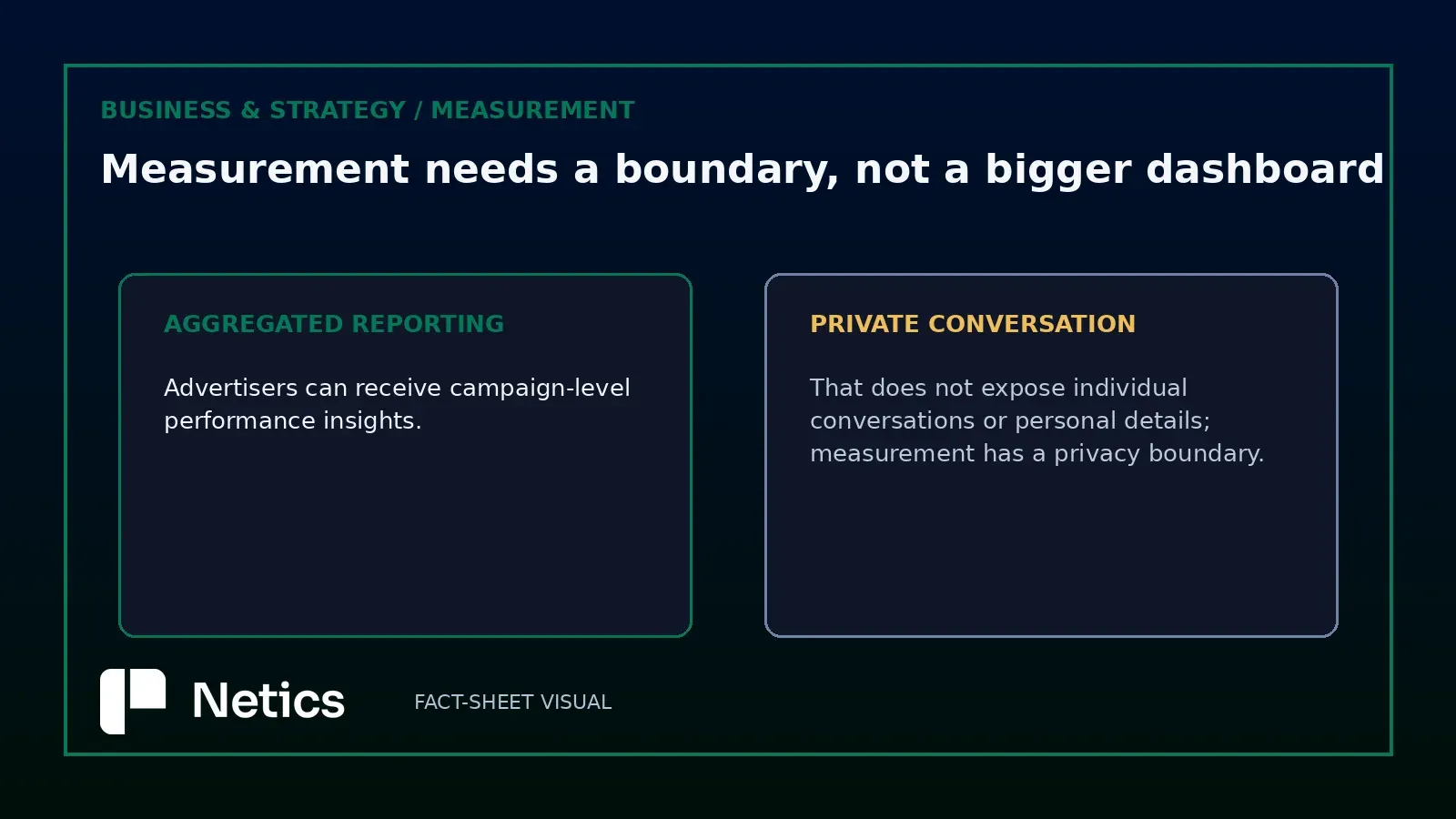
The privacy promise is equally important. OpenAI says advertisers receive aggregated performance insights without access to individual conversations. It also says the updates avoid sharing conversations or personal details with advertisers. This is not a minor implementation note. It defines what the measurement system is allowed to expose.
Aggregation can answer questions such as whether a campaign or audience segment generated more reported conversions than another eligible group, subject to the platform’s rules and thresholds. It should not be read as a license to reconstruct which person asked which question, what they discussed, or why they acted. An advertiser needs a useful report without receiving the raw conversational context that made the ad environment distinctive.
Our AI prototype production-readiness guide makes a related point: a visible output is not the same thing as a trustworthy operating boundary. Ads measurement needs the same discipline.
Attribution has an operational ceiling
A conversion after an ad interaction is observable. Causality is harder. Someone may already have known the brand, compared the product elsewhere, or intended to buy before seeing the ad. The platform can improve its signal by combining events and delivery information, but a report still depends on an attribution window, event definition, matching method, exclusions, and aggregation policy.
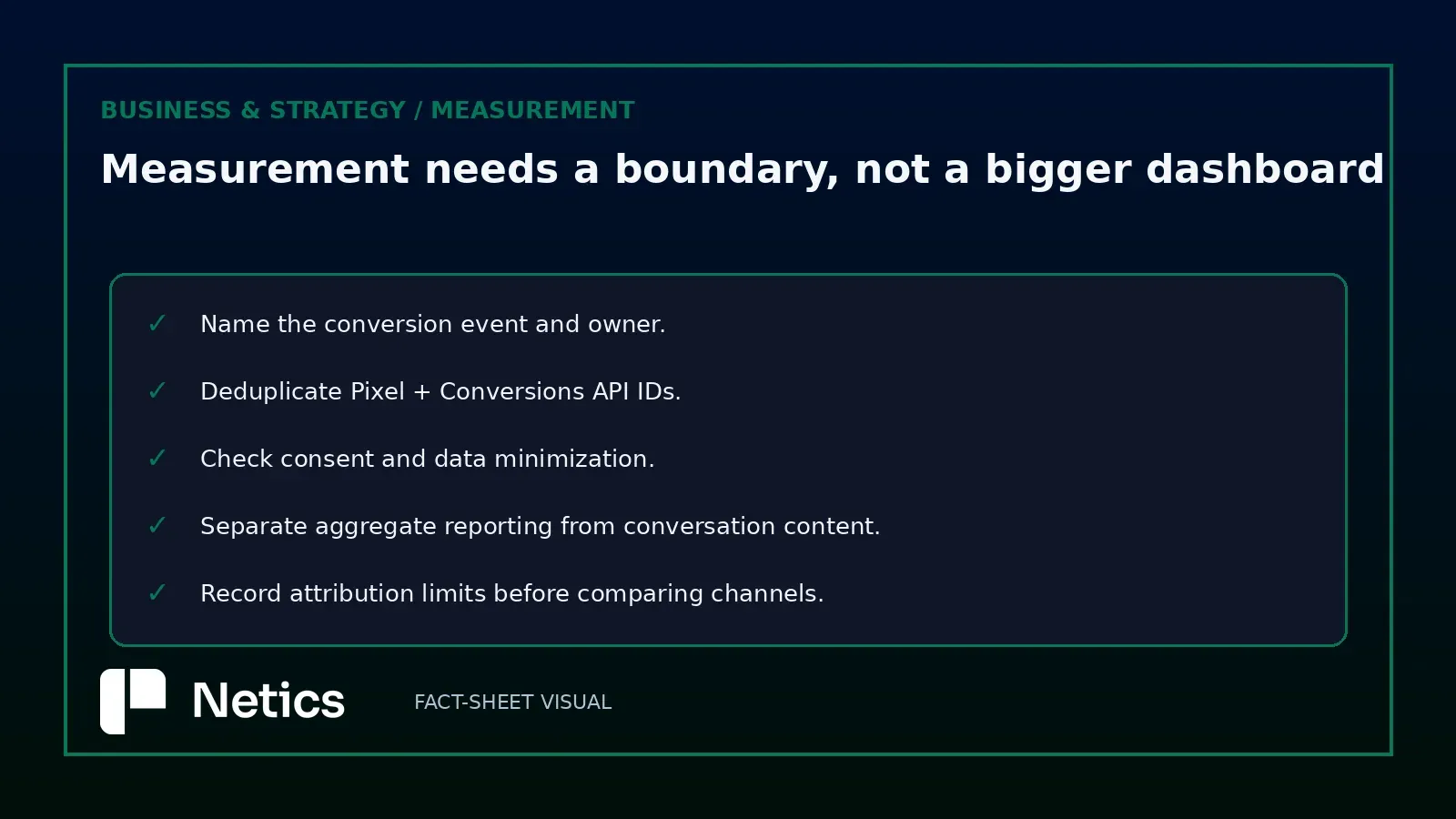
Those choices should be written down before a team celebrates a result. What exactly is the conversion? Which system owns the event? How long after the click does it count? Are view-through actions included? What happens when browser and server events duplicate each other? Which small cells are suppressed? If these questions are unanswered, the dashboard is not a measurement contract; it is a number generator.
The same discipline protects privacy. A narrow conversion definition can be evaluated without exposing the underlying conversation. A vague definition invites teams to request more data when the result is disappointing. Netics’ position is that the correct response to weak attribution is better experimental design, not a demand for personal conversational detail.
Privacy principles must become launch checks
OpenAI says ChatGPT answers remain independent, conversations remain private, and users remain in control. Those principles matter commercially because ads are being placed inside a product whose value depends on trust. They also need an operational translation for advertisers and agencies.
Before launch, document the events that will be sent, the purpose of each event, the retention period, access roles, consent basis where applicable, and the level of reporting that the campaign actually needs. Keep conversation content outside the advertiser workflow. Separate campaign optimization from any attempt to infer sensitive intent. If an analyst cannot explain the privacy boundary in one paragraph, the campaign is not ready for more measurement.
The Netics rule for buying in a conversational channel
ChatGPT Ads may become easier to buy as the self-serve manager expands. That does not make the channel’s results self-explanatory. CPM tells you about purchased exposure. CPC tells you about charged clicks. Pixels and Conversions API can report declared downstream events. Aggregated insights can protect people from advertiser access to their conversations and personal details.
The useful question is whether those signals are sufficient for the decision at hand. If the goal is delivery, CPM may be appropriate. If the goal is an immediate response, CPC may be closer to the buying objective. If the goal is revenue, the conversion event and attribution window need an explicit owner. If the goal is causal lift, platform reporting alone is unlikely to settle it; a properly bounded incrementality design is a different question.
Measurement is useful only when the conversion boundary and privacy boundary are explicit. That is the standard we would apply before connecting any conversational ad channel to a business dashboard.
If you need to turn an event definition into an auditable operating boundary, book a free 30-minute audit.
For a same-language Netics starting point, visit the Netics homepage.
Sources
- OpenAI — New ways to buy ChatGPT ads, published May 5, 2026; primary source for Ads Manager, CPM/CPC, Conversions API, pixel measurement, aggregation, and privacy principles.
- OpenAI — Our approach to advertising and expanding access, OpenAI’s stated advertising principles.
- Netics — Your AI prototype is not production-ready because the model works, related Netics perspective on explicit operating boundaries.
Source: OpenAI, “New ways to buy ChatGPT ads,” May 5, 2026.