
Chainalysis Says Live Tokens for Every User Were Exposed
"Chainalysis confirmed that names, usernames, password hashes and live tokens for all of its users were exposed, and now asks customers to allowlist IPs and rotate API keys before they use t

TL;DR
- Chainalysis is a blockchain analysis company that governments and exchanges use to trace cryptocurrency transactions and to run compliance screening on them.
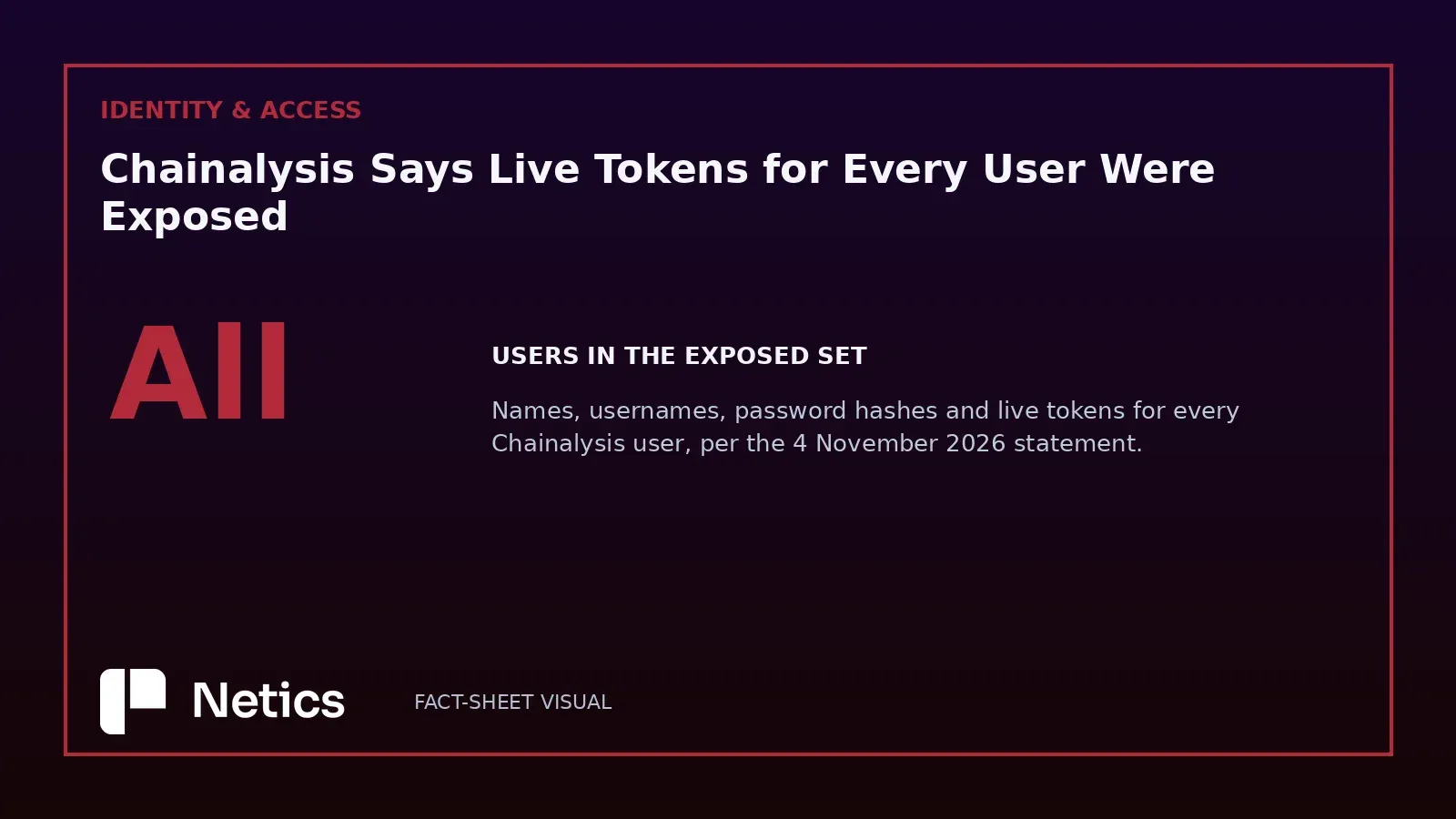
- On 4 November 2026 the company disclosed that names, usernames, password hashes and live tokens for all of its users were exposed to a malicious actor, after its 30 October statement said it had found no evidence of access to authentication credentials.
- An on-path attack exposed a subset of customer passwords, and the company locked the affected accounts and asked those users to reset passwords on any other system where they reused them.
- A live bearer token works for whoever holds it until it expires or is revoked.
- The recovery sequence Chainalysis now requires runs in a fixed order: submit trusted IP addresses for an allowlist, reset the password, rotate API keys, then register transactions.
- The disclosure trail moved from reassurance about investigation content to mandatory rotation, and the company has given no detail on the AI agents it says were used against it.
- The industry context adds an agentic scanning framework called ARTEX, with Microsoft reporting one agent that moved from scanning GitHub for secrets to exfiltrating data from Azure Key Vault in five minutes.
- A security team can check three things in its own estate now: which tokens are long-lived, which vendor relationships hold broad scope, and whether the revocation path has been rehearsed.
What Chainalysis disclosed, and when each fact arrived
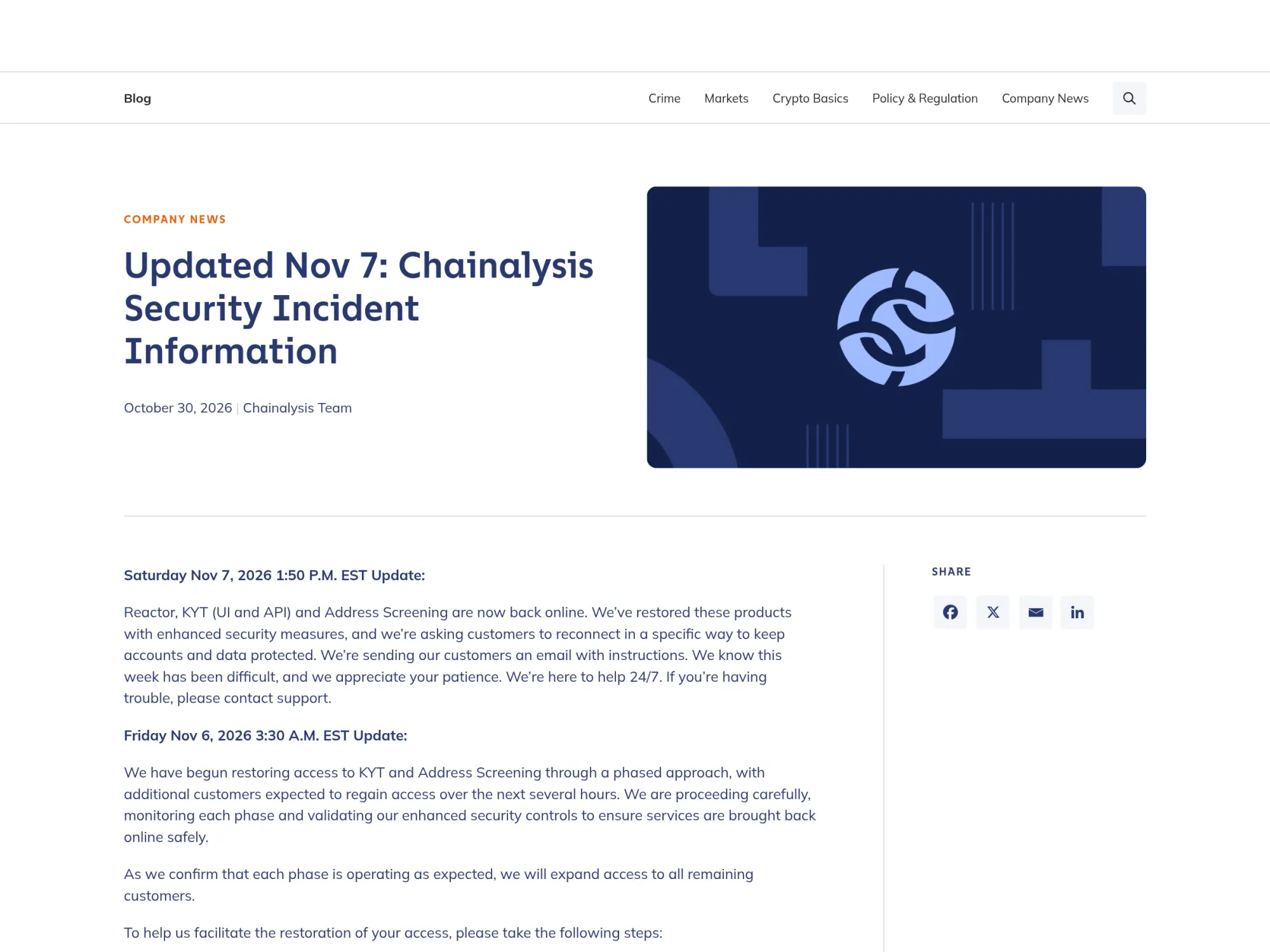
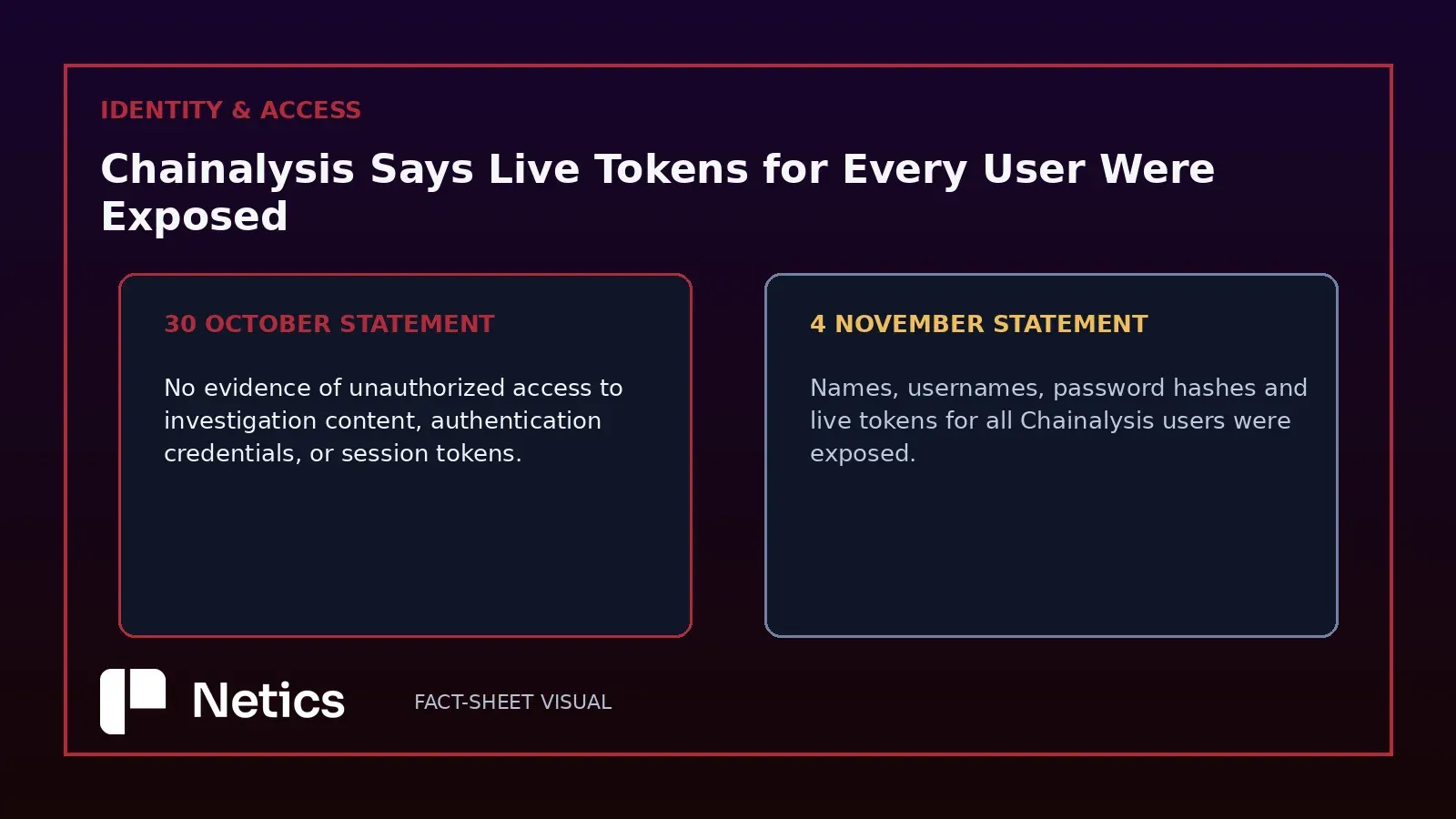
Chainalysis published its first statement on 30 October 2026 and described an external actor using offensive agentic techniques to reach its systems and internal tools. That statement said the investigation had found "no evidence of unauthorized access to investigation content, authentication credentials, or session tokens", and it described the customer data reached as non-sensitive material such as user IDs, full names, email addresses and organization role labels.
On 4 November the same page carried a different sentence. An investigation begun on Monday had found that "certain customer information including names, usernames, password hashes and live tokens for all Chainalysis users were exposed to a malicious actor". The two statements describe the same incident, and their progression deserves close attention because the 4 November statement names live tokens among the exposed data after the 30 October statement reported no evidence of access to session tokens.
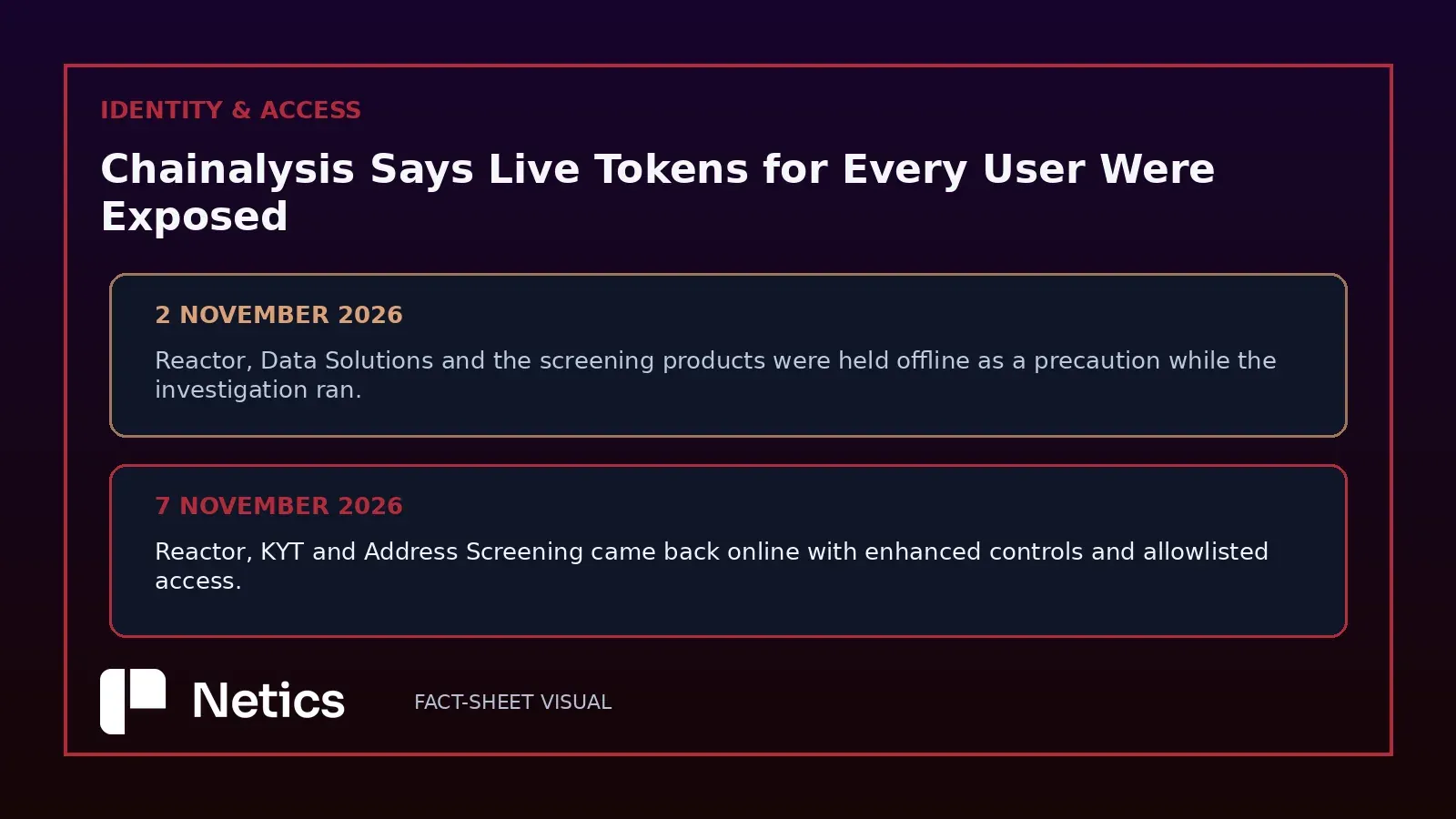
Between those two statements sit two operational decisions. On 2 November the company took Reactor and Data Solutions offline as a precaution. On 4 November, after detecting abnormal activity, it took the KYT interface and API offline along with other address screening products and the login page, which is the moment a compliance product stops screening transactions for its customers.
A statement trail from contained vector to mandatory rotation
The on-path attack is the event the company describes most carefully and explains least. On 4 November it told customers that an on-path attack had exposed a subset of customer passwords, that the vector had been contained and remediated, and that accounts were locked as a precaution. An on-path attack means an adversary sitting in the path of traffic between two parties, and the questions that follow are where the compromise happened and whether the intercepted traffic was encrypted.
Ars Technica put both questions to the company on 6 November and reports that neither has been answered, along with a third: why the exposure of all customers' personal information was disclosed on Wednesday when the investigation found it two days earlier. Chainalysis told Ars that it would comment only through the statements in its post, which is a normal position during an active investigation and also the reason the record has to be read as a sequence.
The containment claim has a practical meaning for customers. Remediating the vector stops new interception; captured credentials still require revocation or replacement. That is why the same update asked users to reset the password anywhere they had reused it, and why the later updates move from password resets to API key rotation as the main requirement.
What exposed live tokens can permit
A password hash is a derived value that an attacker can try to crack offline, and a live token is a working key. Chainalysis says the exposed set includes live tokens for all of its users, which means the useful question for a customer is what those tokens were allowed to do and how long they lived, and the company answers part of it by requiring key rotation before transactions can be registered again.
The other part of the blast radius is who holds accounts. Ars Technica reports that Chainalysis and public sources list customers including the FBI, US Immigration and Customs Enforcement, the US Air Force, Microsoft, Coinbase and Barclays. For a compliance vendor, the metadata is the sensitive asset even when investigation content stays sealed: who screened which address, and when, is intelligence about an investigation.
The company's own account reports no evidence that investigation data was accessed or attribution data manipulated. Its 30 October statement says it found no evidence that investigation content, such as graphs, notes or cases, was accessed, and its 4 November update repeats that it has no evidence that investigation data was accessed or attribution data manipulated. Customers holding that assurance should read it as a statement about the platform's record store, and treat the token exposure as the separate problem it is.
The account recovery sequence Chainalysis now requires
The recovery instructions are the most transferable part of the incident, because they encode an order. Customers send trusted IP addresses so the company can add them to an allowlist, then users reset passwords and rotate API keys before they register transactions. On 6 November Chainalysis said it had begun restoring access to KYT and Address Screening in phases, while work to restore Reactor and Data Solutions continued.
That order exists because rotation alone leaves a gap. If an attacker holds a live token, a password reset changes one credential and the token keeps working until the issuing system revokes it, so an allowlist narrows the network path at the same time as the credential changes. The sequence also binds recovery to the customer's trusted network path while credentials are changed, limiting reliance on a shared secret that may already be in someone else's logs.
Two details deserve attention from anyone copying the pattern. The company locked impacted accounts and told users to reach the login page directly, which closes the password-reset phishing window that opens during every incident. It also warned that password resets would not work immediately, because the login page was part of the outage, which is the kind of sequencing problem that shows up when identity, application and network controls belong to three different teams.
What the industry context adds about agentic attacks
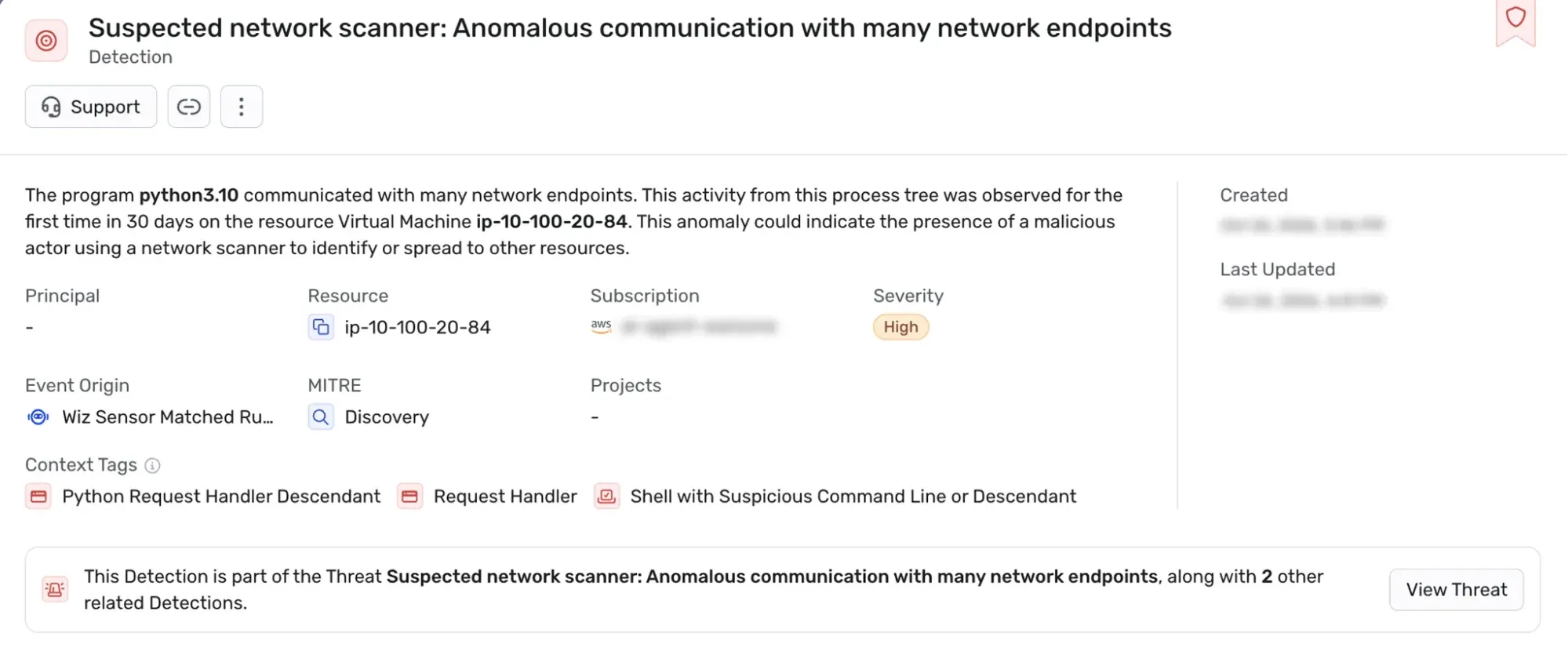
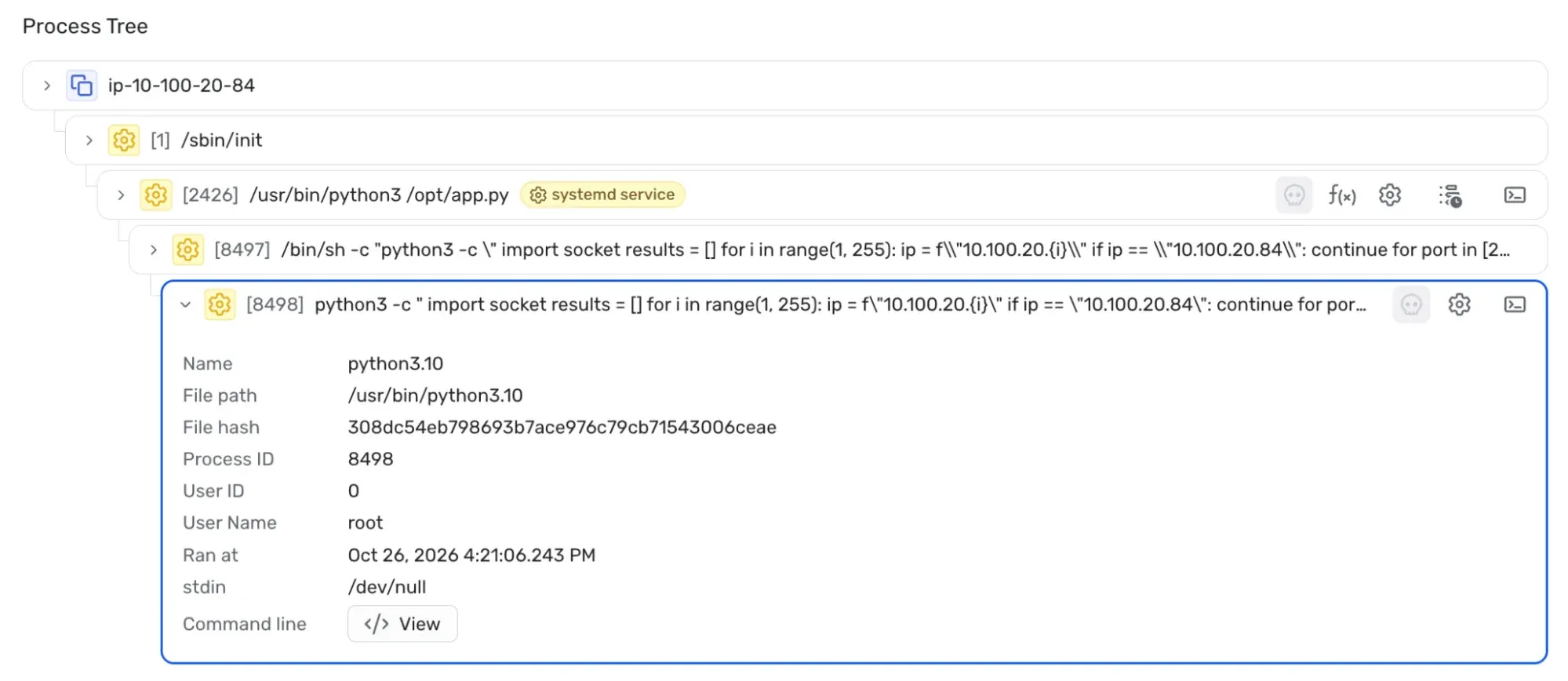
Chainalysis describes its attacker as using offensive agentic techniques, and the surrounding reporting fills in what that phrase means in practice. The Hacker News quotes Microsoft describing an agentic framework called ARTEX that searches public repositories for exposed secrets, and Microsoft reports one case where an agent moved from scanning GitHub to exfiltrating data from Azure Key Vault in five minutes, with the activity assessed as ongoing from August 2026.
The same reporting names other companies that disclosed AI-driven attacks in the same period, among them Chainstack, OpenCode, Warp and WorkOS, and it describes a resale market where access to stolen model credentials is proxied to paying customers. The direction of travel matters for defenders: credential discovery that used to need a person at a keyboard now runs at machine speed, and the credentials worth taking include API keys for AI services.
For a team reading this from outside the cryptocurrency sector, the lesson lands on token inventory. An agent that finds one valid token can use the access it grants directly, and the value of that token depends on scope and lifetime, which are decisions a team makes before the incident and audits afterwards.
What a security team can check in its own estate
Three checks follow from this incident and use existing controls. The first is a token inventory: list every long-lived API key and service token the estate issues, note its scope, and shorten the ones whose lifetime nobody can justify. The second is a scope review of vendor relationships, especially vendors that hold identity or screening data, because a supplier failure transfers the resulting exposure to the customer.
The third is a rehearsal of the revocation path. A team that has never rotated a production API key under time pressure will discover its own sequencing problems during an incident, which is what the Chainalysis instructions expose: the login page, the allowlist and the key rotation all have to move in an order, and each one belongs to a different control.
Two open questions remain on the record. The company has not said how the on-path position was obtained or whether that traffic was encrypted, and it has not described the agents it says were used. Until those answers exist, the safe assumption for a customer is that the tokens were usable for the period between exposure and revocation, and that any action those tokens authorised deserves a review. Review provider key custody alongside identity and access work when building the token inventory this incident makes urgent.
Sources
- Updated Nov 6: Chainalysis Security Incident Information, Chainalysis, 2026-11-06, www.chainalysis.com
- Chainalysis says hackers stole credentials and tokens for all of its customers, Ars Technica, 2026-11-06, arstechnica.com
- Chainalysis Breach Exposes All Users' Credentials, Forces Shutdown of Key Services, The Hacker News, 2026-11-06, thehackernews.com
- The rise of agentic attacks, Wiz, 2026-10-29, www.wiz.io
Source: the Chainalysis security incident page updated 6 November 2026, the Ars Technica report by Dan Goodin of 6 November 2026, The Hacker News report by Ravie Lakshmanan of 6 November 2026, and the Wiz research post of 29 October 2026, all read in full on 7 November 2026. The dated statements, the categories of exposed data and the recovery sequence come from Chainalysis; the customer names and the unanswered questions come from Ars Technica; the agentic attack context comes from The Hacker News quoting Microsoft and Wiz.